Tuesday Tiny Tale – Operating Theatre

It’s the sort of article you read in the tabloids or the rabbit hole you fall into when you are tempted to scroll down on the internet. There was a boy at junior school who always had ghoulish ‘true stories’ to tell. I was never sure whether to believe him, but we wanted to and it was a bit dull in class after he moved away.

When I became a sardonic teenager I realised how ridiculous his tales had been, though I would have given him credit for his imagination if we ever met again.

As I turned into a sensible adult a strange thing happened; television documentaries, tiny cameras in operating theatres and Wikipedia provided real true stories. It turned out that there were girls with two heads and boys with four legs. The stuffed two headed lamb we saw in a glass case at the ‘House of Horrors’ on holiday had nothing on real two headed people who talked on television and went to school. Yes, real life could be truly bizarre and nature played jokes.

When I started getting mystery pains, or rather when I could no longer ignore mystery pains and the strange lump I could feel, I went to the doctor. An appointment came through for my scan, can’t remember which machine it was, but it made lots of noise and I did not like being in it. Of course the operator is not allowed to tell you anything and just mumbled something about a report going to my GP. I was just glad to get dressed and get out of there down to the hospital Costa Coffee. I was beginning to relax with my strong coffee and a lemon tart poised towards my mouth when my mobile rang.

Puzzled I put my lemon tart down.

I didn’t even get a chance to finish my coffee before someone in a uniform appeared and guided me into the depths of the hospital. It was not long before I was undressed and lying on a couch, being prodded and monitors applied. One good thing, I knew I was in good health, heart and everything working properly and fit for surgery. I was just about to ask when the operation was going to take place when the next thing I knew I was waking up in the recovery room with all sorts of tubes attached to me.

Doctor Jekyll was at my side promptly.

This would be a shock for most people. It was certainly a shock for me as I am a man.

I thought of that boy at school, he would have wanted me to look, ready to relate the story to anyone who would listen. Somehow my schoolboy morbid curiosity took over and as instructed by the doctor I turned my head to the other side of the bed and there in an incubator was my baby brother. Or more accurately, if you put a pair of glasses on him he would be an exact miniature replica of me.

Sunday Salon – Meet The Author

J: Greg, you have recently published a historical novel with the intriguing title Champagne in a Broken Teacup. What’s the book about?

G: Without giving too much away, here’s a short summary I wrote for Amazon.

In the spring of 1940 recently married Marie-Claire is blissfully pursuing her career as a freelance artist in Paris. She has no idea that in early May Hitler’s armies will invade France and rip her life apart. In the book we follow her life as tragedies strike and she is forced to flee Paris to escape from the Gestapo. Using a false name and identity she begins a new life in the small provincial French town of Nevers. She finds unexpected inner strength as a resistance worker but her previous life in Paris catches up with her.

J: What inspired you to write it?

G: As a young boy growing up in Canada I was fascinated by the stories I was told about my French aunt. During WW2 she was an art teacher living in the small French town of Nevers where she became a document forger and fighter in the French resistance. As if that wasn’t fascinating enough for a young boy, even more exciting were some of the stories of her escape from the Germans.

Fast forward several decades to the time I retired and started to focus on my interest in writing and inevitably the stories of my aunt’s adventures came to mind. However, I realized I didn’t know enough detail about her life to turn it into a stand alone story and unfortunately she had passed away many years earlier. I decided I needed to find out more about the world she would have lived in and what life would have been like for her in occupied France.

Thanks to the internet and the digitization of many documents I was able to find out far more than I expected. I found it quite moving to be able to read the very newspapers my aunt would have been reading nearly a century ago. I was even able to look at copies of leaflets that the RAF dropped over France during the war – leaflets that my aunt would have picked up in the streets of Nevers and read. I was amazed to find out that the RAF dropped over 640 million such leaflets over France.

Like most of us I had been taught about the big battles and political aspects of the war but virtually nothing about the lives of the ordinary citizens. As my research progressed I became more and more fascinated reading about the things which affected people’s daily lives and the things they did to fight back against the German occupation. I decided that what I wanted to do was write a fictional novel that incorporated the stories I’d been told about my aunt interwoven with historical reality.

G: That’s a good question. In one sense, being a fictional novel my characters are fictional. On the other hand some of the events included in the story are portrayals of events which involved my aunt – but obviously I can’t tell you what they are right now as that would give away too much of the plot. What I can say is that the picture on the back cover of the book, of German soldiers in the rain, was actually drawn by my aunt in Nevers in 1941 when she was a resistance forger. It is one of the few things I have of hers. It hangs on the wall beside my desk and helped inspire me to write the book.

The historical events mentioned in the book are real as I wanted my characters to react to the actual events of the time. Although a lot of what my characters experience and do may not have happened to my aunt they are based on my research and on true stories of what people actually did in the resistance at that time.
J: Did you spend a long time doing the research?

G: Yes, and I enjoyed the research almost as much as writing the book. I became engrossed in reading about such things as forging techniques, rat bombs and pencil detonators as well as more dramatic activities such as derailing trains and blowing up fuel dumps.

I was also fascinated by the small details I discovered during my research which I’ve never seen in a history book. For example, the fact that within six weeks of the fall of France the newspapers reported that it was now illegal for bakers to make croissant or brioche.

J: Illegal for the French to make croissant?

G: Yes, at first I thought the report might be some sort of joke by the newspaper, but thanks to the internet I was able to access and read the actual regulations issued by the Vichy government..

Also thanks to the internet I was able to research locations in Nevers. I even found a 1940’s picture of the steps of the Rue de Calvaire – a place which plays an important part in the story.

Nevers 1940 Rue de Calvaire

J: Tell me about the title. It’s so unusual.

G: The title is critical to the story so I can’t tell you too much about it. All I can say is I needed a title which would be unique and yet fit in the plot as plausible.

J: I enjoyed reading your novel and gave it a five star review on Amazon as a ‘cracking good read’. What have other people said?

G: I’ve had a lot of positive feedback. In fact several people have said the whole story would make a great film.

J: I agree. And before you go, that important question. Where can people get a copy of Champagne in a Broken Teacup?

G: The book is available via Amazon as a paperback, a hardback, a Kindle eBook or via Kindle Unlimited. Our website https://www.kenebec.com?d has a direct link to Amazon for this book and our other books.

I’d like to thank you for asking me to talk about Champagne in a Broken Teacup. I’m not sure how many of your readers are local but if they’re interested I’d just like to add that I’ll be giving a talk about the research behind the book in June at the Sturminster Newton Literary Festival.

Thanks for coming along Greg and good luck with your book sales and festival talk.

Janet Gogerty

5.0 out of 5 stars A great story that brings recent history to life.

Reviewed in the United Kingdom on 15 March 2025

This is a cracking good story and a very well written novel. Paris under German occupation in World War Two is the setting. This is history, but the novel goes far deeper than the classic black and white photographs of German soldiers marching past the Arc de Triomphe. The author takes us into the lives of happy young newly-weds and their friends. This novel is inspired by the author’s aunt who worked for the resistance and is backed up by careful research. Far from being a dry recounting of the times, we are soon wrapped up in the lives of young and older Parisiens determined to fight for their country as violence and the death of friends and family becomes a reality. The Germans are not the only enemy as informers and traitors make it impossible to know who to trust, keeping us in suspense in every chapter.

https://www.amazon.co.uk/Champagne-Broken-Teacup-Adventures-resistante-ebook/dp/B0DPVJNZRM/

Scribbletide

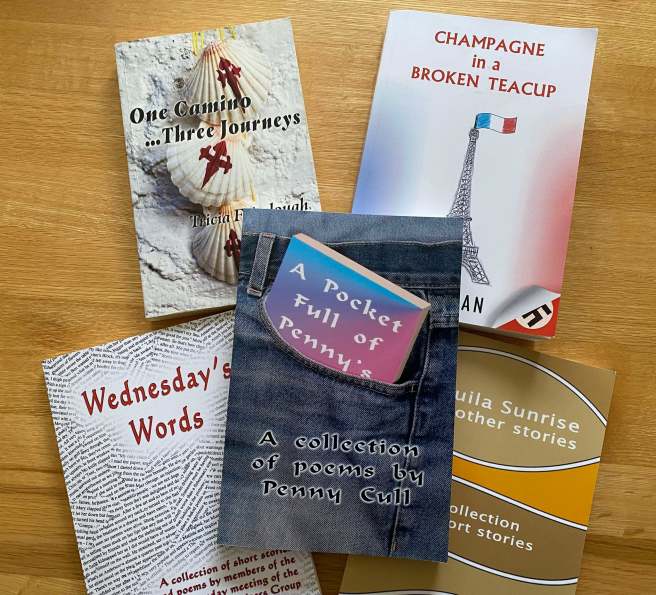
https://www.amazon.co.uk/Champagne-Broken-Teacup-Adventures-resistante-ebook/dp/B0DPVJNZRM

https://www.amazon.co.uk/Camino-Three-Journeys-Tricia-Fairclough/dp/1916193390

https://www.amazon.co.uk/Pocket-Full-Pennys-collection-poems/dp/B0BLFWPMZW

https://www.amazon.co.uk/Pick-Up-Pieces-Didi-Dundee-ebook/dp/B0CTWC4CGP

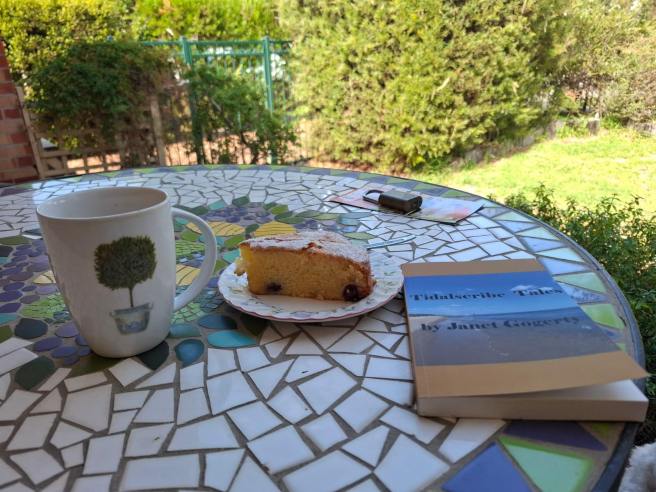
https://www.amazon.co.uk/Tidalscribe-Tales-Janet-Gogerty-ebook/dp/B0DWV9J83V

The End of The Promenade

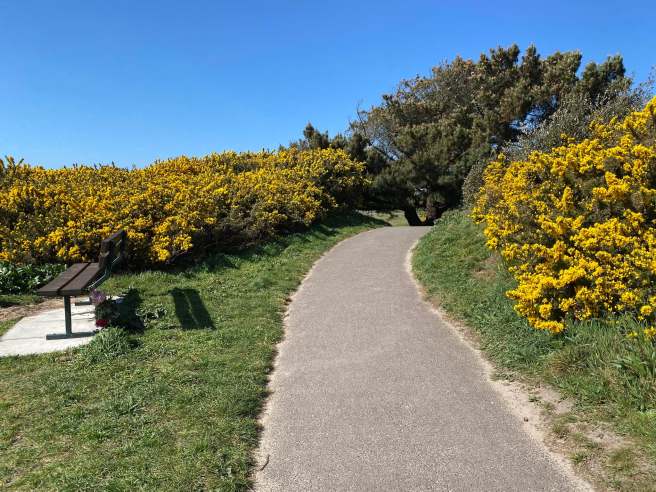
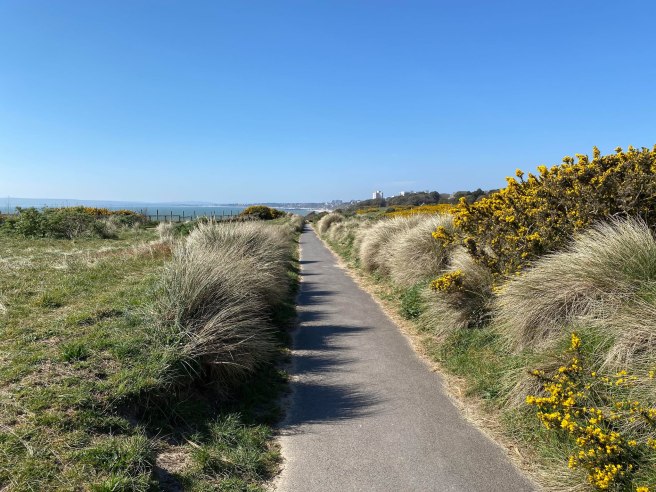
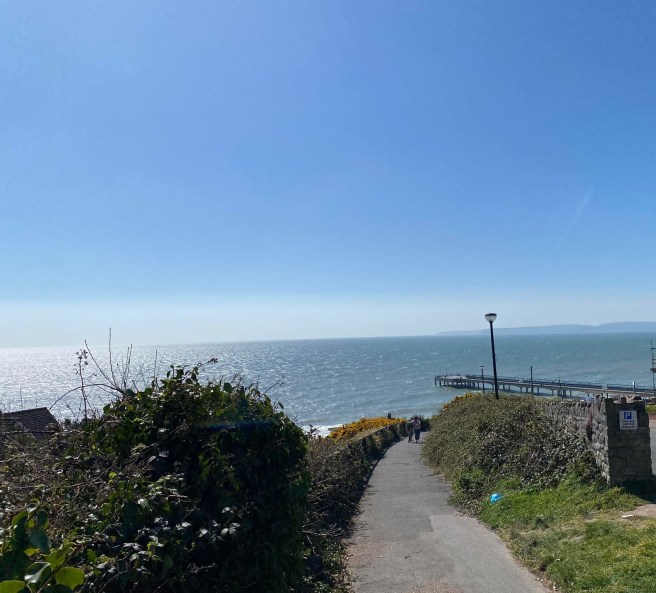
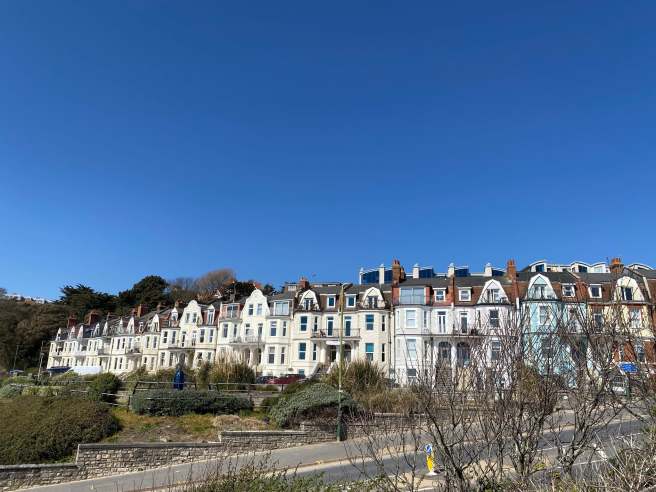
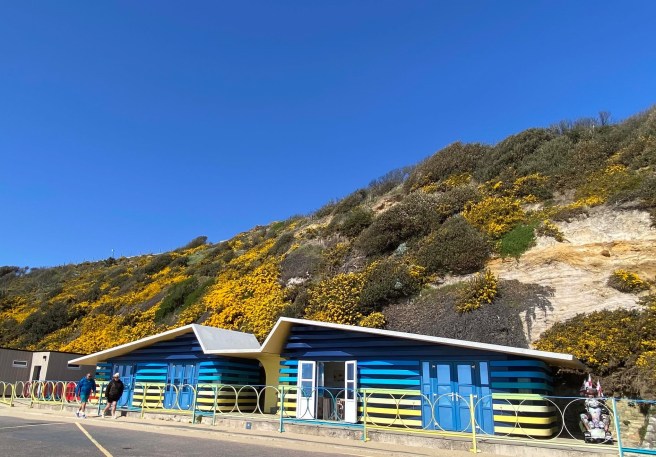
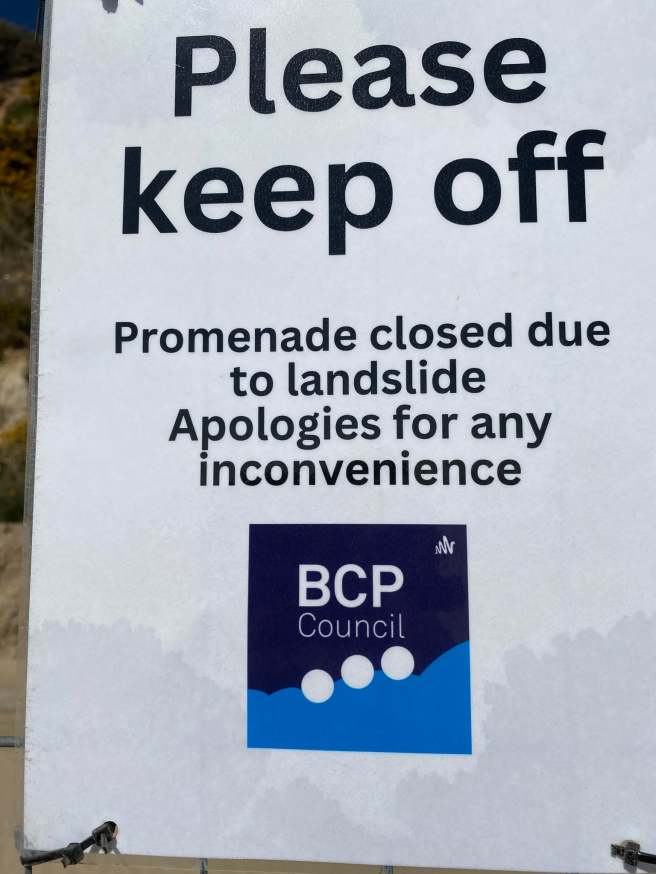
This time it was decided to start at Bournemouth Pier as everyone was older and it was the easiest point for everyone to get to on the bus from all over the area. It was such a nice day I walked from home in Southbourne, not quite the beginning of the prom. The cliff top was lovely with gorse in full bloom. Friends who couldn’t come donated money. How did we get on?

Tuesday Tiny Tale – In Time

It was Tuesday 14th April, only two weeks to go until the start of the new thirteenth month; it had not been an April Fool’s joke. In the USA plans and celebrations were well under way to welcome Trumpril, the new late spring month.

In Israel it was 10 Nissan Anno Mundi 5785, in China it was Ding Wei Day, Geng Chen month, Yi Si year, Year of the Snake. Other lands were waking up to 9, Shawwal, AH 1446…

There were few countries who were well organised or willing enough to change to the new Trumpian calendar in such a short amount of time. In truth many were saying to themselves, whose idea was it anyway to start using the Gregorian calendar in the first place?

In Britain it was 3025 and soon time to celebrate renewal at Pink Moon. The return to the Druid calendar had been the subject of much discussion. Brexiteers and atheists alike took some pleasure in dismissing a calendar that was a European construct and classic example of the church telling everyone what to do. The Prime Minister reminded the people of the United Kingdom that they had already celebrated Ostara, the spring equinox, so there was nothing strange about the Druid Calendar.

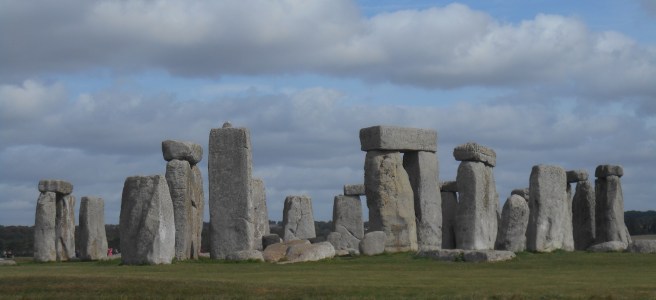
The Druids had been a little uncertain, or felt no need to put a date on creation, so after consultation with experts from such Radio Four programmes as ‘The Infinite Monkey Cage’ and ‘More or Less’, a Cabinet meeting was held. It was decided the easiest way to work out the year the Druid calendar started was to round it up to the nearest thousand years. While BBC Verify were still checking out the facts, the Prime Minister had already announced that Westminster would be moving to Stonehenge. The Chancellor confirmed this would save a great deal of taxpayers’ money as Stonehenge needed less repairs than the Houses Of Parliament.

Saturday Short Story 1000 – On The Bus

Joy had news for our art group, she had her new bus pass… at the age of eighty.

We all had something to say.

About time too, wouldn’t be without mine.

Why did you wait so long. I am looking forward to getting mine, but I’ve got to wait another thirty years.

Are you serious, you have never been on a bus?

‘Unless you count being born on one.’

Our imaginations went into overdrive…

‘At least my mother used to say You must have been born on a bus every time I left a door open.’

Buses have doors these days Joy, the Routemaster has been out of service for twenty years.

Our group varied in age and athletic ability and conversation progressed to discussion of various forms of transport from bicycles to E-scooters and back to cars and buses. Joy was joined at the hip to her car, but it transpired that Joy and the car had both failed their MOT.

‘I didn’t say I was actually going to go on a bus, the bus pass is just in case.’

You must at least have a go.

We all had bus stories, Mandy was expert at manoeuvring her double buggy and six shopping bags on board and I exclaimed how lucky she was to have floors that lowered and space to park. No folding up McClarren buggies for her. Maggie’s bus journey to the hospital to have her baby was equalled by Ron’s travelling from Land’s End to Berwick upon Tweed, using only his bus pass.

The next day I stood at the bus stop with Joy. She had reluctantly agreed to a trial run with moral support. We were at the second stop at the beginning of the route so Joy would be eased gently into the experience. The sunny spring day belied a sharp east wind and I prayed we wouldn’t have to wait long, having told Joy we had two frequent routes to choose from.

 ‘Why are we going into town, aren’t all the shops closing down?’

‘Not all of them, anyway that’s where the bus goes.’

‘How long do we have to wait?’

 ‘Not long, look at the bus ap on my phone, you can see the bus coming up the hill.’

 Joy peered at my phone screen, failing to see the tiny toy bus shaped arrow moving along the map. We were so busy looking, a bus sailed by before I had a chance to put my hand out.

 I always have my bus pass safely in my pocket, ready to produce immediately I’m on board. I hadn’t thought to prepare Joy for the operation. The next bus soon came along, but she spent five minutes fumbling in her handbag for her purse, then five minutes fumbling in her purse for her bus pass. It would have to be that grumpy driver.

I always head straight for the back half of the bus, or better still, upstairs on a double decker, smugly glad I don’t yet have to sit in the front seats with their little signs ‘Please offer these seats to elderly or disabled passengers’. Not actually forbidden so Joy happily plonked herself down in the front seat. I tried to tactfully urge her further back.

‘What was wrong with those seats?’

‘They’re for the elderly and…’

‘How old do you have to be, I’m a pensioner.’

‘But a spritely one, it’s only your eyes that failed the MOT.’

She crossed over the aisle and pulled down a folding seat.

‘The elderly won’t be wanting these ones.’

‘We can’t sit there, that’s the space for wheelchairs and prams.’

‘At least you didn’t make me go upstairs.’

Fortunately the bus soon started filling up with baby buggies, walking sticks and crutches to prove my point.

‘Goodness, how many more walking wounded are coming on board, oh surely she’s not allowed on board with that!’

A lady in a large designer motorised wheelchair/scooter contraption had just about made it up the ramp the driver had put down for her, but it looked as if she was also having her maiden bus trip. Grumpy bus driver set off looking firmly ahead, ignoring the fact that the embarrassed woman was having great trouble manoeuvring into the permitted space. Her face flushed with embarrassment, she pressed buttons and moved a few inches in each direction, ramming a passenger next to the aisle. Her ensuing panic resulted in her being firmly wedged in, preventing anyone getting on or off. I looked across the aisle at the emergency door and back to the window next to Joy, where a sign said In Emergency Break Glass with Hammer. Iwondered where the hammer was.

One passenger did get on and manage to squeeze by, or rather climb over the poor woman. To my horror it was our local ‘character’ Davo. We locals did not need to use the politically incorrect descriptions that came to mind with Davo. Just the mere mention of his name ‘Davo was in the shop’ or ‘Davo came up to our table in the restaurant’ was enough to illicit sympathy and horror.

‘Joy’ I whispered urgently ‘do not look that chap in the eye.’

Unfortunately he started talking in that bellowing voice of his to a young chap behind us, who obviously knew how to wind up Davo for entertainment. That’s when the baby, who had been sleeping peacefully strapped to his mother’s chest, started crying. By this time we had arrived at the stop planned for our disembarking, handy for the few shops in town that hadn’t closed down. It turned out the wheelchair was literally jammed and the driver was radioing his base for help. Luckily it transpired that Davo was an expert at smashing windows and opening emergency doors and the driver couldn’t reach us to stop him.

It was a long way down, but Davo helped us descend, albeit in a rather undignified manner,  bellowing ‘Age before beauty’ before assisting the young mum and other passengers.

Once safely on the pavement, Joy tapped into her phone. ‘Thanks goodness my nephew put the local taxi number into my new phone.’

Calendar Change