No holiday is complete without steps, not the steps your Fitbit counts, real steps you climb to reach a destination, a view you would otherwise never see.
Visitors to Paris head for Le Tour Eiffel, as those of us doing Duolingo like to call it. Why do we give it an English name when we call other famous Paris locations by their proper French names? Anyway, last century found us in Paris with the children and arriving at Le Tour Eiffel we noticed one ’leg’ had no queue, this was where to climb the stairs. Alas one can only take steps to the first and second floor, the public are not allowed on the final flight for safety reasons and take a lift. Still, we climbed up 674 steps and felt we deserved the view of Paris spread before us, so different from London, white buildings laid out geometrically.
We have also been up the Blackpool Tower, half the height of Eiffel, but it does have a famous ballroom, where countless steps have graced the floor.
Sometimes steps are the reason for the holiday. We were watching a programme about Whitby, on the Yorkshire coast, or perhaps it was a programme about Dracula. We instantly decided Whitby would be our next holiday destination so we could walk up the 199 steps. There have been steps here since at least 1340 when Pilgrims would climb wooden steps to Whitby Abbey.
In 1774 they were replaced by stone. Nowadays they are famous for their appearance in the real Dracula story by Bram Stoker. Dracula’s ship, with the crew all dead, was wrecked at the foot of the cliffs and Dracula, in the form of a black dog, runs up the steps to the graveyard of Saint Mary’s church.
As well as the church you will find the ruins of Whitby Abbey, an iconic sight whether you are down in the town or out at sea. It is worth the saunter up the steps to look down on the harbour, river and town. Whitby turned out to be a good place for a holiday with beaches, the quaint old town and plenty of Dracula souvenirs. We have been there several times and up and down the steps numerous times.
There are plenty of other places to visit with opportunities to climb winding narrow steps. Take your choice from castles, cathedrals and lighthouses.
Lincoln is a great city to visit with the added bonus of the iconic narrow street called Steep Hill which you climb to visit the cathedral as the pilgrims did long ago. They did not have the lovely shops, cafes and bars to visit along the way. Conveniently close to the beautiful cathedral is the castle. Climb the steps to walk all round the castle walls.
Durham Cathedral can be seen for miles around and is one of the wonderful views from the East Coast mainline.
When we went there ten years ago a small door led to one of the two western towers, climb up this tower, then walk across to the central tower. This long gallery was where the defibrillator was kept, which hopefully you would not need if you had read the dire warnings about not climbing if you have a heart condition. The lovely views were well worth the climb.
The fun with lighthouses is the design that makes the winding stairs narrower and narrower as you ascend. Portland Bill lighthouse stands at the rugged tip of the Isle of Portland, Dorset and its red and white bands make it a popular subject for photographers. You can have a guided tour to take the 155 steps to the lantern room.
In contrast, the old black Dungeness lighthouse suits the bleak landscape of vast stretches of shingle, home to nuclear power stations. When we climbed on two occasions I did not step outside onto the narrow balcony; opening the narrow door the wind nearly ripped it off its hinges.
For a modern experience we visited Swaffham in Norfolk. We went there some years ago and looking it up brought back happy memories, but when I reached the end of the article a note had been added to say it was permanently closed! Here is what we saw and what you will miss…
‘The Swaffham wind turbine, located at the Green Britain Centre, is the UK’s first megawatt-class wind turbine and offers a unique opportunity for visitors to climb to its viewing platform. It was built in 1999 and stands at a height of 67 meters, with rotor blades measuring 66 meters in diameter. It has a power capacity of 1.5 megawatts (MW). The turbine is notable for being the only one in the UK that allows public access to its viewing platform, which is located just below the generator. Visitors can climb 305 steps to reach the top, where they can enjoy panoramic views of the surrounding Norfolk countryside. The climb provides a unique perspective on wind energy production and the scale of the turbine itself.’
It was a unique experience. Safely behind presumably strong glass we watched the blades gracefully glide past.
I don’t have to go on holiday to find ancient steps. Here is the familiar Christchurch castle and nearby at the Priory are hidden steps leading to St. Michael’s Loft Museum.
You find a little door and go up one side, then sensibly go down the stairs at the other side. We visited once years ago, then the door seemed to disappear… but I found it again last year. If you want to visit, check the website for opening hours.
What Iconic steps have you climbed? If you don’t like steps, can they be avoided?
You can go up the Eiffel Tower by lift.
A bus takes you to the cliff top where Whitby Abbey is.
You can just drive up to the historic part of Lincoln. When we were at the castle last year there was a lift operating, not that we used it! BUT looking up their website, maintenance means access to the wall is by the spiral stairs only.
Turn left to go back to the beginning. Where have you been? How many ducklings did you spot and how many duckings did you see? ...and where is the coffee shop?
Tides are a fascinating phenomena. I first became aware of them when I was eight and we had a fortnight’s holiday in a converted train carriage in Wittering, West Sussex. Mum and Dad obtained a tide timetable so we could visit the beach at low tide when the sand ( sand flats perhaps a better description ) appeared and we were safe in the shallow water. My parents sat on the beach with a rug over their knees and no intention of going in the water. At high tide we abandoned the pebble beach for cultural pursuits such as visiting Chichester Cathedral. Staying for a fortnight illustrated the fact that times of the tides changed slightly every day, for reasons I still don’t understand, but the Moon is involved. So a typical holiday agenda would be beach in the morning first week and by second week, beach in the afternoon.
Tides are at their most interesting when islands are involved, islands close enough to walk to at low tide, with the additional excitement of perhaps being stranded or washed away on the incoming tide. At Saint Michael’s Mount in Cornwall you can walk across a stone causeway or have a boat ride at high tide. By the time you have finished exploring the little rocky island the tide will probably have turned and you will return by the opposite method to your arrival. The Saint Aubyn family still live here and manage it with the National Trust. On arrival you can follow a steep path winding up to the castle. The harbour village has a shop and café. This is my favourite island, what fun to enjoy living on an island, while still being able to pop over to the mainland for your shopping. I love the sub tropical terraced gardens and the castle is very homely, just the sort of little castle I would like to own.
We have also been to the mother ship, I mean monastery, Mont Saint Michel in Normandy, France. This island is on a larger scale, full of restaurants and tourists. You can walk all round the island at low tide and there are lots of photo opportunities. In more recent times no cars go over the causeway. There is a visitor centre with car park and a free shuttle bus across the causeway, or you can take a horse and carriage or walk. The tides vary greatly, at roughly 14 metres (46 ft) between highest and lowest water.
If you have ever travelled on the east coast railway line to Edinburgh you will have been treated to views of Durham Cathedral high above and the Newcastle bridges, but also you can look across shimmering seas to the Holy Island of Lindisfarne. I instantly wanted to go there and we finally made it on a Northumberland holiday which included other great sights such as… you will have to wait for another day to find out.
The island has a causeway which you can drive across, though you leave you car in the car park to enjoy the peace of the island. Saint Aiden came from the holy Island of Iona on the west coast of Scotland to found an abbey.
When we visited, a bride was being driven across in a carriage pulled by black horses, she was being married at the castle. We wondered if the wedding guests would all get off the island again before high tide.
‘Warning signs urge visitors walking to the island to keep to the marked path, to check tide times and weather carefully. For drivers, tide tables are prominently displayed at both ends of the causeway The causeway is generally open from about three hours after high tide until two hours before the next high tide. Despite these warnings, about one vehicle each month is stranded on the causeway, requiring rescue by HM Coastguard and / or the SeahousesRNLI lifeboat.’
Tidal fun doesn’t have to involve an island. We once had a holiday on Grange-over-Sands railway station, Cumbria. The working station also had part of the building converted to a cottage, it was surreal hearing trains go through in the middle of the night. Grange-over-Grass might be a more appropriate name as at low tide sheep were put out to graze, then sheepdogs rounded them up before the incoming tide. The station looked out over the vast stretch of Morecambe Bay. I have looked this up and can’t find holiday accommodation listed for the station or any mention of sheep. Did I imagine the whole thing?
You can walk across the bay at low tide, it’s a long way and the Morecambe Bay sands are renowned for their quick sands and fast flowing tides. Crossing the sands has always been dangerous. The King’s Guide to the Sands is the royally appointed guide to crossing the sands.
We did not try that.
What is your favourite island and more interestingly, have you ever been stranded on one?
My guest today is one of our local authors, Greg Duncan.
J: Greg, you have recently published a historical novel with the intriguing title Champagne in a Broken Teacup. What’s the book about?
G: Without giving too much away, here’s a short summary I wrote for Amazon.
In the spring of 1940 recently married Marie-Claire is blissfully pursuing her career as a freelance artist in Paris. She has no idea that in early May Hitler’s armies will invade France and rip her life apart. In the book we follow her life as tragedies strike and she is forced to flee Paris to escape from the Gestapo. Using a false name and identity she begins a new life in the small provincial French town of Nevers. She finds unexpected inner strength as a resistance worker but her previous life in Paris catches up with her.
J: What inspired you to write it?
G: As a young boy growing up in Canada I was fascinated by the stories I was told about my French aunt. During WW2 she was an art teacher living in the small French town of Nevers where she became a document forger and fighter in the French resistance. As if that wasn’t fascinating enough for a young boy, even more exciting were some of the stories of her escape from the Germans.
Fast forward several decades to the time I retired and started to focus on my interest in writing and inevitably the stories of my aunt’s adventures came to mind. However, I realized I didn’t know enough detail about her life to turn it into a stand alone story and unfortunately she had passed away many years earlier. I decided I needed to find out more about the world she would have lived in and what life would have been like for her in occupied France.
Mare-Therese Pellissier 1949
Thanks to the internet and the digitization of many documents I was able to find out far more than I expected. I found it quite moving to be able to read the very newspapers my aunt would have been reading nearly a century ago. I was even able to look at copies of leaflets that the RAF dropped over France during the war – leaflets that my aunt would have picked up in the streets of Nevers and read. I was amazed to find out that the RAF dropped over 640 million such leaflets over France.
Like most of us I had been taught about the big battles and political aspects of the war but virtually nothing about the lives of the ordinary citizens. As my research progressed I became more and more fascinated reading about the things which affected people’s daily lives and the things they did to fight back against the German occupation. I decided that what I wanted to do was write a fictional novel that incorporated the stories I’d been told about my aunt interwoven with historical reality.
J: How much of the novel is true and how much is fiction?
G: That’s a good question. In one sense, being a fictional novel my characters are fictional. On the other hand some of the events included in the story are portrayals of events which involved my aunt – but obviously I can’t tell you what they are right now as that would give away too much of the plot. What I can say is that the picture on the back cover of the book, of German soldiers in the rain, was actually drawn by my aunt in Nevers in 1941 when she was a resistance forger. It is one of the few things I have of hers. It hangs on the wall beside my desk and helped inspire me to write the book.
The historical events mentioned in the book are real as I wanted my characters to react to the actual events of the time. Although a lot of what my characters experience and do may not have happened to my aunt they are based on my research and on true stories of what people actually did in the resistance at that time.
J: Did you spend a long time doing the research?
G: Yes, and I enjoyed the research almost as much as writing the book. I became engrossed in reading about such things as forging techniques, rat bombs and pencil detonators as well as more dramatic activities such as derailing trains and blowing up fuel dumps.
I was also fascinated by the small details I discovered during my research which I’ve never seen in a history book. For example, the fact that within six weeks of the fall of France the newspapers reported that it was now illegal for bakers to make croissant or brioche.
J: Illegal for the French to make croissant?
G: Yes, at first I thought the report might be some sort of joke by the newspaper, but thanks to the internet I was able to access and read the actual regulations issued by the Vichy government..
Also thanks to the internet I was able to research locations in Nevers. I even found a 1940’s picture of the steps of the Rue de Calvaire – a place which plays an important part in the story.
Nevers 1940 Rue de Calvaire
J: Tell me about the title. It’s so unusual.
G: The title is critical to the story so I can’t tell you too much about it. All I can say is I needed a title which would be unique and yet fit in the plot as plausible.
J: I enjoyed reading your novel and gave it a five star review on Amazon as a ‘cracking good read’. What have other people said?
G: I’ve had a lot of positive feedback. In fact several people have said the whole story would make a great film.
J: I agree. And before you go, that important question. Where can people get a copy of Champagne in a Broken Teacup?
G: The book is available via Amazon as a paperback, a hardback, a Kindle eBook or via Kindle Unlimited. Our website https://www.kenebec.com?d has a direct link to Amazon for this book and our other books.
I’d like to thank you for asking me to talk about Champagne in a Broken Teacup. I’m not sure how many of your readers are local but if they’re interested I’d just like to add that I’ll be giving a talk about the research behind the book in June at the Sturminster Newton Literary Festival.
Thanks for coming along Greg and good luck with your book sales and festival talk.
This is a cracking good story and a very well written novel. Paris under German occupation in World War Two is the setting. This is history, but the novel goes far deeper than the classic black and white photographs of German soldiers marching past the Arc de Triomphe. The author takes us into the lives of happy young newly-weds and their friends. This novel is inspired by the author’s aunt who worked for the resistance and is backed up by careful research. Far from being a dry recounting of the times, we are soon wrapped up in the lives of young and older Parisiens determined to fight for their country as violence and the death of friends and family becomes a reality. The Germans are not the only enemy as informers and traitors make it impossible to know who to trust, keeping us in suspense in every chapter.
It was Tuesday 14th April, only two weeks to go until the start of the new thirteenth month; it had not been an April Fool’s joke. In the USA plans and celebrations were well under way to welcome Trumpril, the new late spring month.
In Israel it was 10 Nissan Anno Mundi 5785, in China it was Ding Wei Day, Geng Chen month, Yi Si year, Year of the Snake. Other lands were waking up to 9, Shawwal, AH 1446…
There were few countries who were well organised or willing enough to change to the new Trumpian calendar in such a short amount of time. In truth many were saying to themselves, whose idea was it anyway to start using the Gregorian calendar in the first place?
In Britain it was 3025 and soon time to celebrate renewal at Pink Moon. The return to the Druid calendar had been the subject of much discussion. Brexiteers and atheists alike took some pleasure in dismissing a calendar that was a European construct and classic example of the church telling everyone what to do. The Prime Minister reminded the people of the United Kingdom that they had already celebrated Ostara, the spring equinox, so there was nothing strange about the Druid Calendar.
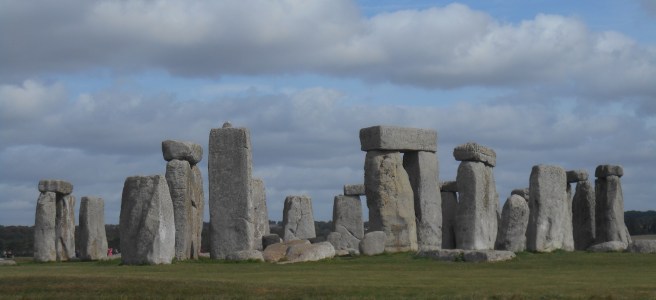
The Druids had been a little uncertain, or felt no need to put a date on creation, so after consultation with experts from such Radio Four programmes as ‘The Infinite Monkey Cage’ and ‘More or Less’, a Cabinet meeting was held. It was decided the easiest way to work out the year the Druid calendar started was to round it up to the nearest thousand years. While BBC Verify were still checking out the facts, the Prime Minister had already announced that Westminster would be moving to Stonehenge. The Chancellor confirmed this would save a great deal of taxpayers’ money as Stonehenge needed less repairs than the Houses Of Parliament.
A nice day for visiting. Whose home are we going to?
THE LORD PRESERVE THY GOING OUT AND THY COMING IN
A nice bright house and cosy
Wonder if we’ll be invited for dinner?
Let’s explore
We meet the family
The previous Lord Montagu, founder of the Beaulieu Motor Museum, had a very colourful life. The current Lord Montague leaves interesting notes around Beaulieu Palace.
My father came home one day, very excited with a new invention, Velcro! He worked in plastics, but I’m not sure if the plastic factory where he was manager actually produced it. Looking up Velcro I see it was commercially available in the fifties, but to us in the late 1960s it was a novelty. He kept trying to find ways of using Velcro around the house.
More exciting inventions lay ahead of course, Dad once said that he would like to live to a hundred to see what would be invented. Sadly he only got past seventy. August 2025 he would have been one hundred and I have thought for a while it would be interesting to think of how many new inventions he has missed. This is rather an overwhelming task; there is a difference between something being invented and most people being aware or getting to use it.
2025 also marks a quarter of a century gone by, whether 25 is the last year of the quarter or the first year of the next, doesn’t really matter. I can remember when, thanks to George Orwell, 1984 was The Future, then 2001 A Space Odyssey confirmed the start of a new century as the obvious FUTURE when we would be living in plastic bubbles on the moon.
All that seemed to happen at the turn of the century was the panic that all the computers would get confused and everything would be switched off. At work we were seriously considering whether we should all go home and fill the garage with tins of food and flagons of water. Chez Gogerty we didn’t in the end and luckily all was well.
How has life changed in those twenty five years? Before the millennium I naively thought the twenty first century would be one of peace after all the violence of the twentieth, how wrong could I be. We can definitely conclude that humans have tried everything to make the world a better place, following faith, education, new political ideas, better medical treatments, scientific improvements. Alas new inventions are hijacked by criminals and war mongers as well as doctors and scientists hoping to improve lives.
So what in your life is vastly different from 2001 AD or CE .
I seem to recall saying at the end of last century that had I known home computers were going to be invented, I would not have got married let alone had children! I cannot recall why. Probably children arguing over whose turn it was to use the one computer and me saying everyone was spending too much time on that ghastly second hand machine with green writing, my memories are hazy. I do know that fathers were saying they should get a computer for the children, when they actually wanted one for themselves.
Now of course I can’t imagine not having a computer and iPad and panic if I forget my phone, even if I am just popping to the greengrocers.
What has changed in your life over the past twenty five years?




 Times and Tides of a Beachwriter