
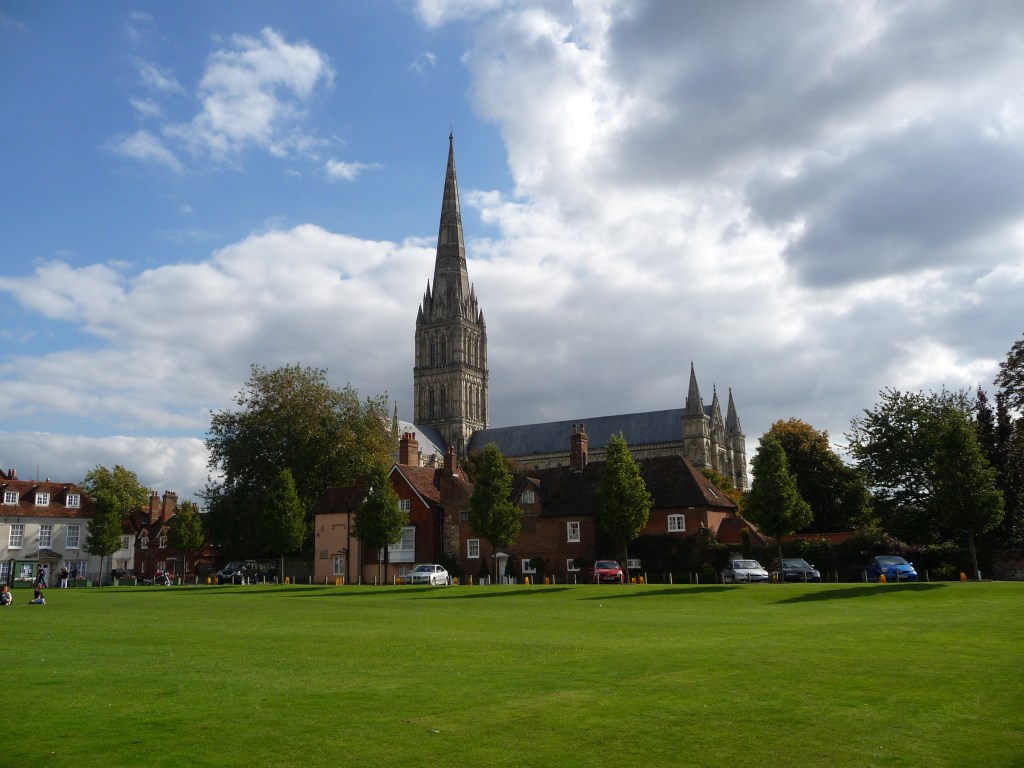
The Reverend John Dee had always dreamt of Salisbury Cathedral, striding across the green gazing up at the tall spire, pointing to a heaven he didn’t believe in. It was the beautiful setting that appealed to the vicar; he pictured himself as a new deacon cycling by the water meadows, smiling at other cyclists and walkers, enjoying a drink in the pub by the mill. Dining in the evening with fellow clergy interested in history and nature.
Instead, John Dee found himself in a bleak town in sole charge of Saint Justin’s parish church, a church under threat of being deconsecrated, its few remaining parishioners left to the ministrations of visiting lay clergy. But St. Justin’s was also an historic Saxon church which experts, who didn’t actually attend church themselves, felt should remain dedicated to Christian worship. No other clergy wanted to take it on and no other parish wanted John Dee. He only agreed because of his love of history and nature. The church was surrounded by a large graveyard, accidentally rewilded. Next to the grounds of the church was a nature reserve of a few acres, fields and a copse protected for eternity from the encroaching ugly town by a trust endowed by a local of great standing centuries ago.
As John Dee stood leaning on the churchyard wall in the autumn sunshine, listening to the robin’s sweet song, he took some pleasure in his new little kingdom. But there was a difficult side to his new calling, the bishop expected him to revive the congregation and inspire locals to attend services and put money in the collection. He could rustle up a few stirring sermons on the internet, but how to get locals there in the first place, especially as he didn’t particularly like people.
He decided to turn his attention to the letter that had arrived that day. A team from the university in a neighbouring more interesting town, had been given permission to do a small test archaeological dig just the other side of the wall. They were hoping to find traces of a Roman Villa. The robin would be happy with a supply of juicy worms, but John did not want his peaceful sanctuary disturbed. Then he recalled a bizarre conversation with his oldest parishioner.
She told him this very field was the resting place of evil, where the wicked were buried in unconsecrated ground after being executed or struck down with nasty illnesses they deserved. John had been amused and tried to suggest modern thinking would no doubt consider they had been harshly treated for stealing a loaf of bread or having mental health issues. But the old lady had no truck with modern thinking and warned him that field must not be disturbed for fear of releasing evil.

John Dee was struck with a new idea. Halloween would soon be upon them and he would somehow spread rumours that the dig might come upon skeletons not Roman tiled floors. After all, it was traditional for those not worthy to enter the Kingdom of God to be buried on the other side of the wall. Before interest could wane he would hold a service on All Hallows’ Eve to pardon those poor souls and welcome them back into the family of the church; an excellent alternative to all the commercial rubbish and greed at Halloween. The bishop should approve.



 Times and Tides of a Beachwriter