Lottie almost faltered under the withering gaze of her agent Felicity Buchannon, but it was too late to change her mind.
‘Felicity, it was you who said I must take a break after losing Callum.’
‘A break, not permanent exile.’
‘I’m hardly leaving the country, it’s a lovely little place where I can get away from everything.’
Charlotte stopped typing. She had set herself to write the opening page of her Lottie Lincoln novel, now all she had to do was decide in which order to put all the chapters she had written so far. She could well imagine the reactions of Felicity and Lottie’s friends. She recalled her boss’s reaction when she had handed in her notice.
‘Where on earth is Hambourne?’
Once her boss realised Hambourne was not within Greater London, Royal Berkshire or Surrey, she lost interest and obviously decided Charlotte was a lost cause and did not try to dissuade her. After that, the longer Charlotte left it to explain to people she was moving away, the harder it became to tell anyone, let alone mention David’s situation. Her best friend from school days had recently departed to live in New Zealand with her new partner, so there was no need to reveal her change of address, thank heaven for emails.
So here she was in Hambourne writing, which was more than Lottie was doing as Charlotte had given her writer’s block. She started typing again.
When Lottie’s mobile rang and she saw Felicity’s name, she was tempted not to answer, but Felicity had been a good friend to her, she deserved better.
‘Lottie, how are you, we’re worried about you.’
‘I needed time to think.’
‘Did you ring that number I gave you for the grief counsellor?’
‘I don’t need counselling, a walk by the sea helps.’
‘So how’s your novel coming along?’
Novel? She hadn’t even unpacked the few chapters she had written, so much had happened to her, Puddleminster was not the quiet place she had expected. After Callum’s tragic death some people had advised her to have a complete break from writing and work, while others had insisted she must keep busy, keep writing.
‘Are you still there Lottie? I don’t want to push you, but we have got a publishing deadline to meet.’
‘I can’t do it Fliss, maybe I’ve got writers’ block. If I do write it will be something dark, this is such a strange place it’s given me new ideas.’
‘Darling, we don’t do DARK, what on earth would all your readers say, they want romance and escapism.’
‘I’ll write under a pen name then, look I have to go, I have an appointment…’
Five minutes later Lottie was on the beach and happy to bump into Geoff the pathologist out with his friend’s dog.
‘Hello Lottie, my wife was just talking about you, wondering when your next book was coming out.’
‘Oh dear, my agent just rang with the same question. I think I’ve got writer’s block. Maybe I should write something different, about a pathologist or a forensic scientist, what is the difference?’
‘For a start hasn’t that already been done and my wife certainly doesn’t want to read about bodies, being married to me. Mind you, I have got an interesting case on the slab, elderly lady, quiet life, living alone with her pot plants, not an enemy in the world and she has been poisoned with a very unusual substance, the sort of thing arrows in the South American jungle were tipped with…’
Lottie wasn’t sure if there was a code of conduct among pathologists and if he should be telling her this, but her interest was piqued.
‘Ohh, was it a local lady?’
‘No, no, way the other side of town. I would not be telling you if it was local.’
‘Are you sure she was murdered? Would the plants still be in her house, did she have exotic plants?’
‘No idea, why?’
‘My aunt had plants, house like a jungle my father used to say. Anyway, she liked her tea brewed properly with freshly boiled water, so she would empty her kettle before using it, distilled water for her beloved plants. If your lady had an exotic plant and the kettle spout touched highly poisonous leaves, is it possible the poison might end up in her tea….’
Geoff laughed then looked thoughtful. ‘I am not an expert on tropical plants, but it would be amusing if an episode of Gardener’s World was devoted to plants that killed their owners.’
‘Oh yes, those viewers’ homes where they can hardly move for plants.’
‘…and you were right about the headless body in the park…’
Charlotte passed for a moment, what fun, this could be a further step to Lottie becoming an amateur detective.
Two weeks had passed with Lottie writing not a single word, while frantic emails from Felicity became more and more frequent. She had joined a walking group and a widow’s support group, where she was of great interest because of her novels and the unusual circumstances of Callum’s death. But she had to face the fact she had no idea in what direction her life should go.
As she walked on the beach one morning she looked up to see Geoff striding purposefully towards her waving.
‘You were right, house full of exotic plants. More than one type highly toxic. A gradual build up of poison in her body, it would not have killed you to have one cup of tea with her, but… ‘
Charlotte closed her lap top, no need to decide tonight how poor Callum had died or what might happen next in Puddleminster-on-Sea.
Gabriella tied back her springy blond hair and trotted down the stairs.
‘Gabby, surely you are not going out dressed like that, you’ll freeze.’
‘Muuum, this is my jogging outfit, I’ll soon warm up running.’
‘Do be careful and don’t go into the woods.’
‘But the woods will be perfect on a morning like this, sunny and frosty.’
‘Not now they have started that new scheme.’
‘Don’t believe everything you read on Facebook.’
‘… and I do wish you would have breakfast before going out on a cold morning.’
It was a beautiful morning as Gabby trotted off down the road and took the footpath into the National Trust woodland. They were so lucky to live near a forest. She waved to a couple of joggers she knew by sight as they passed by.
‘Lovely morning, happy new year.’
‘Same to you…’
Further along Gabby glanced at her Fit Bit, she was doing a good time, maybe she would go in for the local half marathon and then who knew what next. She took the right fork for the first time to increase the length of her circuit. It was a pretty path but more challenging with an incline and rougher going. Gabby began to wonder how much further this was than her normal route. Then she began to wonder when she would come across a familiar path. After a while she began to feel hungry and a bit light headed. Perhaps she should have had a yoghurt or banana before setting out. Still, she must keep going and not lose her rhythm. Her aim now was not preparing for a marathon but to get home and persuade her mother to cook her a nice breakfast.
In the distance she could see a shape, a cottage, a run down cottage? Strange, nobody was supposed to live in these woods, that’s why they were perfect for the rewilding project. Probably abandoned decades ago, but why could she detect the delightful scent of wood smoke? As Gabby drew closer she could see smoke gently spiralling up in the cold air. Must be some poor homeless person, sensible to make a cosy home for himself, better than sleeping on the pavement.
The path led close by the ramshackle cottage and she felt like an intruder. Should she rush past or take a diversion? No she must stick to the path, the trees were really thick here and she didn’t want to get further lost than she was already. As she ran round to the other side, she noticed the door was open and there was the unmistakeable smell of porridge. She realised just how hungry she was now and wished she was back home eating porridge and watching breakfast TV. But despite her misgivings she could not resist having a peep inside.
To her surprise it looked clean and homely and on a wooden table stood three bowls of steaming porridge. There was no sign of the occupants. Now she was so hungry she thought if she took a spoonful out of each bowl, nobody would notice. It tasted divine, the fresh cold morning air had given her an appetite.
The cottage was silent, she took a few more spoonfuls, just enough to boost her energy so she could get away before the mystery occupants returned. But as she took her phone off her belt, thinking of looking at Google maps to get her location, she had an idea. She must take a few quick snaps to show her friends and put on Instagram and it would be a shame not to take a quick shot upstairs.
The old worn wooden steps creaked as she crept up and came straight out into a single room with a sloping roof, just big enough for three beds. With their clean fresh duvets it all looked unlikely to be a hidey hole for a homeless person or someone on the run from the police. As Gabby stared she realised how cold she had become since she stopped running. It would be a sensible idea to climb under the duvet and warm her limbs up for a few minutes, as long as she did not fall asleep.
The next thing she knew she was startled by a noise, a lot of noises, loud men’s voices in a strange language. All she could do was hide under the duvet and hope they would sit down and eat their porridge and not come upstairs. Her hands were shaking as she tried to look at her phone, but who should she call?
At that moment she felt a heavy hand press down on her shoulder. She let out a muffled scream and somehow managed to scramble out of the bed and stumble down the stairs. Her nimbleness getting out of the door was her only advantage against the two very large figures downstairs.
At the Reursinement headquarters several people were observing all the monitors.
‘Any sign of them?’
‘No, but that’s only to be expected, we can’t have CCTV all over the forest.’
‘What about the tracking devices?’
‘They stopped working days ago.’
‘So are you saying we have no idea where they are?’
‘Yes, no, surely the idea of rewilding is just that, letting them get on with their own lives, looking after their young without us intruding and they should be hibernating by now.’
‘Hopefully, but do rescued circus bears actually know how to hibernate?’
This is the full version of last week’s tiny tale which accidentally turned into a mini serial.
Flora and Jim loved their new riverside cottage and could not believe their luck getting such an ideal spot in their price range. Even the name was quaint, Little Nile. Jim joked that it was just as well it had not been named Little Amazon.
‘People would think we were living in a warehouse!’
The little river that trickled past their tiny garden was actually called ‘The Seven’, not to be confused with The Severn, the longest river in Great Britain.
As they sat in the cosy sitting room enjoying a leisurely Sunday morning Flora sighed with delight
‘…and we did not even have to do any work on it. All newly decorated.’
‘Hmm, I don’t think I could live with that dreadful wallpaper for long’ replied Jim.
‘But it would be a waste to rip it off.’
‘What’s that mark on the wall?’
‘Just part of the pattern.’
‘No, it’s some sort of stain, bigger than yesterday. Perhaps there is a body hidden behind there, it is a very old cottage.’
‘You’re giving me the creeps.’
‘There is a corner peeling off by the ceiling, I could just have a peep…’
To their surprise the paper fell off in one strip revealing writing on the wall.
‘Oh how sweet, a height chart, we could keep that as a feature’ trilled Flora. ‘Five feet ten inches, 2024, some lanky teenager, we don’t know who was last to live here do we, the estate agent didn’t say.’
‘2022, five foot one inch, he must have had a growth spurt.’
‘2019, four foot six inches, a child back then.’
‘2010, four foot 2 inches, must have been very young then, how tall is your nephew?’
‘Doesn’t make sense, in nine years they must have grown more than that, unless that was a different child, pity they did not write their names. We must write their names when we do that with ours.’
‘Our what?’
‘Babies of course.’
‘1995 must have been a baby, two foot one inch, 1980 one foot six inches, must have been the seven dwarves living here, of course, hence the name of the river.’
‘Look down the bottom, can hardly read the writing, 1895, one foot one inch, The Great Flood. What’s that all about, look it up.’
‘I can’t find any great flood for that year and can’t imagine our tiny river flooding, what a hoot.’
‘We certainly would not want a foot of water in here.’
‘No chance after the hot dry summer we’ve had.’
The next day rain lashed the windows of their little cottage, but Flora and Jim did not mind.
‘It’s lovely being all cosy inside. What weather does your phone say Jim?’
‘Still no reception, but I don’t need to look at my phone to see what the weather is.’
‘No weather forecast, but it is rather liberating not having a television. Dad says we can have his old laptop to stream stuff.’
‘Once we’re on the internet. In the meantime we can go exploring and find a spot where we can get reception, just in case of emergency.’
‘I can’t imagine us having any emergencies, except not being able to order pizza!’
‘Come on, walking in the rain will be fun and when we get back I’ll have a go at lighting the fire.’
‘Great idea, but won’t the firewood have got wet in the rain?’
‘I’ll just pull logs out from the bottom of the pile, like Jenga.’
‘Looks like a real river now Flora, don’t get too near the edge, it must be at least two foot deep, ha ha. Let’s see how far along the river this little path goes.’
At Upper Seven Valley police station the late shift were coming on duty.
‘There is an amber alert coming into force at 15.00.’
‘Not like last year surely Sir, not after the dry summer we’ve had.’
‘We’re not taking any chances after what happened last year.’
‘At least the survivors moved out of that cottage down in the valley, can’t imagine they would have managed to sell it.’
‘Well it’s still standing, we hiked that way in the summer.’
‘Why are you playing with your phone Evans?’
‘Just looking it up on Rightmove Sir… Believe it or not it was bought last month, knock down price.’
‘Let’s hope they have been following the weather reports then. Right, we have got other problems to sort out in town, so let’s hope this rain eases off.’
Flora and Jim had reached a high point in the valley and looked down to see just a glimpse of the red roof of their cottage. The rain was even harder, if that was possible. They could hardly see the screens of their phones to check if they had any signal or any text messages.
‘It’s certainly exhilarating up here’ said Jim.
‘And so quiet, we haven’t seen a soul’ Flora struggled to make her voice heard above the wind and rain.
‘No one else is mad enough to come out in this rain. I think we’ll have to try our phones tomorrow when the weather has cleared. Best thing we can do is go back and get that fire lit.’
‘Whaaat, I can’t hear you.’
Jim signed to Flora to head back down the narrow steep track, clinging to her as he nearly slipped. The foot path had turned into a muddy stream, but they were still in good spirits enjoying their adventure. The sound of rushing water guided them back to the river, though it was hard to recognise how far they were from their cottage as they were on a part of the river that had no path beside it. Talking was impossible with the wind and rushing water and they could not see the river properly with the rain driving in their faces. The white shape of the cottage suddenly loomed out of the gloom, nearer to the river than they recalled.
‘Have you got the key Flora?’ Jim yelled.
‘No you put it in your anorak pocket.’
Flora paddled through puddles to grab at the front door in the hope they had forgotten to lock it, then remembered putting the key in her back pack. She could hardly undo the zip with her cold wet hands.
‘Unlock the door while I start fetching the wood.’
Jim slithered round the corner to where logs were stacked against the wall and was disconcerted to see water pouring down the hillside and swirling round the bottom of the wood pile. He thought of the cosy pub in the nearest town where they had enjoyed a hearty meal after first viewing the cottage. The best thing they could do was walk along the river the other way and take the gravel track that led up to the road and the bus stop. Was it quarter to or quarter past the hour that the hourly bus came along? Well they could always hitch hike.
The rain showed no sign of easing up and they were glad to get to the road.
‘Oh that’s funny, wonder why they have barriers across the road?
‘Jim, it will be getting dark soon.’
‘When a car comes along it will have to stop at the barrier and we can ask for a lift.’
At Upper Seven Valley police station the late shift were coordinating with the fire brigade and the Coastguard and RAF. It was turning out to be an even worse evening that with last year’s flood.
‘As far as we know most locals heeded the red weather warnings, they are checking names at the community centre now. We can’t account for any visitors staying or hiking in the area. The coastguard helicopter was only flying for fifteen minutes before it was grounded at 17.00 hours due to dangerous flying conditions. With the poor visibility they could not be certain there were no persons clinging to roofs or needing rescuing. We got the road blocks up early, so there should be no vehicles in the flood area.’
Clarissa was having a wonderful evening. At last, as a volunteer with Seven Valley Community Support, she was getting to do something exciting and useful. With power lines down, the community centre was lit with candles and battery torches. Computers were down and all they had were clipboards and pen and paper. Clarissa was in charge of the list, or registering unhoused arrivals as she put it. Her excitement grew when a young policeman pushed his way through the throng.
‘Has anybody been reported missing yet?’
‘No, all accounted for.’
‘Not so apparently, the station got a frantic call from a mother who said she had not heard from her daughter and she is not answering her mobile. She just moved into that cottage by the river, umm Little Nile?’
‘Oh goodness, surely no one is living there after what happened last year? The name?’
‘Whose name?’
‘The daughter.’
‘Oh yes, of course. Flora Dora.’
‘Are you sure? Obviously not from around here then. Anyone else living there?’
‘Her boyfriend, Jim James.’
Clarissa clapped her hands to gain attention, unsuccessfully. The police officer moved in front of her, glad of the chance to assert his authority and put on his crowd control voice.
‘Urgent, we need to know if we have a Flora Dora and a Jim James here.’
There was no response.
‘They just moved into Little Nile cottage.
There was a collective gasp and urgent mutterings.
‘They’ll be gonners by now.’
‘Yup, cottage submerged completely.’
‘Even if they got out the river will have taken them.’
The policeman moved among them trying to get any useful information.
‘They would have heard the alerts and the red warnings.’
‘Not unless they have registered for Seven Flood Alert or got the app.’
‘Slim chance they might have made it up to the road, but that’s blocked off.’
‘The army,’ called Clarissa ‘my nephew’s out there on a training exercise with the Ukrainians.’
‘Training them?’
‘No, the Ukrainians are training our lot, they can drive tanks in the most awful conditions.’
Flora and Jim had started walking along the road, best case scenario they would meet a vehicle. Worst case scenario they would have to keep walking till they came to a house or the town. Neither of them mentioned the actual Worst Case Scneario, not that they could hear a word they said to each other, nor could they read each other’s expressions. All they could hear or see was the relentless rain. Perhaps it was fortunate they had to keep their thoughts to themselves, cosy the memories of their parents’ boring little suburban houses…
It was so dark now, no street lights, not even any distant lights. There was no distance so they did not see the solid darkness looming out of the general darkness and barely heard the shouts. When they were blinded by a bright beam they had no chance of seeing anything.
‘Are you lost?’
‘Of course they’re lost corporal, not out for an evening stroll and get that torch out of their eyes.’
‘Soldiers’ stammered Flora through chartering teeth ‘are we on the firing range?’
‘No, but you must have a death wish, didn’t you heed the warnings. Names?’
They tried to say their names, but their frozen mouths did not seem to work. The soldiers got close and yelled ‘Are you Flora Dora and Jim James?’
They nodded vigorously.
‘The whole of the British army is out looking for you and half the Ukrainian army to boot.’
At the community centre Clarissa took charge of the new arrivals, she was not going to be upstaged.
‘Priority registration, have they got any rooms left at Premiere Inn, how’s the hot food coming along, we need two survivor kits over here right now, one men’s one ladies’.
She felt just like the United Nations or Medecine Sans Frontieres, though the survivor packs merely contained donated second hand clothes.
Flora and Jim soon became celebrities.
‘A good way to get to know the locals’ laughed Flora, almost restored to her normal self with hot chocolate.
‘And a free night at Premiere Inn hopefully’ added Jim.
‘Well your cottage will still be there, it’s withstood centuries of floods, though they are getting worse.’
‘Yup, it should be dried out by next August‘ added another local.
Clarissa was having a wonderful evening. At last, as a volunteer with Seven Valley Community Support, she was getting to do something exciting and useful. With power lines down, the community centre was lit with candles and battery torches. Computers were down and all they had were clipboards and pen and paper. Clarissa was in charge of the list, or registering unhoused arrivals as she put it. Her excitement grew when a young policeman pushed his way through the throng.
‘Has anybody been reported missing yet?’
‘No, all accounted for.’
‘Not so apparently, the station got a frantic call from a mother who said she had not heard from her daughter and she is not answering her mobile. She just moved into that cottage by the river, umm Little Nile?’
‘Oh goodness, surely no one is living there after what happened last year? The name?’
‘Whose name?’
‘The daughter.’
‘Oh yes, of course. Flora Dora.’
‘Are you sure? Obviously not from around here then. Anyone else living there?’
‘Her boyfriend, Jim James.’
Clarissa clapped her hands to gain attention, unsuccessfully. The police officer moved in front of her, glad of the chance to assert his authority and put on his crowd control voice.
‘Urgent, we need to know if we have a Flora Dora and a Jim James here.’
There was no response.
‘They just moved into Little Nile cottage.’
There was a collective gasp and urgent mutterings.
‘They’ll be gonners by now.’
‘Yup, cottage submerged completely.’
‘Even if they got out the river will have taken them.’
The policeman moved among them trying to get any useful information.
‘They would have heard the alerts and the red warnings.’
‘Not unless they have registered for Seven Flood Alert or got the app.’
‘Slim chance they might have made it up to the road, but that’s blocked off.’
‘The army,’ called Clarissa ‘my nephew’s out there on a training exercise with the Ukrainians.’
‘Training them?’
‘No, the Ukrainians are training our lot, they can drive tanks in the most awful conditions.’
Flora and Jim had started walking along the road, best case scenario they would meet a vehicle. Worst case scenario they would have to keep walking till they came to a house or the town. Neither of them mentioned the actual Worst Case Scenario, not that they could hear a word they said to each other, nor could they read each other’s expressions. All they could hear or see was the relentless rain. Perhaps it was fortunate they had to keep their thoughts to themselves, cosy memories of their parents’ boring little suburban houses…
It was so dark now, no street lights, not even any distant lights. There was no distance so they did not see the solid darkness looming out of the general darkness and barely heard the shouts. When they were blinded by a bright beam they had no chance of seeing anything.
‘Are you lost?’
‘Of course they’re lost corporal, not out for an evening stroll and get that torch out of their eyes.’
‘Soldiers’ stammered Flora through chartering teeth ‘are we on the firing range?’
‘No, but you must have a death wish, didn’t you heed the warnings? Names?’
They tried to say their names, but their frozen mouths did not seem to work. The soldiers got close and yelled ‘Are you Flora Dora and Jim James?’
They nodded vigorously.
‘The whole of the British army is out looking for you and half the Ukrainian army to boot.’
At the community centre Clarissa took charge of the new arrivals, she was not going to be upstaged.
‘Priority registration, have they got any rooms left at Premiere Inn, how’s the hot food coming along, we need two survivor kits over here right now, one men’s one ladie’s.’
She felt just like the United Nations or Medecine Sans Frontieres, though the survivor packs merely contained donated second hand clothes.
Flora and Jim soon became celebrities.
‘A good way to get to know the locals’ laughed Flora, almost restored to her normal self with hot chocolate.
‘And a free night at Premiere Inn hopefully’ added Jim.
‘Well your cottage will still be there, it’s withstood centuries of floods, though they are getting worse.’
‘Yup, it should be dried out by next August‘ added another local.
Flora and Jim loved their new riverside cottage and could not believe their luck getting such an ideal spot in their price range. Even the name was quaint, Little Nile. Jim joked that it was just as well it had not been named Little Amazon.
‘People would think we were living in a warehouse!’
The little river that trickled past their tiny garden was actually called ‘The Seven’, not to be confused with The Severn, the longest river in Great Britain.
As they sat in the cosy sitting room enjoying a leisurely Sunday morning Flora sighed with delight
‘…and we did not even have to do any work on it. All newly decorated.’
‘Hmm, I don’t think I could live with that dreadful wallpaper for long’ replied Jim.
‘But it would be a waste to rip it off.’
‘What’s that mark on the wall?’
‘Just part of the pattern.’
‘No, it’s some sort of stain, bigger than yesterday. Perhaps there is a body hidden behind there, it is a very old cottage.’
‘You’re giving me the creeps.’
‘There is a corner peeling off by the ceiling, I could just have a peep…’
To their surprise the paper fell off in one strip revealing writing on the wall.
‘Oh how sweet, a height chart, we could keep that as a feature’ trilled Flora. ‘Five feet ten inches, 2024, some lanky teenager, we don’t know who was last to live here do we, the estate agent didn’t say.’
‘2022, five foot one inch, he must have had a growth spurt.’
‘2019, four foot six inches, a child back then.’
‘2010, four foot 2 inches, must have been very young then, how tall is your nephew?’
‘Doesn’t make sense, in nine years they must have grown more than that, unless that was a different child, pity they did not write their names. We must write their names when we do that with ours.’
‘Our what?’
‘Babies of course.’
‘1995 must have been a baby, two foot one inch, 1980 one foot six inches, must have been the seven dwarves living here, of course, hence the name of the river.’
‘Look down the bottom, can hardly read the writing, 1895, one foot one inch, The Great Flood. What’s that all about, look it up.’
‘I can’t find any great flood for that year and can’t imagine our tiny river flooding, what a hoot.’
‘We certainly would not want a foot of water in here.’
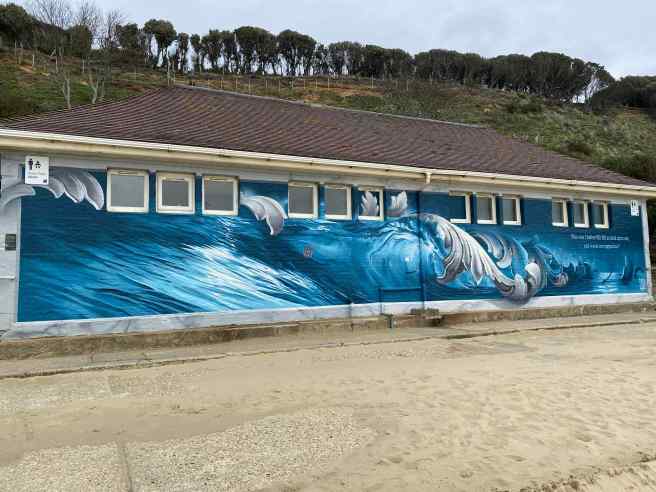
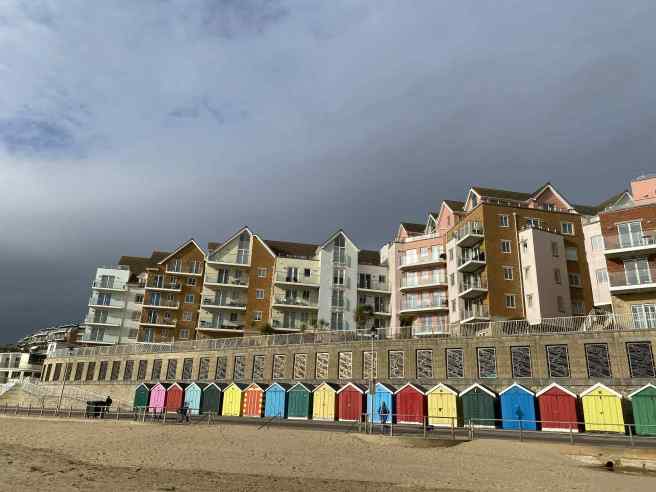
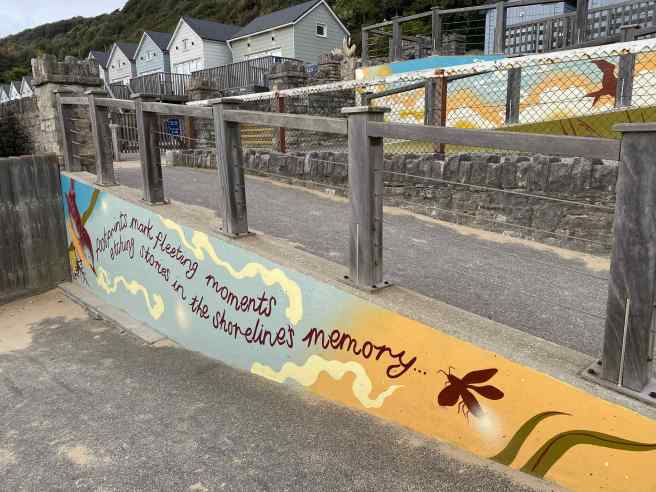
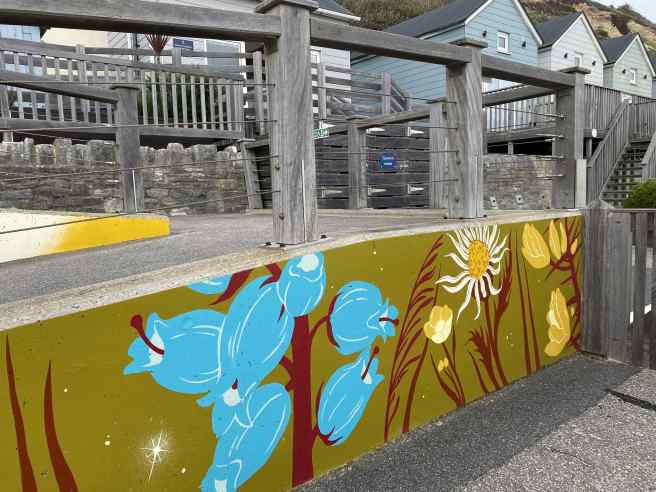
I have been away from the Blogosphere and dipping into real life. Here are some surreal pictures which should hopefully give you no idea where I have been and what new things I may have discovered.Let us know if you can guess any clues.
I was idly scrolling through Facebook on my phone when I was surprised to see a picture of myself. I never post pictures of myself on holiday, well I never go on holiday, nor do I socialise enough to appear in other people’s photos. I peered closer. It was definitely me, in that fleece I got from Mountain Warehouse, but I had never been to the Royal Albert Hall. There I was standing outside the famous round building in summer sunshine. Had I been photoshopped in?
I dashed upstairs and put my desk top computer on, I needed to look at this properly, but knowing Facebook that post could disappear any second. Even as I climbed the stairs my phone pinged with a WhatsAp message.
Hi Claire, have a good time, which Prom are you going to?
I wasn’t the only person to have seen my picture, the picture that could not be me. I would love to have got down to London and gone to The Proms, but my budget did not stretch to a city break.
I don’t take much interest in Facebook, occasionally I put a link to my blog or my website when I have a new book published. My followers are a select bunch, but it’s surprising how many readers love my series about Bunny Bunting, a private detective who solves crimes in the cut throat world of pedigree rabbit shows.
There I was again looking up at the Prince Albert Memorial, carrying my jade fleece. I had on my blue polo shirt from Edinburgh Woollen Mill. Did I have a long lost twin? Now I was sitting and looking properly I read what the post said.
Have you seen Claire? Her family are desperately worried. She went on a day trip to London with work friends, but became separated. Claire is believed to be vulnerable and does not know her way around London.
Thanks a lot, not only has someone stolen my identity, now they are calling me vulnerable?
Claire Smith is forty three years old, five foot four inches and well built.
That is me exactly, though what is well built supposed to mean? At least she has not got the same surname.
We know it’s a long shot, but if you are a Londoner, especially a music lover, perhaps you may have seen Claire at Thursday evening’s prom. She is believed to have struggled with depression lately after the end of a relationship.
That is certainly not me, unless Claire Smith has just lost her pet rabbit. Give me a Flemish Giant any day over a man… there were comments already…
Is this Claire from Carlisle, I follow her on Facebook.
Oh no, that is me, I live in Carlisle, so wonder where this other Claire comes from? Please answer and tell us Claire Smith comes from Saint Ives…shall I add a comment…
No, I am Claire Lapin from Carlisle.
Hang on, that post has disappeared.
A hospital room, now what has happened? That looks just like the picture my brother took of me after I had my tonsils out.
Claire Darling we all love you and beg you to get in touch, you are due for dialysis tomorrow at Glasgow Royal Infirmary, but if you cannot get back here in time, please call at any hospital Casualty Department.
Oh dear it gets worse and worse…
My phone rang, my brother.
‘Sis, turn on the evening news, it’s you, are you in London, lost?
‘No Sam, of course I am not, nor am I on Facebook, someone has stolen my identity.’
He laughed ‘You have got a Doppleganger!’
‘A what?’
‘Your exact double, doesn’t even have to be a relative, just someone who looks exactly like you, everyone is supposed to have a Doppleganger somewhere in the world. But I know how you can find out if she is a relative, they are calling for kidney donors, searching for a good match before its’s too late, someone to give her hope…’
‘How can you call for dead people?’
‘No, live donors, you have two kidneys. I’ve taken the number, I’ll text it over to you.’
‘But Sam, I don’t like hospitals…’
I called the number, it was one way to find out who this Claire was. The kidney business caught people’s interest and a chap spotted her at sunset on Waterloo Bridge, staring into the Thames. He called out to her, rather prematurely ‘Hey, they found you a kidney.’
Claire Smith had a kidney transplant thanks to me. No it wasn’t my kidney. We are not related at all, but I somehow found myself in the swapping chain. My kidney went to an anonymous patient whose relative was a good match for Claire. I wasn’t in the news as I had not actually given her my kidney and I certainly did not post pictures of myself in hospital on Facebook.
Five years ago there was a dark cloud hanging over us.
In 2020 life changed in ways that affected the whole world, how each country directed it citizens to fend off a world wide pandemic varied greatly. In a town in England in March 2020, Cassie is looking forward to her first day working from home. But life for Cassie and other locals soon becomes strange as they try to obey and adapt to the continually changing rules issued by the government, often with amusing results.
In 2020 life changed in ways that affected the whole world at the same time. Confined to our homes many of us were glad to have the internet; Facetiming family, working from home and for entertainment. Writers could still write and bloggers were glad to link up with each other and not feel isolated. I enjoyed writing blogs, especially short fiction about ordinary folk, inspired by what was going on around me or related to me by others. Most of my tiny tales featured the same few families and neighbours in an English town that perhaps you know. Looking back at these stories, all written in real time, I was amused at the strange regularly changing rules we had to adapt to. The stories naturally formed themselves into a novella. I have not altered them, but I could not resist finding out what has happened to the main characters since. Most of us could not have predicted the upheaval of this current decade, but some people have taken the opportunity of such disruption to change their lives.
The second half of the book is an eclectic collection of stand alone tales, also written in real time. We may have avoided the future portrayed in the final story, or have we?
In March 2025 we were remembering the official start of Lockdown and for the first time I looked back at what I had written in my blogs.
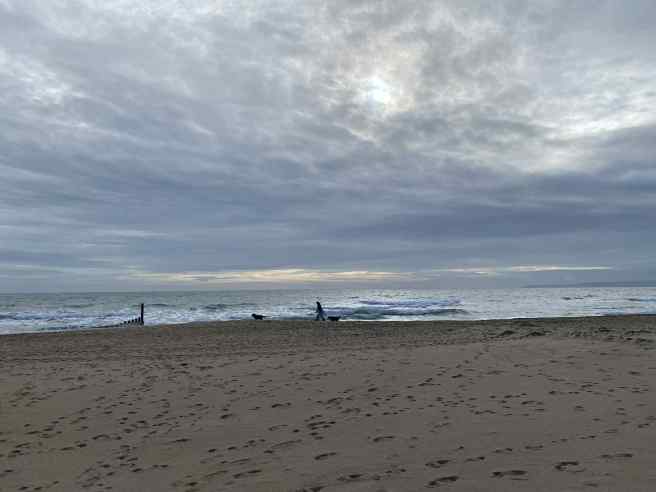
These were strange times with unusual sights to photograph on our permitted exercise walks. Cruise ships moored out in Poole Bay.
Strange happenings, but maybe not as strange as the pandemonium at Tidalscribe Head Office, creating a book and hopefully remembering how I tackled Kindle Direct Publishing for Tidalscribe Tales back in February.Three things are needed for an eBook or a paperback; a title, a manuscript and a cover.
The Covid Chronicles was my working title, but that had been snapped up long ago and there are plenty of books with pandemic in the title, so how about a word that means pandemonium in a pandemic? PANDEMONICA – All I have to do is remember what I called it and how to spellit.
I could not find my word document for the very first story, no problem, copy and paste from my blog – Do Not Try this at home.
I remembered from last time that if you use your own photographs you need portrait shape, not landscape, all of my Covid pictures were landscape. Hmm, how about a desolate promenade at sunset, you might just spot a lonely jogger… it popped onto the Kindle cover no problem. If you like doing the technical side of photography you will know about strange numbers and letters telling you something or other about your photo, or you can just try a photo and KDP will either accept it or reject it. The cover of the paperback evolved to look nothing like my original idea, the sunset was rejected, but how about a desolate beach in sepia tones instead?
An extract from Chapter Two
After two years she now had the house just as she wanted, but that didn’t alter the fact that her independence had been swept from under her feet, transformed overnight by Boris Johnson from a fighting fit recycled teenager into a vulnerable over seventy. As if that wasn’t bad enough, her son had moved back in ‘for a week’ after his divorce, just in time to find himself locked in, locked down, or whatever they called it. Left to her own devices she would have sneaked out, but James was on guard, no doubt on instructions from his sister.
Pop through the ether to have a look at Pandemonica

























 Times and Tides of a Beachwriter