Albertopolis

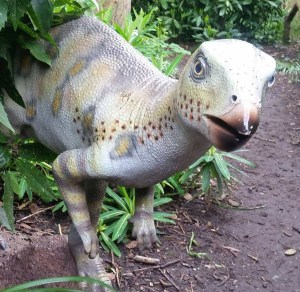
Everyone remembers the first time they see a dinosaur. For many of us it will have been on our first visit to the Natural History Museum in London. As you walked in the Great Hall there he was staring at you, the huge skeleton of Diplodocus. We were on a junior school outing, squashed cheese and tomato sandwiches in Kensington Gardens, then round the museum with our activity sheets. It wasn’t until I visited as an adult that I was disappointed to discover he was only a plaster cast of the original, uncovered in the plains of fossil-rich Wyoming.

One memorable visit was when two friends and I took our seven children, including three toddlers in buggies, on the tube train. On the way home in rush hour the poor passengers had to contend with four large plastic diplodocuses, their dangerously long tails waving in their faces. Diplodocus is now touring round the country and you can see a real Blue Whale skeleton instead.
https://www.theguardian.com/science/2017/jan/01/dippy-diplodocus-london-tour-replica-dinosaur-whale-natural-history-museum

7

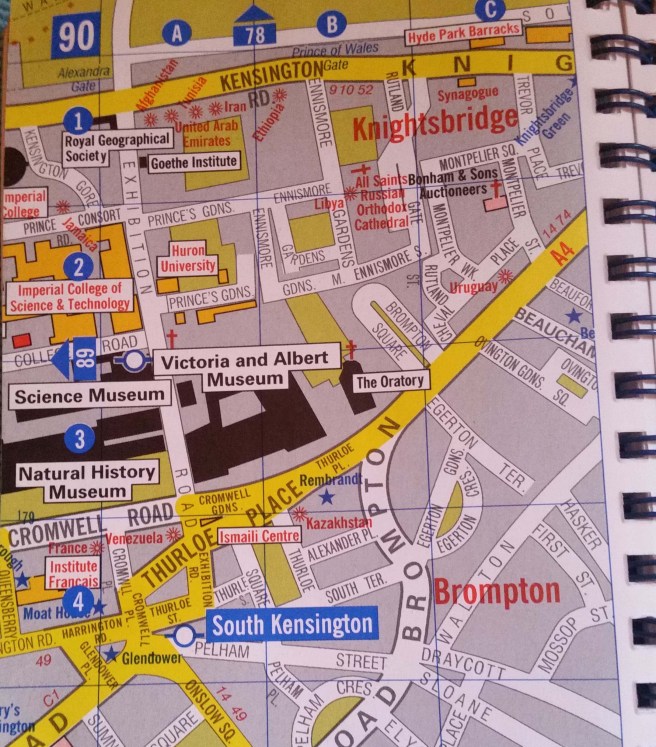
But Prince Albert would have been pleased how many school children and families visit Albertopolis.  Over 150 years ago open fields and market gardens changed when two men had a vision to develop a part of London dedicated to the arts and sciences, using the profits of the Great Exhibition of 1851 held in nearby Hyde Park. Nicknamed ‘Albertopolis’, the area was designed to celebrate the achievements and grandeur of Victorian Britain, it is still thriving today with three museums, colleges and the Royal Albert Hall.

https://www.discoveringbritain.org/activities/greater-london/walks/albertopolis.html

39613703_397479757449518_5582809189551439872_n-e1534894085854.jpg

Prince Albert’s vision for the hall was to promote understanding and appreciation of the Arts and Sciences. When he died of typhoid fever in 1861, plans were put on hold until they were rekindled by Albert’s collaborator Henry Cole. The Royal Albert Hall of Arts and Sciences was opened on 29 March 1871 by Queen Victoria. Albert’s very ornate statue sits across the road in Kensington Gardens. The design of the Hall was inspired by Cole’s visits to ruined Roman amphitheatres and it was originally intended to accommodate 30,000 people, reduced to 7,000 for financial and practical reasons, and today to around 5,500. Every summer it is the main venue for the BBC Proms, the world’s greatest music festival, which surely would have pleased the prince.
39799723_488185681646015_9009656414120968192_n.jpg

Even if you have never been to London, the building will be familiar if you watch The Proms on television; a good way to enjoy the concerts as you get to meet musicians and find out about the music. There is something for everyone from ‘Cuba meets Jamaica’ to the first appearance of the Estonian Festival Orchestra founded in 2011. Premiers of new music are bundled in with old favourites so no one will be scared off. You will learn to interpret the words of the commentators; ‘what an amazing sound picture’ – no tune – ‘especially commissioned work’ – it’s only five minutes long…

But you can’t beat a live performance. I must confess I have never queued for cheap tickets on the day to stand in the arena with the Promenaders. I have not lived near enough and don’t like queuing or standing, is my excuse, but enthusiasts will tell you it is a wonderful experience and some go to every concert. If you are booking seats, all you need to know is don’t book the cheap seats near the top if you want to hear your favourite pianist or violinist  – the soloists look like tiny puppets going on stage. But if you are going to hear a big symphony or the Planet Suite, sit wherever you like, it will be fun. If you want to go on the famous Last Night plan well ahead and check how the ballot system works.

What are your museum memories? Have you been to The Proms?

Friday Flash Fiction – Black Mamba

John had set out to buy a birthday present, but had no idea where to go or what to choose. The initial euphoria at being invited to the party, albeit at the last moment, had been replaced by panic. When his mobile beeped and he looked at the message one question had been answered; what time to turn up? Two of the others in the group were going to meet him at the tube station; he had never been to Ali’s place before.

He smiled to himself, now he had a timetable to work to and the weekend was looking up. That was the good thing about being in London, you didn’t have to be lonely, there was always something going on, especially if you were part of a group. He had started going dancing to get out and meet people and it seemed to be working. The group of twentyandthirtysomethings had absorbed him. From Valentine’s evening to bank holidays, it didn’t matter if you weren’t in a couple; there was always a dance or a picnic in the park. With mobile phones and Facebook everybody kept in touch. He tried to explain to his mother on the phone that these days girls and boys could just be friends; if he mentioned a girl’s name she was liable to get twittery.


Ali was his friend, she was everybody’s friend, the centre of the group. He had no idea if there was a boyfriend lurking in the background, too new in the group to know much about the lives of the others.

John sighed, he surely wasn’t the only bloke who fancied Ali. She was tall, slim and beautiful, but there was more to her than that. The first time he saw her on the dance floor, her long legs were encased in jazzy black tights and she wore a short red tartan skirt that his mother would have called ‘no more than a belt’. Ali’s short black hair, stunning eye make up and black lipstick were set off by the broad, black leather collar with spikes that she wore around her long neck. It was a look that only Ali could carry off with aplomb. She had done modelling, but was far too intelligent to actually be a model; her job was something interesting and arty.

He found himself at the flower market near Brick Lane. Flowers would be a safe gift he pondered, as he paused at a stall. Amongst the lush bouquets he saw a small pot, a neat plant with two small flowers.

‘It’s a Black Mamba Gallia Lilly’ the flower woman interrupted his thoughts.

John picked up the pot and examined the exquisite flower. No flower could be truly black; these blooms were deepest purple, the hint of colour gave them their beautiful velvet sheen.

‘I’ve got some nice pink tissue paper if it’s for a present’ she said helpfully.

Ali certainly didn’t do pink.

‘Do you have black tissue paper?’

29954723_2036439673052479_203354561_o

When the three of them arrived at Ali’s place it was so crowded he wasn’t sure of the set up. Girls were arriving bearing shiny gift bags; he tried to see what the other men had brought and hung back as Ali gratefully hugged everybody. As people wandered off to get drinks he nervously edged forward and proffered his gift.

‘Oh, it’s perfect, that’s so me, you really get it.’

She pecked his cheek and he kissed her shyly, wary of the collar spikes. She clasped his hand.

‘Come through and meet Lucas, my fiancé.’

Friday Flash Fiction – Happy Days

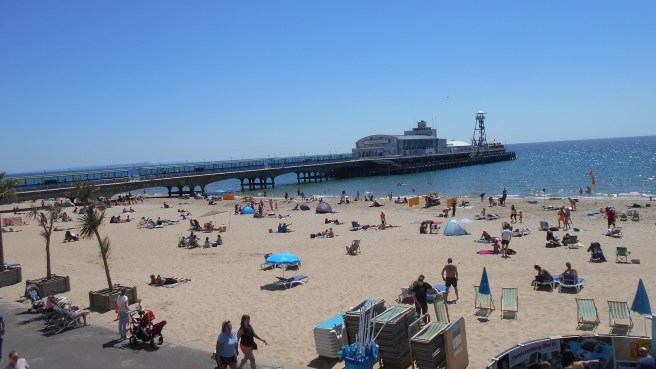
 He leaned back in the chair and smiled; the best things in life were free. The afternoon sun bestowed its life giving warmth and he understood why the ancients worshipped the golden disc. Myriad specks of light danced on the calm turquoise sea, a scene to delight the impressionists, but no painter could do justice to such a view; the chalky cliffs of the Isle of Wight and the green sloping downs of the Purbecks.

He languorously reached out for his glass of wine; it tasted like the nectar of the gods. Silky arms wrapped themselves around his neck; Tasha crept up behind him and kissed the nape of his neck. He sighed contentedly, love in the afternoon.

Tasha stretched out on the other chair and they watched life below on the promenade and beach; happy cries of children drifted up to them. They pondered where they would eat tonight, what they might do tomorrow. The sea air made them pleasantly drowsy.

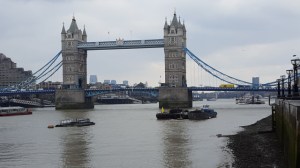
Friends said he would tire of the sea view, but if he did he would call a taxi to the station. At Waterloo he would step off the train and stroll along the embankment to another balcony, with spectacular views of the Thames; watch the sun set and the city light up. Then perhaps go to the theatre, dine late, take in a club.

12

He opened his eyes from his daydream as he felt Tasha’s fingers on his cheek. It wasn’t a daydream, it was real. Money could buy you happiness; a seaside apartment, London penthouse, holidays to anywhere, a beautiful woman and a life free of debt and work. Winning the lottery was certainly helpful if you wanted to exchange a grotty rented room in a rundown house in a dreary suburb, for a new life.

No Time Like The Present

There’s no time like the present, especially for authors. How long does the present last; a year, a week, a day, a second?

My first novel Brief Encounters of the Third Kind’ was set in the present, that was where I intended it to remain. I did not want to name a year; the characters lived in London and the 2005 bombings were still quite recent when I started writing, I did not want their story overshadowed by such a major event.

But first novels, especially long ones, take a while to write, to be read by others and edited. The present was fast becoming the past. World events were turning out differently to what most of us could ever have imagined and technology was racing ahead. My characters had mobile phones that took photos, they Skyped and went on Facebook, a few of them had SatNav. But they did not have smart phones, tablets, ipads, Kindles etc. and the last thing I wanted them to be able to do was Google their location or look up information on the internet with their smart phone; that would have wrecked the plot. More of the Twenty First Century passed by while I went down the traditional route of looking for agents. In the meantime I had written my second novel, Quarter Acre Block, a shorter straight forward family drama set firmly in 1964 and 1965. It became the first novel I published on Amazon Kindle.

I decided to stick to self publishing, Brief Encounters became a trilogy and I describe all three novels as being set in the early years of the Twenty First Century. As far as my characters are aware, they are living in the present and in a new century.

My work in progress was initially inspired by a local event during the Valentine night storm of 2014 and the novel should come to an end within 2014. All the places the wandering hero finds himself are real. But real places can present problems if your story takes place in the present; pity the author whose character goes shopping or works in BHS, no sooner is it published than the shops close down.

If you avoid ‘the present’ and set a year you still have to be on the alert. London and other cities have many familiar and iconic landmarks, but well known scenes can change dramatically. If you set your novel in a particular year, don’t have your hero enjoying the view from the top of The Shard before it has even been built, or the heroine after years away abroad, tearfully spotting the iconic cooling towers on the horizon that mean she is near home – the cooling towers that were demolished two years previously.

But there is no need to rely on your memory; what did authors do before the internet? Rush down to the library to search through old newspapers. Whether you are writing an historical novel or a millennial saga you can look up when Queen Victoria visited your local town, or what the weather was like in Portsmouth when your hero set sail for his solo trip round the world.

As for getting the future right, you will just have to wait and see; not many writers from the past got it completely right or completely wrong.