

One of my favourite parts of summer is the world’s greatest music festival, the BBC Proms.
It didn’t always belong to the BBC and it wasn’t always held in the Royal Albert Hall. The first Proms concert took place on 10 August 1895 in the newly built Queen’s Hall in London. The aim was to reach a wider audience by offering more popular programmes, adopting a less formal promenade arrangement and keeping ticket prices low.
The first radio broadcast of a promenade concert by the BBC was in 1927 and every prom is now broadcast live on BBC Radio 3 and repeated, so there is plenty of chance to listen at home.
The Queen’s Hall was destroyed by bombs in 1941, during WW2.
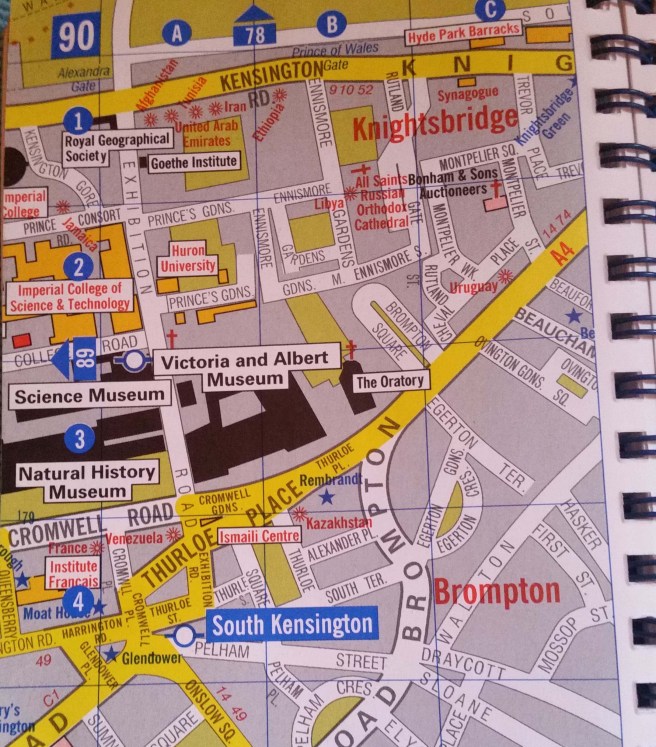
The Royal Albert Hall was opened by Queen Victoria in 1871 and is inextricably linked with The Proms. Even if you have never been to South Kensington you may recognise the famous round building and the warm red interior. Some of the prom concerts are broadcast on television and always of course the Last Night. When a camera pans down the height of the hall you feel dizzy and the top seats and gallery are very high. We once had cheap seats near the top for a concert with a famous pianist; we looked down as a tiny puppet tip toed over to a toy piano. The year we booked lots of concerts, so we could qualify for last night seats, we planned with care; big symphonies sit anywhere, but if you want to see your favourite soloist get the best seats you can afford nearer the stage. Live concerts are always different from listening to recorded music and The Proms have extra atmosphere; everyone is there to enjoy themselves and because they love music. At the end you emerge into a summer night and surge with the happy throng walking down Exhibition Road to South Kensington tube station.

But there is a lot to be said for watching on television. As happens every year, with life getting in the way, I have recorded more proms than I have watched since they started on July 19th, but I have enjoyed several very different concerts so far. What struck me this year was how wonderful it is to have two hours of positive thoughts and enthusiasm with no mention of Brexit, world leaders or general doom. Music is a universal language that brings us together.
The advantage of television is having presenters to tell you about the music and chat to musicians during the interval. Our presenters are impossibly positive; after all they are listening to the best musicians from around the world and being paid to share their love of music. One of them is so enthusiastic he talks at twice the normal speed, if he was a piece of music he would be ‘Flight of the Bumblebee.’ Often presenters get so excited they nearly topple off their high balcony.
If we are not musicians we may not always understand what presenters and musical guests are talking about, perhaps they don’t either, but that’s all part of the fun. They may spend longer talking about a new piece of music having its world premiere than the piece actually lasts. If you hear the words this wonderful sound picture it probably means there is no tune, but hearing pieces of music you don’t know is all part of the experience.
When the music actually starts, there is more entertainment. The camera pans over members of the orchestra, to the happy prommers standing in the arena, then round to the huge choir. We can wonder why the biggest bloke in the choir has been put next to the skinniest, we can make comments on the dresses of the soloists and we can marvel at the blur of bows in the string sections. It’s all very different from 125 years ago.
Read more about The Proms
https://www.bbc.co.uk/programmes/articles/1sgMxZvFzHQG3Y1HktMfg6w/history-of-the-proms
Have you been to The Proms? Are you a musician or a listener?
My novel Brief Encounters of the Third Kind follows the story of a golden couple of music. The Royal Albert Hall has a walk on part.
As the first in a trilogy you can download for just 99 pence.




 Times and Tides of a Beachwriter