The Blog of Many Colours

Times and Tides of a Beachwriter is brought to you today by the colour peacock blue, thanks to Kevin Parish who started the ball rolling last week by choosing one of the most exotic colours. You can visit Kevin’s blog here.

https://whatwordsmaycome.com/

OLYMPUS DIGITAL CAMERA

Other birds may have streaks or patches of the iridescent blue, in tropical waters we might find fish showing off that colour, I don’t think any flower could quite match it. So the male peafowl gets to have a colour named after him. His home was originally India, he may have arrived in Britain with the Romans, but most of us think of peacocks strolling proudly around the grounds of stately homes. I like to imagine the lord of the manor bringing some home as a gift for the lady of the manor, but would she be so enamoured after constantly hearing their mournful cry? Perhaps she would suggest a banquet; their beauty did not prevent them being eaten, a dish to impress at mediaeval feasts.

Would any creatures from the past have worn peacock blue? I have never been to New Zealand, but it fascinates me because it was blissfully devoid of human beings until a thousand years ago or less. Reminding us that other  creatures are there because they are there, not for us to go on holiday to look at or have documentaries made about them. Did the various species of giant moas have wonderfully exotic plumage, with no predators to worry about? But they did…

‘The Haast’s eagle (Hieraaetus moorei) is an extinct species of  eagle that once lived in the South Island of New Zealand, commonly accepted to be the Pouakai of Maori legend. The species was the largest eagle known to have existed. Its massive size is explained as an evolutionary response to the size of its prey, the flightless moa, the largest of which could weigh 230 kg (510 lb). Haast’s eagle became extinct around 1400, after the moa were hunted to extinction by the first Maori.’

I wonder what sights greeted the first Polynesian arrivals on these remote islands. How sad moas are no longer with us.

Further back are the species that humans can’t be blamed for making extinct. What colour were pterodactyls? It is now theorised that dinosaurs were not the shades of greens and greys they are given in pictures. Imagine a peacock blue diplodicus or could you take an irridescent blue Tyranosaurus Rex seriously?

7

Can  artists recreate peacock blue? Artists have always sought ways to make blue pigment.

‘ Lapis first appeared as a “true blue” pigment in the 6th century, gracing Buddhist frescoes in Bamiyan, Afghanistan. Around 700 years later, the pigment traveled to Venice and soon became the most sought-after colour in mediaeval Europe. For centuries, the cost of lapis rivalled the price of gold, so the colour was reserved for only the most important figures, such as the Virgin Mary and the most lucrative commissions, the church.’

DSCN0403

The Winchester flower festival in the cathedral last year had as its theme the Winchester Bible, the bright red and blue flowers refelecting the colours used for illuminated text.

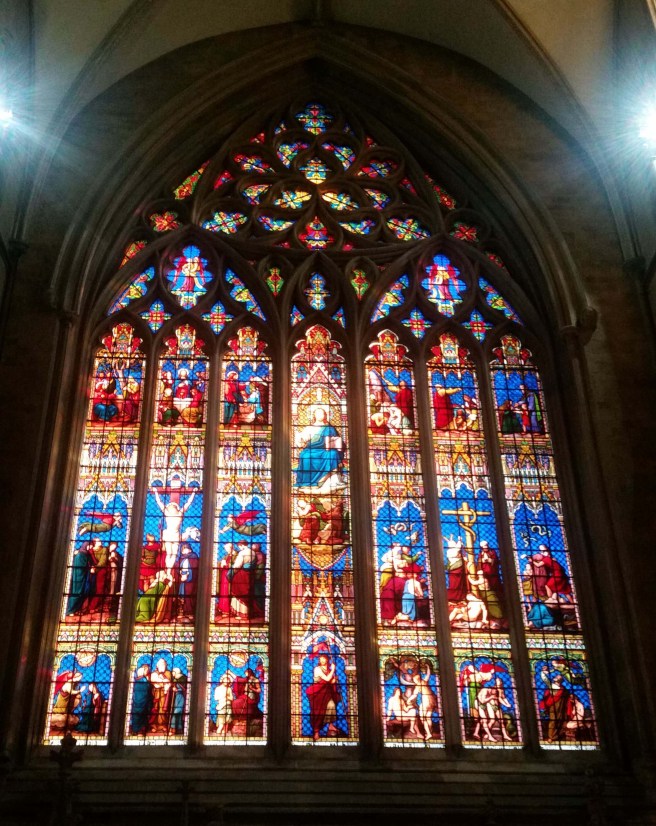
Or perhaps stained glass best recreates nature’s blue.
45099843_2175504622717717_4380948856183980032_n

Next week’s colour, purple, was chosen by Sandra. If you have a favourite colour you would like to see, tell me in the comments.


ANZAC Day

Today is ANZAC day and what better way to mark it than with these poignant words from a special guest blogger. In the first of an occasional series my Sister Down Under writes about a unique island.

A Very Humble Monument   by Kate Doswell

Some thoughts for ANZAC day   25th April, 2018.


30772291_10212842443909538_1334244612_o

I’m not sure what it’s like in other Commonwealth countries, but in Australia we take our war memorials very seriously, and rightly so. “Lest We Forget” is inscribed on most of them, and as we read down the long, alphabetical lists of names, we are reminded of the truly terrible cost of war. Even in tiny outback towns, the list seems far too long, far too many of the youngest and strongest of the community taken from those that are left behind to carry on.

Most of these monuments are made of stone, imposing obelisks in bluestone or limestone or granite, depending on where they are situated. They are usually in the centre of town. Running around the monument and integral to its form is a ledge wide enough to sit on. People may sit and contemplate awhile, or simply pass by on their daily business or as a visitor to the town. How many, I wonder, stop and read the names and wonder at the fate of these lost men? Do the locals become so used to it that they just pass by?

30546417_10212842451869737_1397495450_o.jpg

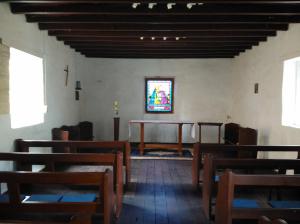
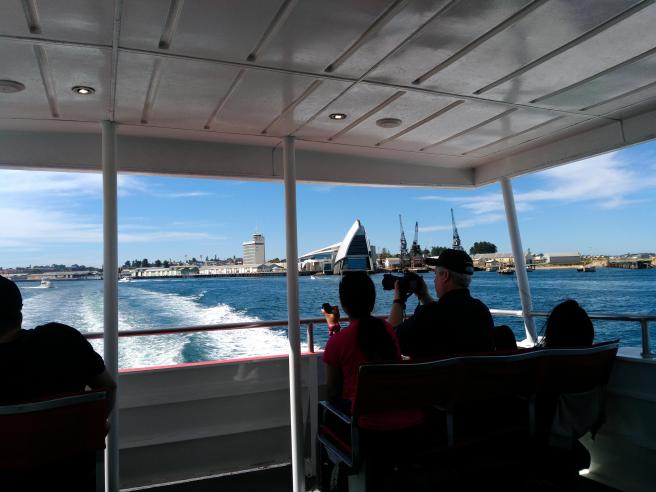
However, not all monuments are as striking or as prominent, and last week I found one that was truly humdrum. It was on the Island of Rottnest, 20 km from the West Australian Port of Fremantle. For many years this Island has functioned as a much loved holiday playground for the people of Western Australia, and the tourists who come to our isolated part of the world. It has a rather grand Roman Catholic church high on a hill, but the Anglican church is represented by a much older, but more modest chapel of limestone and whitewashed render.

30767987_10212869608108626_1610926664_o

30772440_10212869676350332_1722123227_o

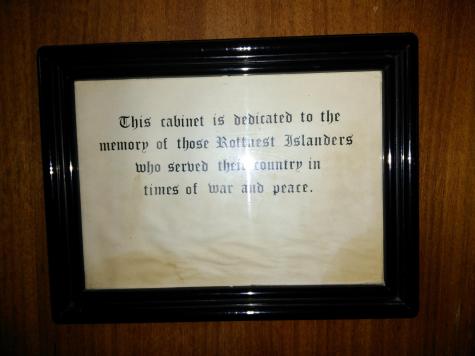
I visited the chapel late in the day, as there were other tourist activities that had claimed my attention. The door was stiff to open, and the interior gathering the gloom of the impending sunset, so the first thing I noticed was the distinctive smell of very old (to our European Australian eyes) limestone buildings from the early settlement era. Above the altar, I could see a simple, but attractive stained glass window depicting The Annunciation. Turning from there I looked at the pews, some thought to have been made by the Aboriginal Prisoners for whom this Island acted as a prison for 60 years. There were brass plaques on the wall in memory of various European families who had played important roles in the Island’s history, but the one that caught my eye was one on the door of a storage cupboard at the back of the chapel. It looked relatively new – certainly not crafted by the Aboriginal men in the 18th century – and I guessed it had been built and installed after the chapel was reconsecrated in 1965. It was utilitarian – capacious and solidly built but without ornament or distinctive features. Except for the plaque. A simple paper notice, its words carefully handwritten in Old English script, and framed with a plain wooden frame, so small it could be covered by two hands.

“This cabinet is dedicated to the memory of those Rottnest Islanders who served their country in times of war and peace.”

I have never seen such a monument before, if I can even use the word monument. Is this the only place in the Commonwealth to have such a homely reminder of the dead?


30771997_10212869673830269_2127583472_o

30769005_10212869667870120_1043963808_o.jpg

30550196_10212869673910271_984660608_o

30825116_10212869673870270_2125740430_o


I didn’t open the cupboard, I had no business to do so, but I imagined it containing vestments for the visiting priest, the chalice and paten, hymn books and orders of service, all the paraphernalia of a functioning chapel. I thought of those remembered by this most humble of monuments, and wondered if they would have been disappointed, aggrieved, or even angry that they had nothing grander built in their memory? But then again, maybe they would have been pleased that, having it placed on an object that was in regular use for the worshipers, they would readily and frequently come to people’s minds. These people, no doubt, would have attended this chapel, maybe some even came in the week before they left to sail away to war. Now, each time someone opens the cupboard and sees that little plaque, they are back here again. Back home to stay.

30547133_10212864000568441_1695530355_o


Observed on 25 April each year, Anzac Day was originally to honour the members of the Australian and New Zealand Army Corps (ANZAC) who fought at Gallipoli against the Ottoman Empire during World War I. It is one of Australia’s most important national occasions. It marks the anniversary of the first major military action fought by Australian and New Zealand forces during the First World War.

30550812_10212842448149644_161802627_o