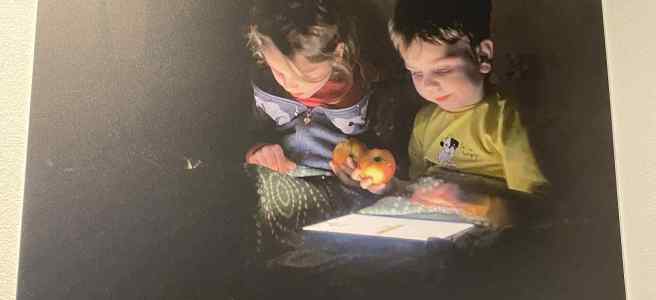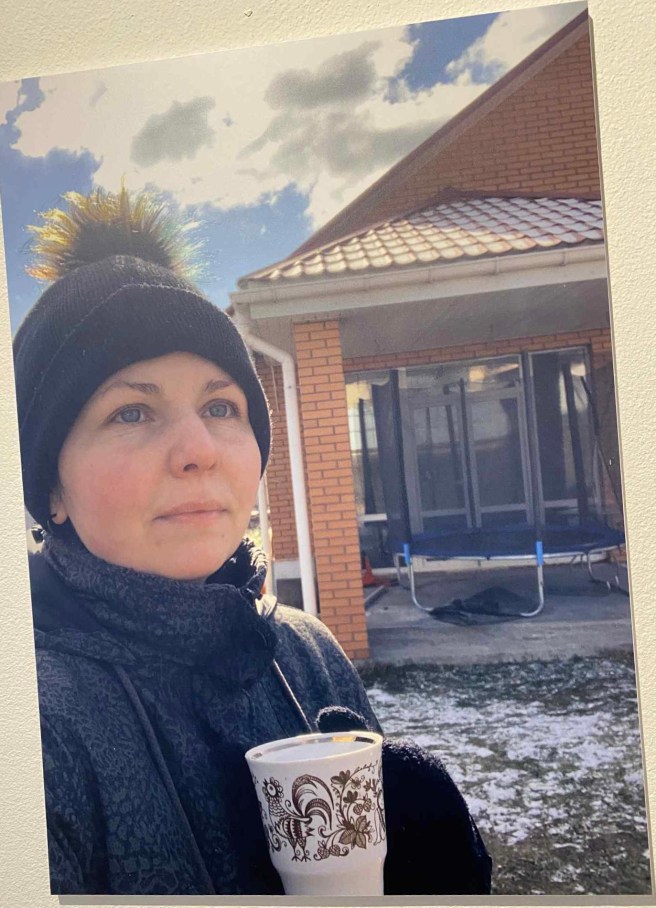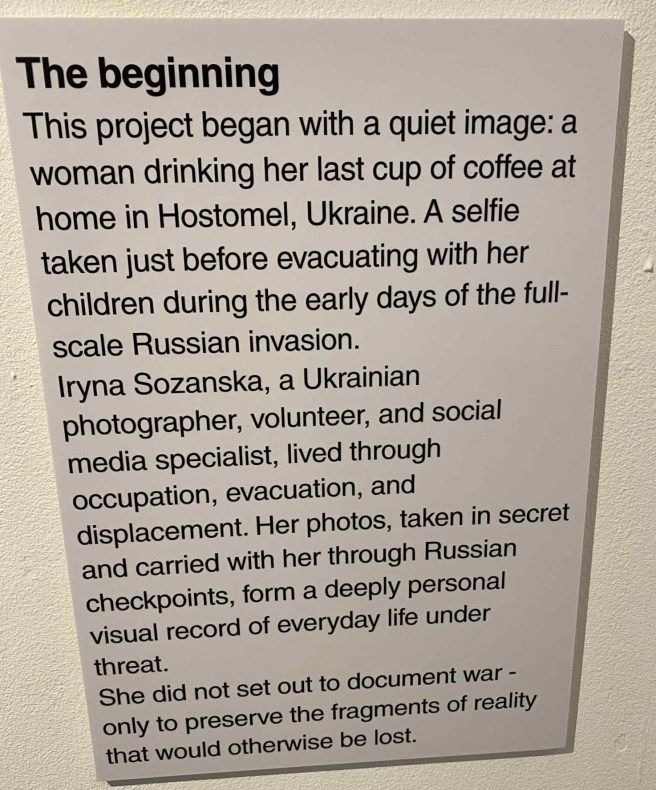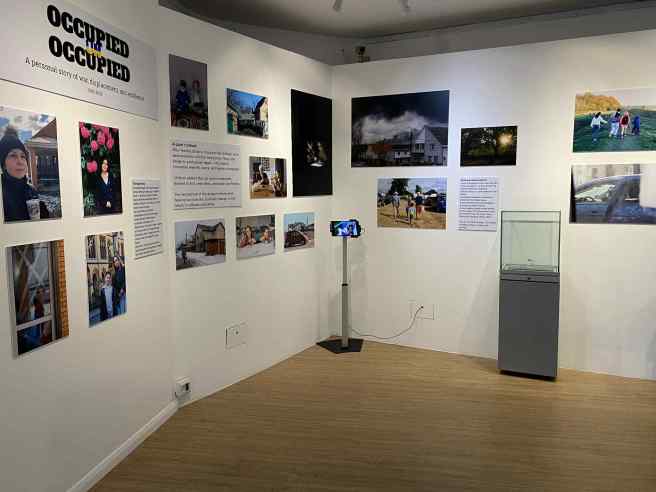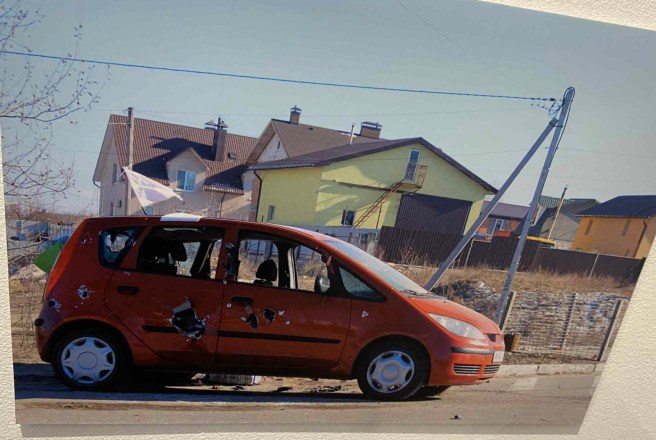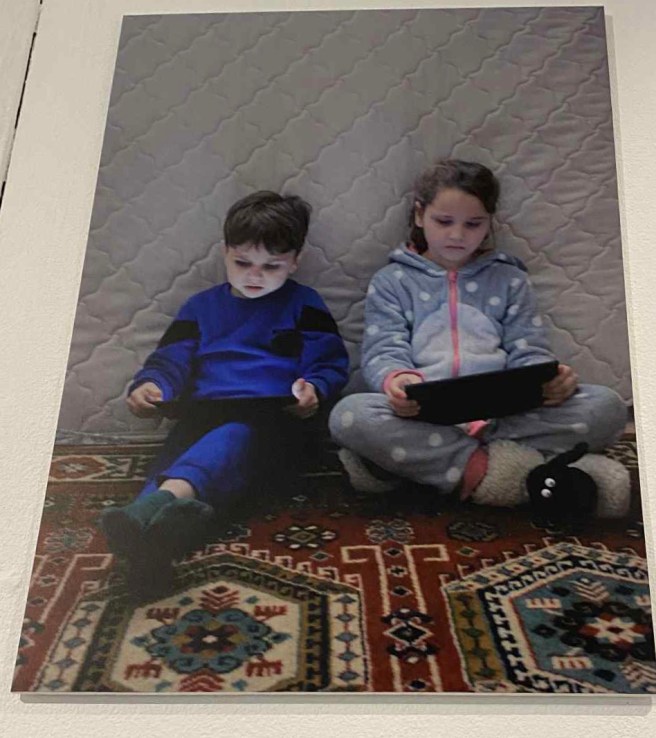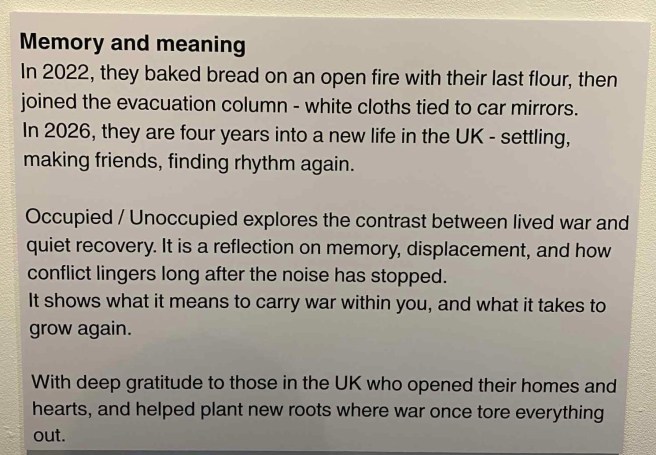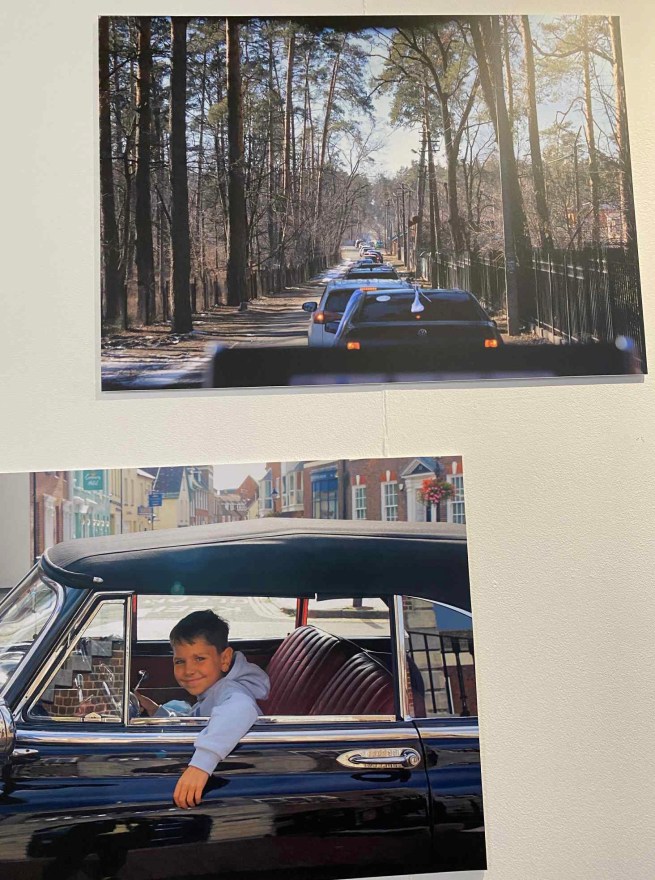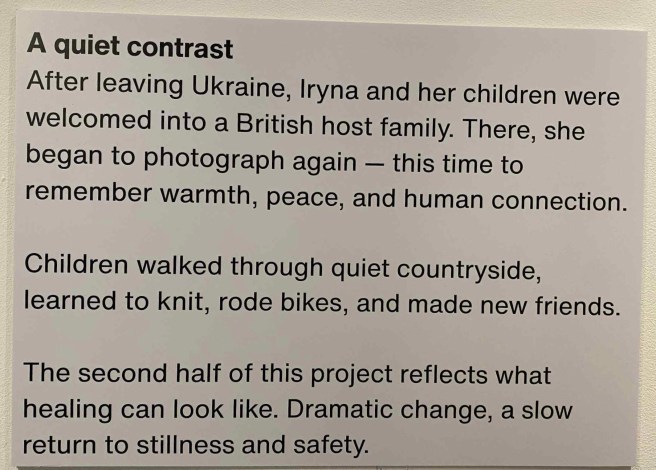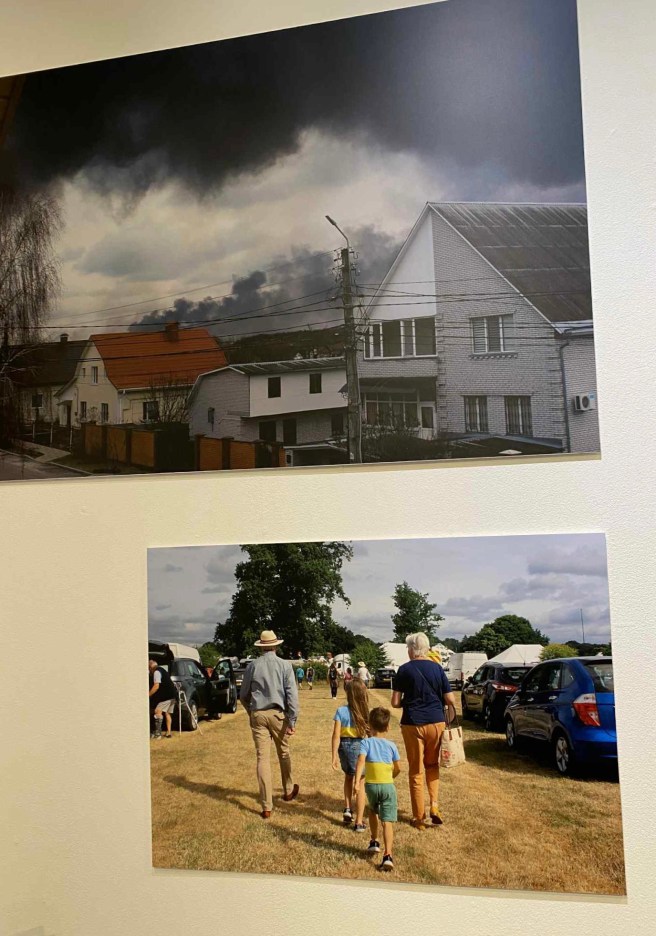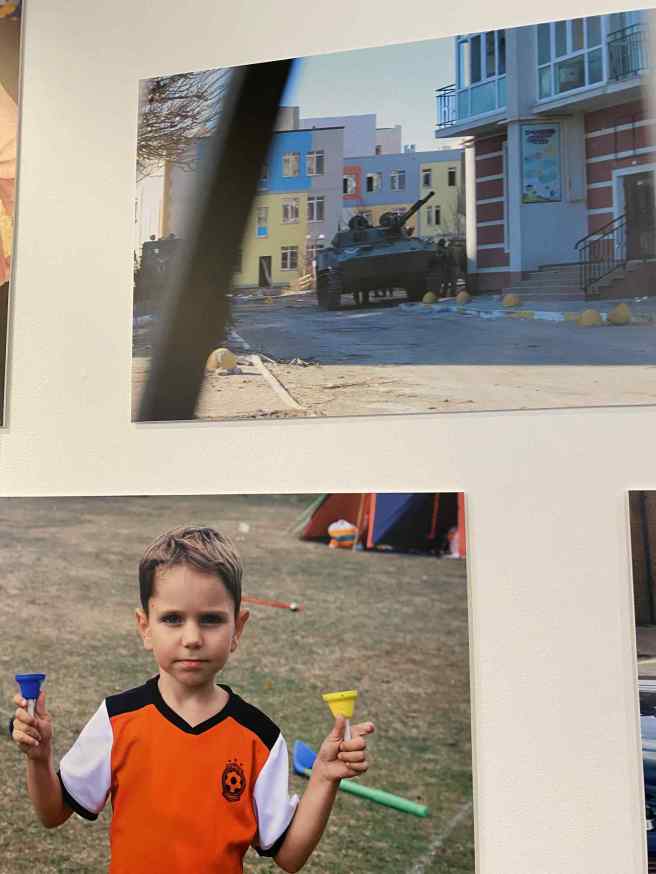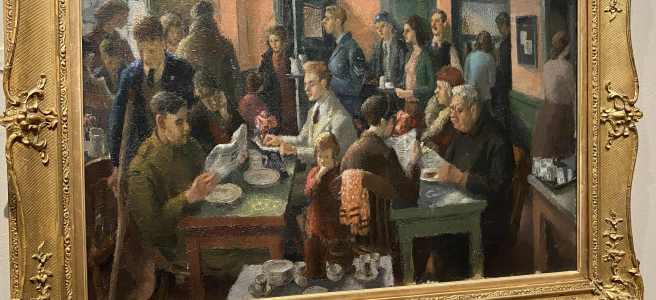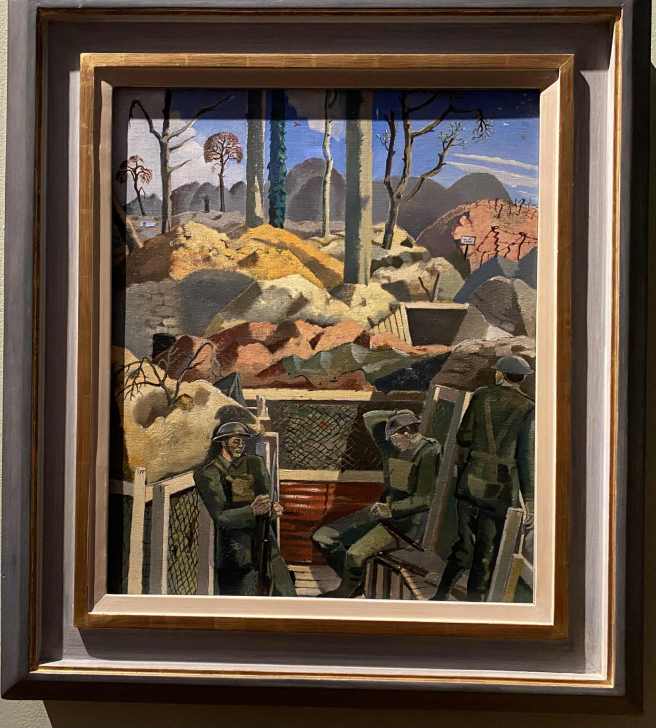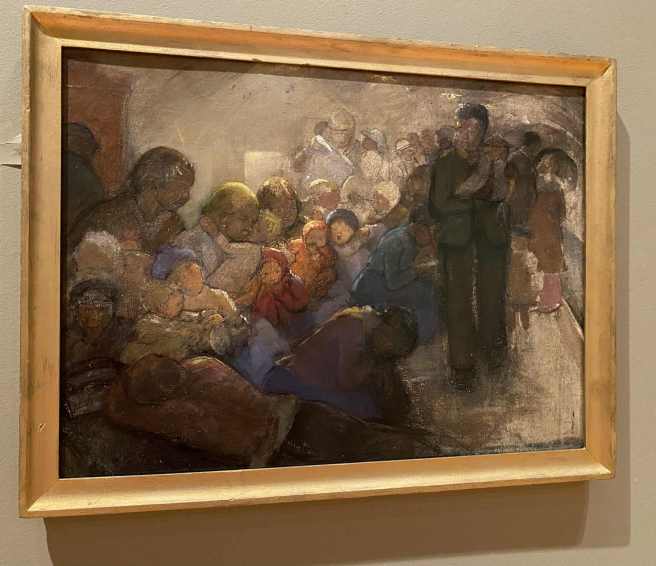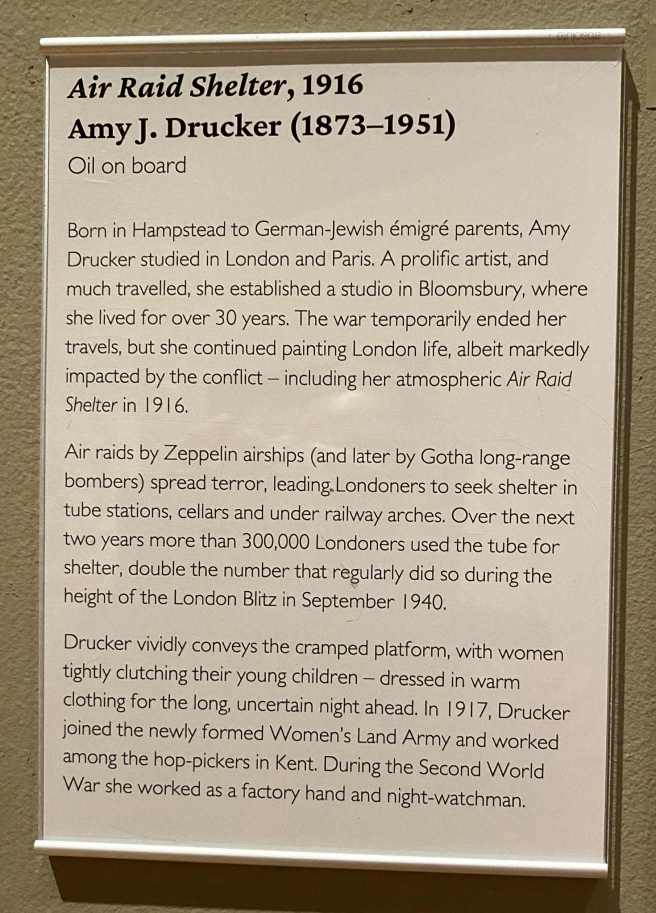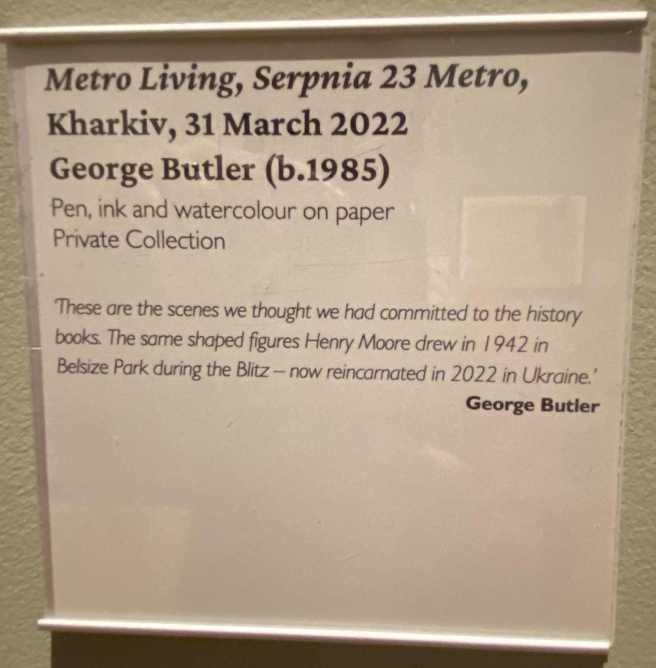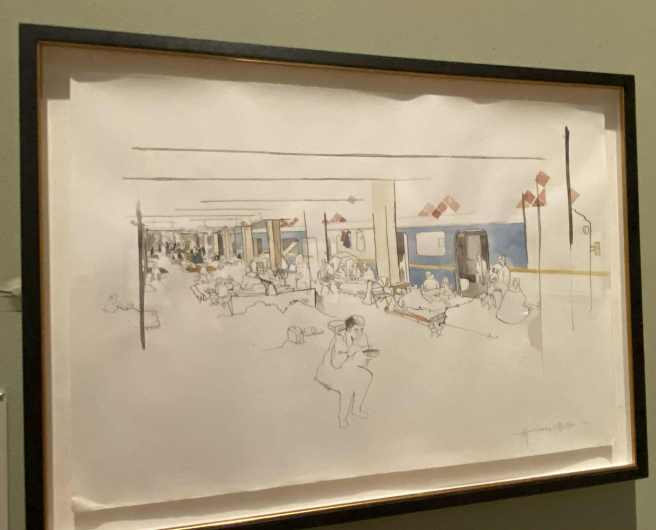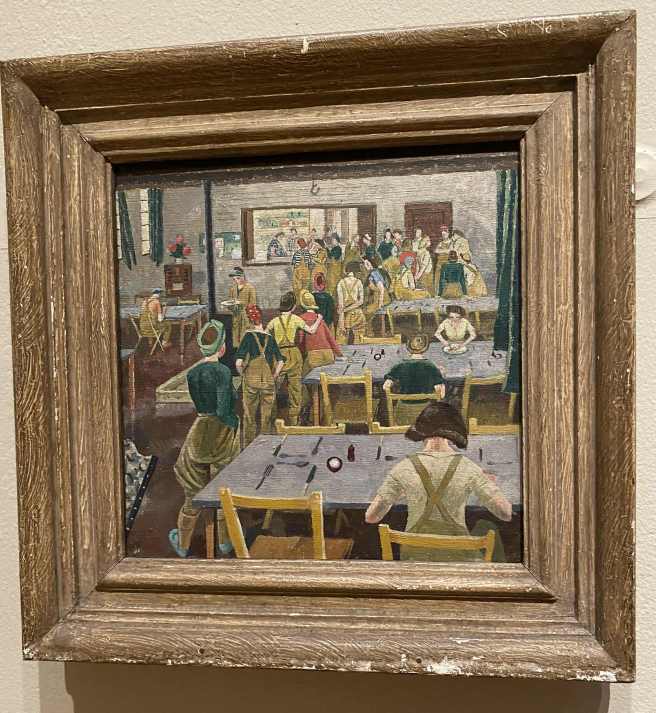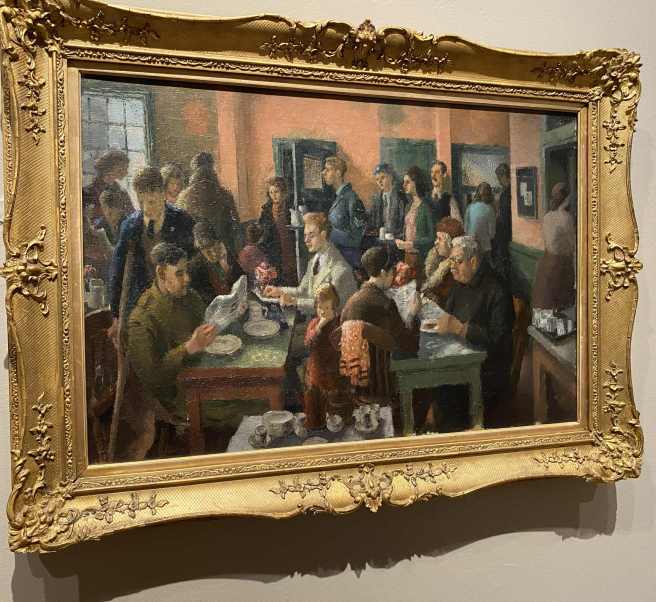

This exhibition in the café area of Russell Cotes Art Gallery and Museum compliments the art exhibition I featured recently. The museum has just reopened after it’s annual dust and vacuum.


This exhibition in the café area of Russell Cotes Art Gallery and Museum compliments the art exhibition I featured recently. The museum has just reopened after it’s annual dust and vacuum.


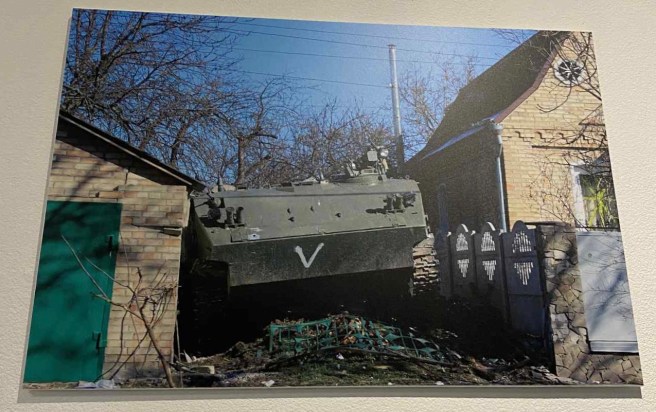
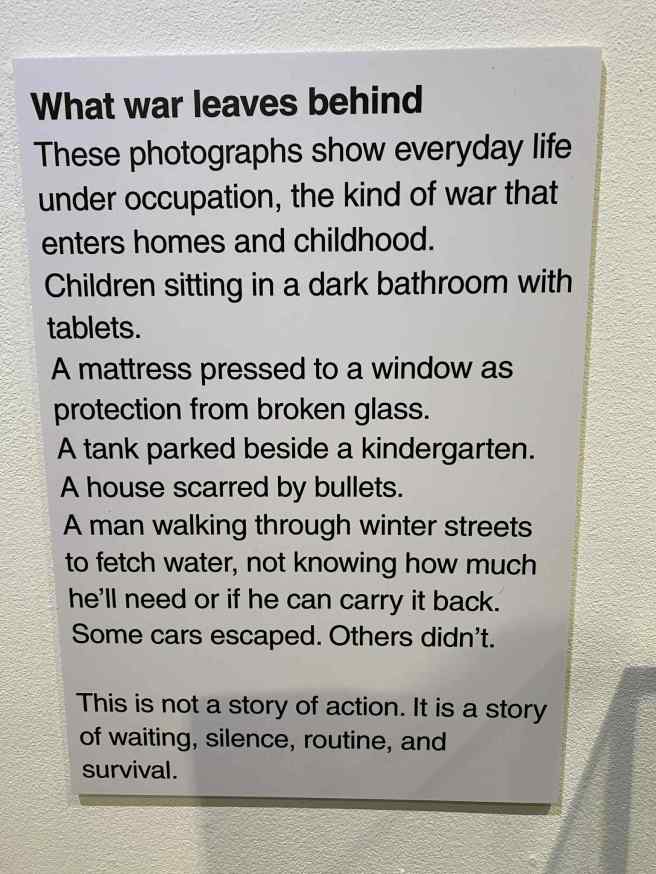
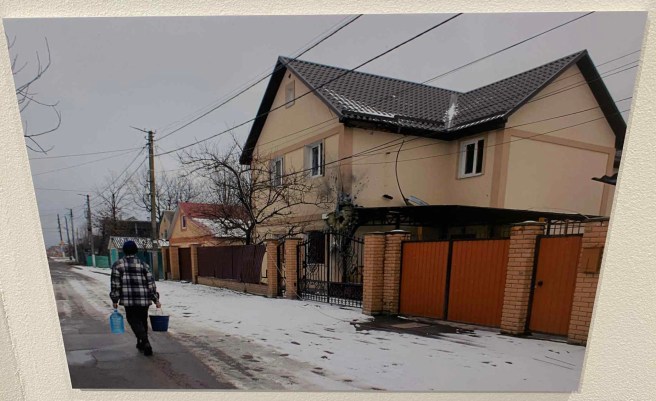
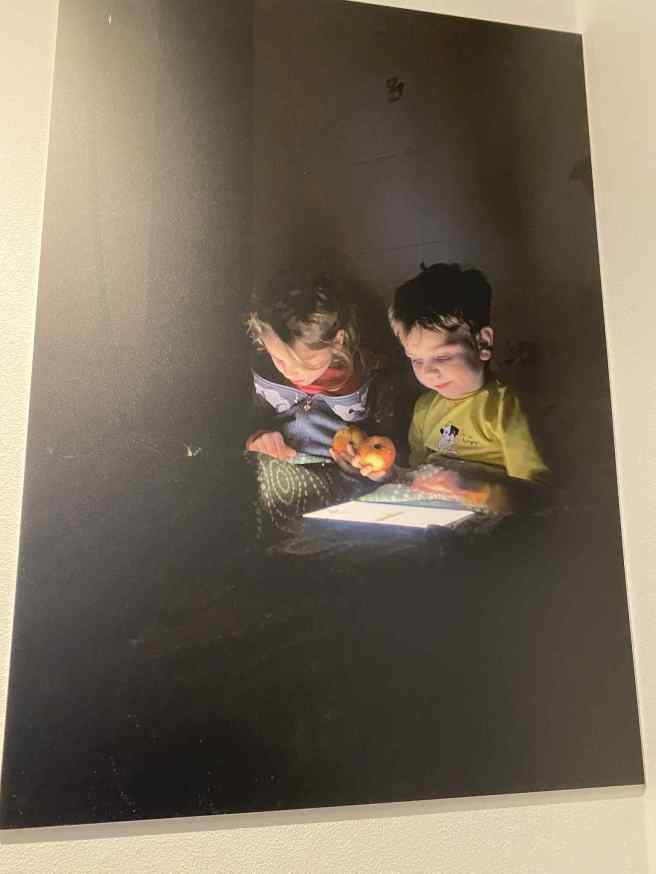
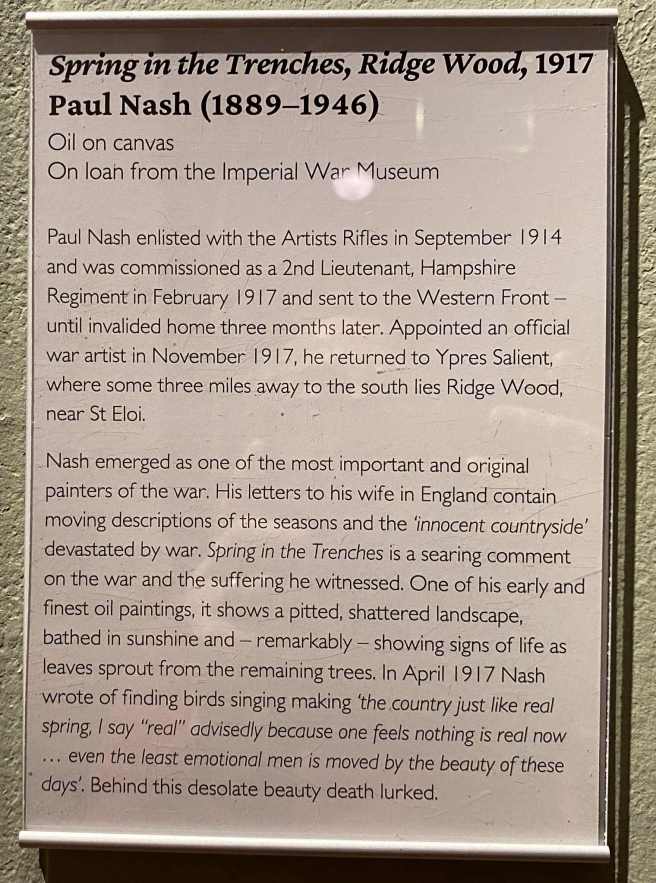
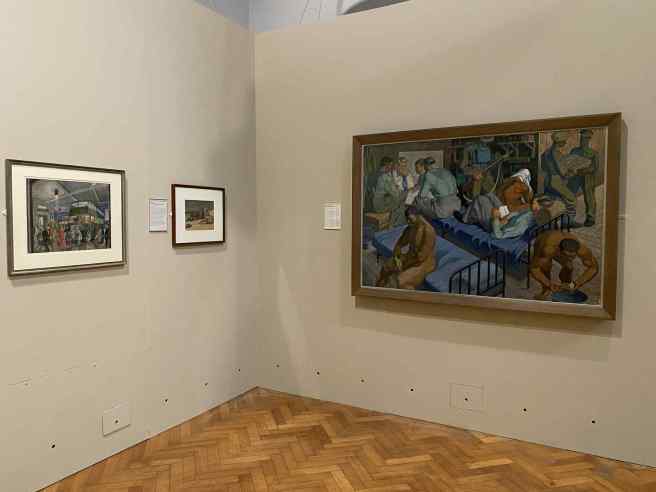
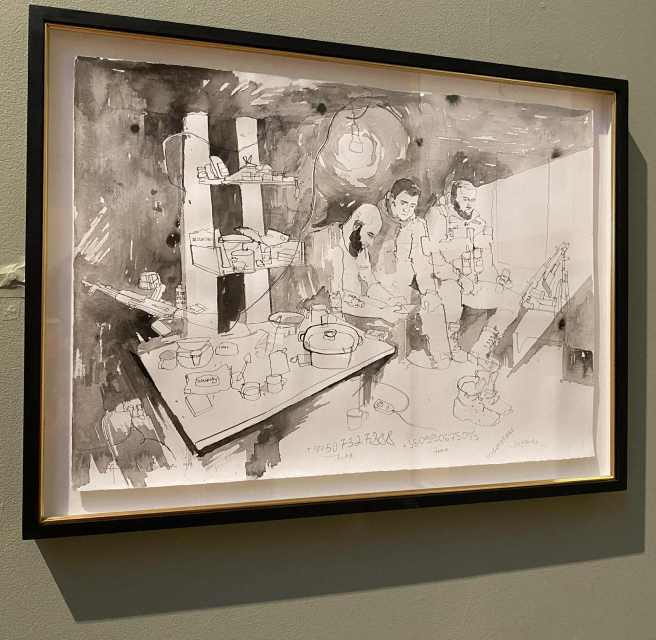
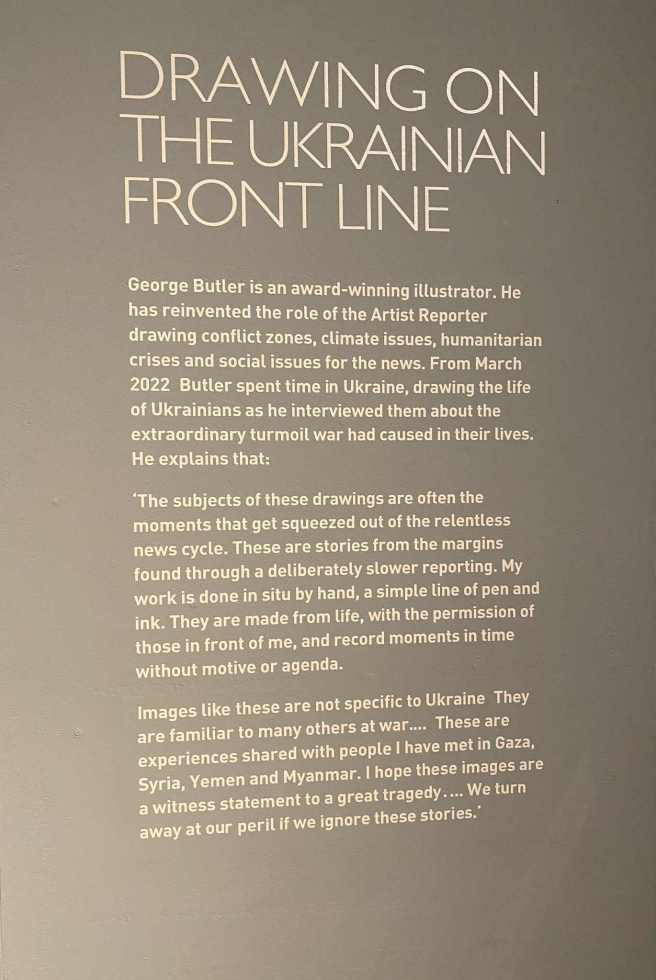
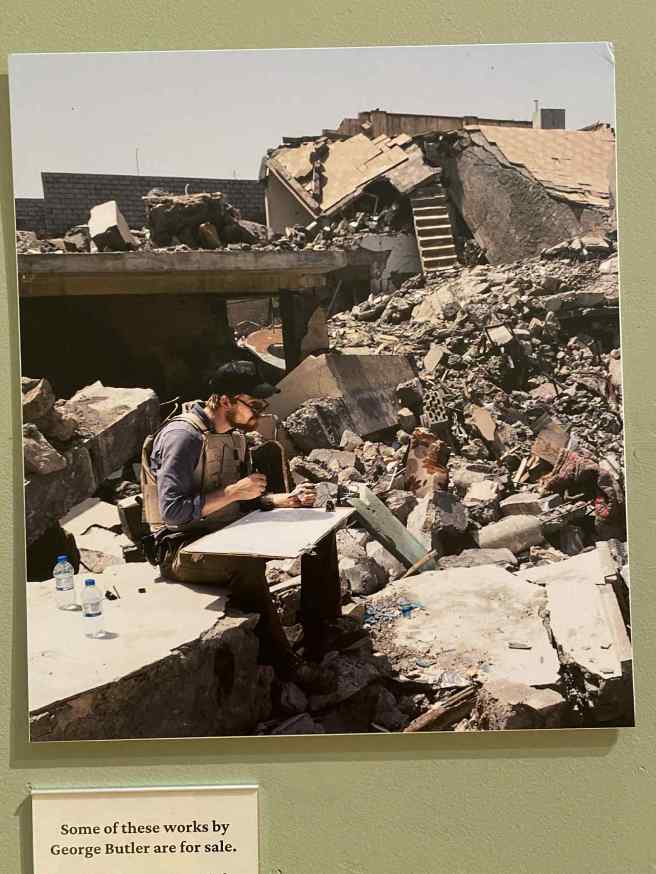
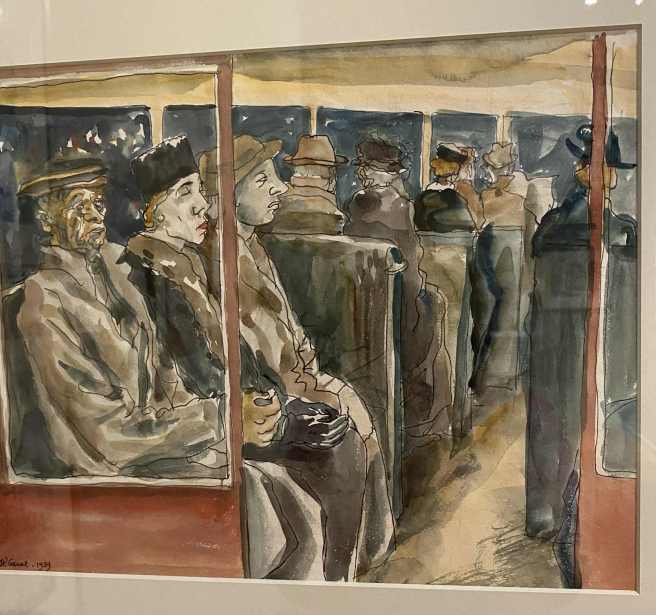
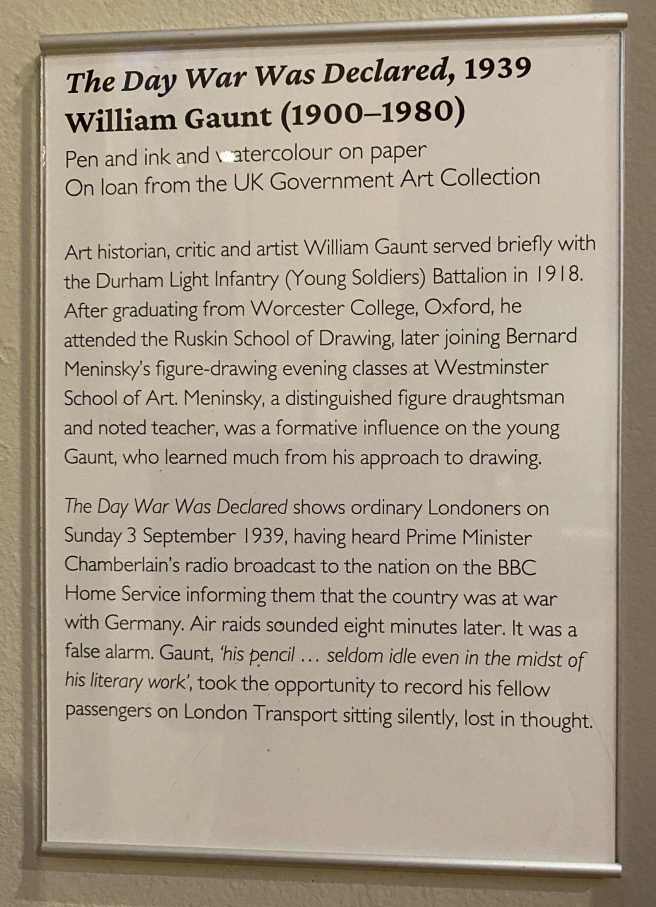
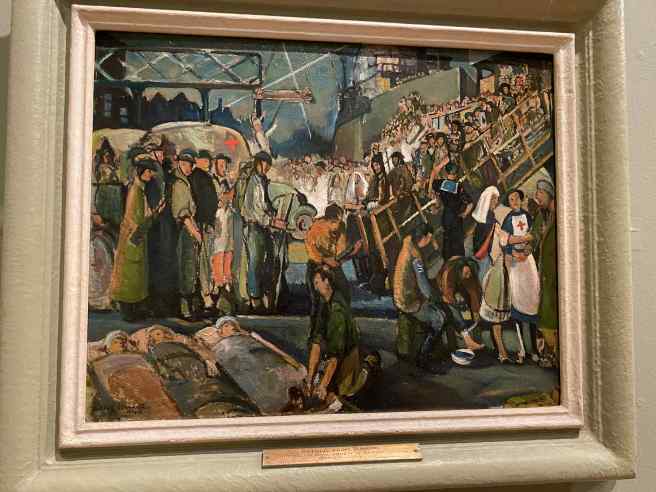
‘Artist as Witness: The Impact of War
25 October 2025 – 8 March 2026
This thought-provoking exhibition explores the importance of the artist as eyewitness, providing insights not only into warfare but also the impact of war on those involved and the communities affected. It includes artwork from the First and Second World War, as well as recent work by award-winning artist George Butler of the war in Ukraine.’

If you have returned after yesterday’s visit to the Russell Cotes Museum have a look round the gallery.
https://tidalscribe.com/2025/12/28/sunday-salon-victorian-christmas/


https://russellcotes.com/event/artist-as-witness/
Are artists as important as ever in recording war?
https://yerosacom.wordpress.com/2025/06/02/children-of-god-stop-the-war-in-gaza
Most of us probably refrain from attempting to write about the awful events going on in the world, especially if politics was not the reason for creating our blogs and websites. Yelling Rosa has posted a song and also a video message from one of our well known British ‘characters’, though she is now an Australian citizen. But she is also Jewish so her words are especially worth listening to.
My father came home one day, very excited with a new invention, Velcro! He worked in plastics, but I’m not sure if the plastic factory where he was manager actually produced it. Looking up Velcro I see it was commercially available in the fifties, but to us in the late 1960s it was a novelty. He kept trying to find ways of using Velcro around the house.
More exciting inventions lay ahead of course, Dad once said that he would like to live to a hundred to see what would be invented. Sadly he only got past seventy. August 2025 he would have been one hundred and I have thought for a while it would be interesting to think of how many new inventions he has missed. This is rather an overwhelming task; there is a difference between something being invented and most people being aware or getting to use it.
2025 also marks a quarter of a century gone by, whether 25 is the last year of the quarter or the first year of the next, doesn’t really matter. I can remember when, thanks to George Orwell, 1984 was The Future, then 2001 A Space Odyssey confirmed the start of a new century as the obvious FUTURE when we would be living in plastic bubbles on the moon.

All that seemed to happen at the turn of the century was the panic that all the computers would get confused and everything would be switched off. At work we were seriously considering whether we should all go home and fill the garage with tins of food and flagons of water. Chez Gogerty we didn’t in the end and luckily all was well.
How has life changed in those twenty five years? Before the millennium I naively thought the twenty first century would be one of peace after all the violence of the twentieth, how wrong could I be. We can definitely conclude that humans have tried everything to make the world a better place, following faith, education, new political ideas, better medical treatments, scientific improvements. Alas new inventions are hijacked by criminals and war mongers as well as doctors and scientists hoping to improve lives.

So what in your life is vastly different from 2001 AD or CE .
I seem to recall saying at the end of last century that had I known home computers were going to be invented, I would not have got married let alone had children! I cannot recall why. Probably children arguing over whose turn it was to use the one computer and me saying everyone was spending too much time on that ghastly second hand machine with green writing, my memories are hazy. I do know that fathers were saying they should get a computer for the children, when they actually wanted one for themselves.

Now of course I can’t imagine not having a computer and iPad and panic if I forget my phone, even if I am just popping to the greengrocers.
What has changed in your life over the past twenty five years?
If you live in a city or suburb you will probably hope to get away for a change of scenery. As you stand on top of a moor, hearing only sheep bleating, you will say to yourself ‘This is Real Life.’ The same thoughts will surface if you stand on a rocky outcrop feeling the spray from the waves pounding below, or perhaps you have visited a peaceful holy island, Iona or Lindisfarne.

Supposing you move somewhere remote and idyllic, or to the coast and can saunter down to the beach on a wild winter day, dodging waves. Sheer bliss. Then one day you go up to London to visit friends or relatives or for a cultural outing. As you arrive at a London terminus, descend into the underground, hear the rumble of an approaching tube train, then squeeze on board with the multitudes, you find yourself saying ‘Back to Real Life!’

Could it be that real life must involve cities, mainline railway stations and underground trains?

Those millions of us brought up in suburbs anywhere in the world are bound to feel we are never in real life; neither in the bustling heart of the city, nor in the countryside growing food and raising livestock to feed the nation.

When you turn on the television news real life takes on a different dimension. Why are your working on the cheese counter at Waitrose when that girl you were at school with is now a war correspondent standing on a heap of rubble?

Is real life the peace all great prophets have urged us to follow; cherishing the soil, creating harmony, music, arts, science and babies. Or is reality living on a knife edge beneath a volcano or on an earthquake fault line? Are you likely to see your home swept away by fire or flood or do you face death every day in war?
Have you experienced real life or are you still waiting to find it?
What is your reality?
Alas just a fantasy, like many of us I cannot imagine anything worse than being a politician, let alone a leader of a nation. After many jobs and career attempts I realised I don’t actually like responsibility, so it is hypocritical of me to tell royalty and politicians of any nation how they should be running things.
We have had many dark days this century for people and the planet and today’s news compounds that. There are places in the world we hear little about and others which are never out of the news, they all matter. In a world of peace we could be helping all people to grow food and be healthy and healing the planet. We have the knowhow, but ordinary folk and clever scientists alike are crushed every day.
What would you tell your leaders this evening?
Do NOT phone him to congratulate him.
Do block incoming suspicious calls.
Certainly do not invite him to visit your country, even privately let alone a state visit; best in fact to alert all ports to look out and detain any world leaders with criminal convictions.
Do assemble the best team of scientists and doctors you have and urge other nations to do the same. Offer sanctuary to the best brains trapped in countries where they can’t use their talents. Get together and plan an alternative unified bloc to run the world.

So, what are you waiting for…let’s go!
Do you ever wonder what really is real life. Assuming that we are real and not a computer dreaming, have we attained the human condition we should all aspire to if we live in peace, well fed with time to indulge in the arts and creativity? Or is real life a daily battle against the elements to grow enough food to survive, pitting your wits and using your strength to hunt and kill enough to feed your family. Even worse, is real life facing death at any moment as you are attacked and invaded and must defend yourself and your people?

Maybe our earliest ancestors led a peaceful life, with a human population so small nobody needed to fight over land. Life was in tune with nature and the seasons, social life was chatting about the mammoth hunt and telling tales around the fire as you ate mammoth steaks.
If you are bored living in the comfort zone you can leave it to trek to one of the poles or up Mount Everest. The bravest people are those who leave their own countries and take their medical and other skills to war zones. If they manage to return home safely how mundane must our ordinary lives seem.
If Aunty Joan complains she has to wait for her hospital appointment perhaps the adventurer will suggest she is lucky her hospital has not been destroyed by a missile attack. If the nephew complains he could not get his favourite cereal at the supermarket, they might point out he is lucky to have food at all. If the adventurer’s sister tells him her anxiety has been bad he might point out they don’t have time for anxiety in the Gaza Strip or Ukraine.

You don’t have to leave your own country or even your own home to be plunged out of your comfort zone. If you work for the emergency services you will certainly see real life. For ordinary members of the public storms, flash floods and wild fires can mean destruction of their home and security as well as all their possessions.
Some of our chat at home or over coffee with friends will be about the awful state of the world and local dramas on the news, but most of us still enjoy gossip about work and our neighbourhood that would mean nothing to anyone outside our little circles. Any trip to the shops or day out becomes a dramatic story.

In the comfort zone
It was so windy last night all the food bins were in the middle of the road.
My patio chairs blew onto the lawn!
I saw Kate on the bus on Tuesday.
Oh how is she?
Fine, got her appointment at last.
I thought I was never going to get here, the puddles, I tried to dodge them but still got my shoes wet.
Next door have got a leak…
That white car has been parked outside my house for three days now…
Have you started watching that new series?
Was that the bloke that was in that other series?
No, you’re thinking of that other chap who was on Strictly…

Are we hiding away from real life or keeping civilisation alive?
Have you ventured outside the comfort zone or suddenly found yourself in the danger zone?
The perfect peaceful zone…
‘Doctor Chowdry, can you sign this to say you agree to this interview being filmed?’
‘With that tiny thing you call a phone, however many things does it do?’
‘If you claim to be from the future, surely you are acquainted with far more advanced technology than this?’
‘No, no, that’s what I have been trying to tell everyone for the past two months, all gone, everything that you take for granted gone. Where does the power come from for your phone, it’s not plugged in like your kettle and toaster and all those strange things in the kitchen.’
‘Battery… well obviously I plug it in to charge the battery.’
‘Mr Cummings, you seem like a fairly intelligent chap; how would your society work if the power disappeared completely?’
‘Um well, I cycle to work and do a great BBQ…’
‘And do you work in a building, does it have electricity, computers?’
‘Okay, point taken, the best thing you can do is to explain to me and the important people who are going to see this interview, what on earth happened between now and 2099.’

Doctor Chowdry does not wish to reveal his given names. Interviewed by Findlay Cummings, HM’s private office, Saturday 22nd July 2023.
‘Can you tell me your age and describe where you were living in 2099?’
‘In the same place I have lived all my thirty five years, in a large bunker beneath what was London. What I am going to tell you is incomplete, passed down to me by my parents and others by word of mouth. When communication, as you Mr. Cummings know it, has been destroyed, it is hard to know what happened to the city, my country, let alone the rest of the world. But as no one has come to find us except The Hunters, we can presume a world wide civilisation no longer exists.
You are all in a panic about the future, without doing much about it. Is artificial intelligence going to take over, is climate change going to destroy the planet, will wars ever stop? Artificial Intelligence will take over for a while, until the power cuts out, by which time AI has ensured that wars continue. Programmed to send missiles to destroy cities and power hubs it kept seeking out new targets. The planet, Gaia, will be fine, it can look after itself, always has, while humans swarm around in panic like the ants and rats that live in our bunker.

A perfect storm of events occurred. In a city flattened by war or natural disaster and you already have plenty of those, people can’t access clean water or food or medical help. If the whole world was like that, who would send help? Are you getting the picture now?’
‘Yes, yes, but we wouldn’t have let it get like that…’
‘Well apparently you did. Add to that the fires and floods that you already have with regularity, bringing lost food production, we can presume lives were lost in the billions.’
‘But how did your people survive?’
‘My grandparents and others thought it a temporary measure, a wartime situation, shelter in the many underground networks, stock up on food and essentials to tide them over. It evolved into living underground, only creeping out to try and salvage what they could. Nature took over, quicker than they expected. You might think that sounds good, but for us nature is dangerous, certainly the way it developed. As nature encroached so did the animals and following them were the hunters.’
‘I thought no one had survived, how could they, but Lauren Smith has told us about the hunters…’
‘I have seen your so called ‘survival programmes’ and news about wars. Soldiers, mountaineers, people who love trekking around in the wild, those who hunted for fun, criminals as well perhaps; anybody who was tough, used to surviving out in the open, could handle a gun. Those people retreated to the wildest parts, shot animals for food, found abandoned farms, rode abandoned horses, they became the hunters. They were not bothered that they couldn’t read a book, go to the theatre, watch the news on television. Many of these tough ones would still have succumbed to natural disasters, but we know there are networks of hunters across our land. They bring us meat in return for medical help, such as we can offer.’
‘Are you a medical doctor?’
‘I don’t think I would get a job with your NHS. My grandfather was a doctor, a surgeon and I have his precious books, but not the means to carry out most of the procedures. I think of myself more as a scientist, preserving what has been passed down to me, trying my best to gain new knowledge.’
‘I will find medical people who will be very interested to talk to you. But I also want to know why you think nature is so dangerous, with war over why haven’t you moved outside, started growing food?’
‘Talking of food, it’s lunchtime and I’m tired and hungry, perhaps we will talk off record while we eat.’
Interview part one ended for refreshment break.
Tonight’s tale follows on from last week’s or you can read as a stand alone story.

The book had been locked away again; I had only read the opening lines of Door To The Future, published 2028, but enough to know the narrator shared my name and had also been propelled into the future. There must be many Lauren Smiths around, this book need not have anything to do with me, just a coincidence, though how many others of my namesake had gone through the wrong door?
How did it come to be written and if it was about me, was it reassuring proof that I returned to my own time? It was unlikely I had written it, I had no imagination, as my English teacher was always telling me. Before we had the children I worked in an office and wrote reports, dealt with finances. I liked that world of precision and writing a romantic fantasy novel would never have occurred to me. Someone else could have written it, but I knew no writers to tell my story to.

‘Lauren, Miss Smith, did you hear what I said dear, you must be tired, we must let you sleep.’
I had been so deep in thought I had lost track of what my rescuer and his mother were talking about.
‘No, I can’t sleep, I need to find out how this happened to me and how I can get back.’
‘No hurry dear, your time will stay the same, that’s what the book says.’
As they tried to explain their world I realised I could understand their past and my future better than they possibly could. I surmised Billings in the bunker had a better grasp of what had happened; my stomach churned as I wondered if she had made it safely back to the bunker or had she been eaten? I asked my rescuer what creature it was that attacked me.
‘A great cat, he wouldn’t eat you, got plenty of venison and beef out there, they just like to play with the weaker humans.’
The creature I glimpsed was a lot bigger than mythical black panthers spotted in the west country, it didn’t make sense.
As if she read my thoughts the mother spoke.
‘My mother told me strange creatures they had never seen escaped from the borytrees when everything stopped. Signtists made them from gentic earing. They mixed with other animals that went to the wild…’
It made sense, if normal society broke down the creatures we kept for our entertainment or experiment would escape, not just domestic dogs and cats, but wolf packs lovingly supervised in Scotland, animals in the zoo and wild boars that were already roaming some woodlands. I recalled Billings’ words that farm animals were much better at survival than humans, then there were large deer populations breeding happily with no natural predators.
‘How did everything stop?’
‘Pewters ran the world, then they turned off the cities.’
A simplistic explanation, but with no books and only stories passed down it must be hard for them to understand. When I worked in the office I was efficient, liked everything to be precise. If I had worked in pre computer days I would have kept immaculate ledger books and orderly filing cabinets; unless the office burnt down all that information would be safe and nothing would hold up our work. If the computers ‘went down’ in our office, or worse, the whole company’s computers were down it was a disaster, we were helpless and expected the tech people to sort it out. I Lauren Smith could not fix a computer let alone make them. If power started failing there would be no basic services or computers; society would grind to a halt.
‘But survivors, hunters… our people knew how to get food’ said my rescuer.
I would have been a bunker person, so would my friends. It was obvious who would survive, anyone who had been in the armed forces, knew how to use a gun, survive under tough conditions. Even those people we look down on who go out shooting grouse or culling deer and enjoying the stalking, they had the last laugh. Farmers, they deserved to survive, presumably they knew more about animals than the rest of us and probably had a shot gun handy and could kill a sheep or cow if need be. I knew little about life outside the city and now it seemed my lifestyle was pathetic when it came to awful disasters. But still there was a big question.
‘I don’t understand how the cities in my time could crumble, we have huge buildings everywhere, tall buildings, ancient stone buildings, where did they all go?’
‘There were wars, then the big destruction came. Weapons flew by themselves, even when the wars stopped. Weapons dropped out of the sky and flattened cities, my mother remembers even from the countryside where they had escaped they could see the fire and smoke on the far horizon. The city people who survived were hiding underground.’
In my cosy little world of the family and my teaching assistant job we watched the news, but still felt removed from all the awful events. Syria, Ukraine, it was possible for cities to be flattened under relentless attack and unmanned drones were a reality.
Even if I took the hunters and bunker people back to my time right now it was probably too late to unravel events already set in motion. I looked down at the uncomfortable rough cloth I was wrapped in and at the rough clothes of the man and his mother. Even if we could get back to 2023, who on earth would listen to us and our tale?
On BBC Radio at the weekend they talked on the phone to a family who have taken in a young Ukrainian man. They sounded like one of those larger than life families who are so fascinating to we lesser mortals. The parents are both vicars ( one was in training ) and have five children and numerous pets. As Christians they have always used their spare room for whatever needy person has come into their lives, not for them the valid excuses of not enough room or too busy. The children love meeting new people and their new Ukrainian is having lots of fun and improving his English.

Meanwhile on the home front my younger son and daughter-in-law have just bought their own place and I am on my own again. Lots of their stuff is still here so I might not have room for any refugees just yet, especially as the rest of the family want to come and see the many improvements they have done – that’s for another blog.

But far from the terrible war in Ukraine and Chez Tidalscribe, two stories in the news caught my imagination, one local tiny tale and one big story on the other side of the world.

Before Christmas there was a fire in a block of flats in Bournemouth, luckily the elderly residents were safely evacuated and quickly transferred to the Premiere Inn next door. But a News South story the other day revealed they were still there; so close to home and yet so far. They are being well looked after, have their friends and neighbours close and don’t have to bother with cooking. But it’s not HOME. Premiere Inns are usually reliable ( all look exactly the same ) and comfortable as long as you like the colour purple. Very handy as stopovers on long journeys or to stay near relatives who have a full house, but you would not want to live there for months on end. Ensuite bathroom yes, but the furnishings are basically a few shelves, some coat hangers and a hard chair. A lady of 93 was shown sitting on the big bed knitting, much the same position you would find me on a short Premiere break. I prefer to avoid the hard chair, gathering all the pillows and lounging with my knitting, book or iPhone. With all that’s happened, the last place I actually stayed away from home was Margate Premiere Inn Christmas 2019, a handy location twixt railway station and beach, overlooking the shelter where TS Eliot wrote The Wasteland, which still lies languishing on my Kindle… you can read more about the delights of Margate in this blog…
The Wonder of Wetherspoons | Times and Tides of a Beachwriter (tidalscribe.com)

A more chilling story came from China in the news one evening. Anyone testing positive for Covid was being forced into quarantine in the most basic facilities ( or lack of facilities ) but the people screaming and fighting ‘security forces’ were not being taken away for quarantine. They were being evicted from their flats, their homes, so the whole block could be taken over as a quarantine centre; perhaps an effort to improve accommodation for the quarantees! Where the residents were going to live was not clear, but there are so many ways to lose one’s home. Never take your home for granted, one day you may have No Sweet Home.