Retroblog – Australia 1965

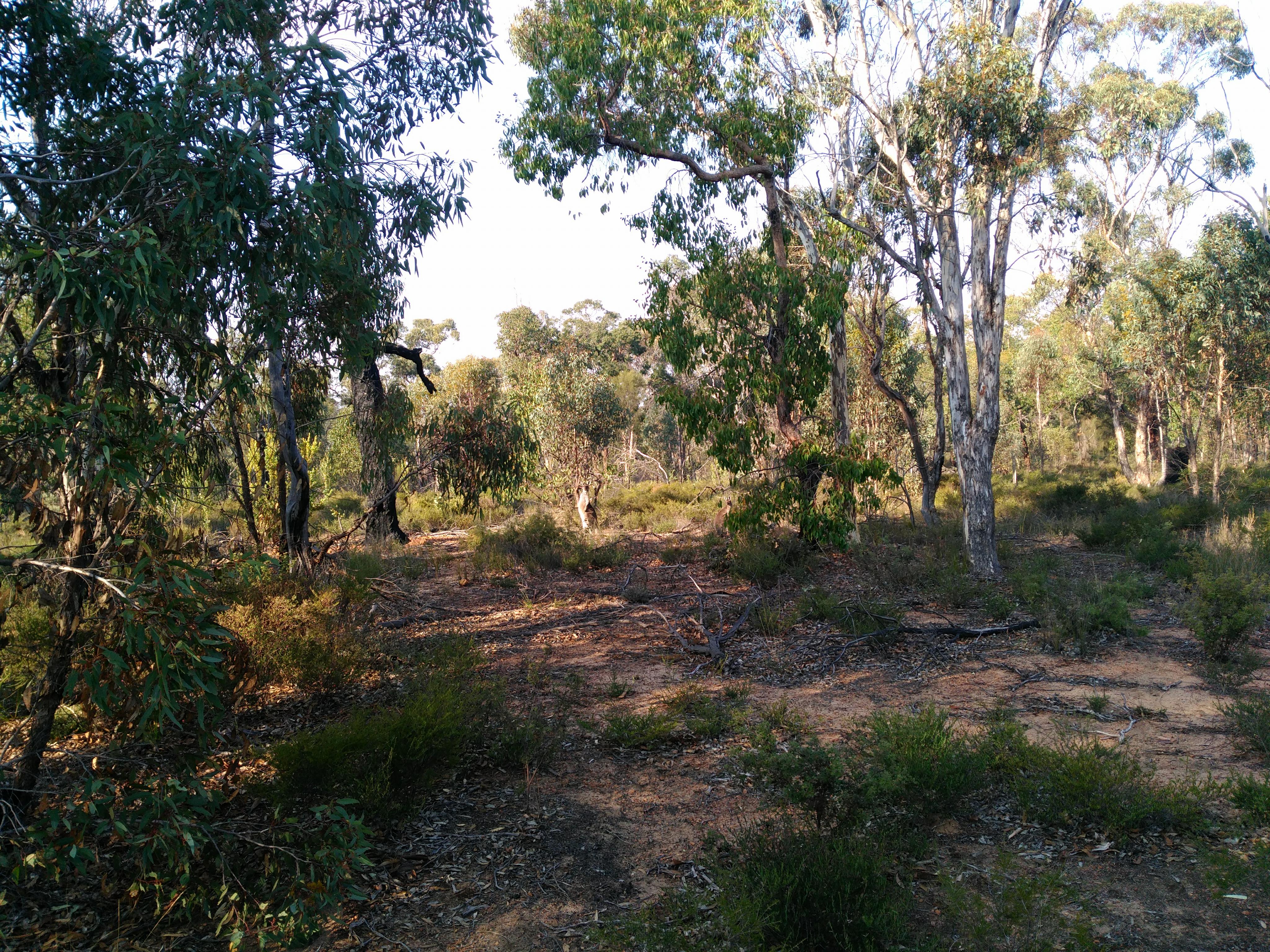
By Christmas 1964 we were in our new house on a quarter acre block; south of the Swan River in a new suburb laid out in the popular grid pattern. Our street would soon go on for miles, but at the time there was still a sandy track between us and the few shops. The location was ideal for Dad’s new job and we could see my future high school across the paddocks opposite our house. On one side of our house was bush with beautiful ‘Christmas Trees’ covered in yellow blossom. The other side was an empty quarter acre block that mirrored ours with gum trees and black boys – now days they are called grass trees – almost prehistoric, they had black trunks with long tough grass like spikes. They were said to grow just one inch a year, which is probably why they were only waist height.

48368557_265702204123652_6619187581215047680_n

On the other side of the empty block were our only neighbours, Mable and George, dinky di Aussies who had retired from the goldfields in Kalgoorlie. George got himself a job as a dustman and after work devoted himself to the novelty of a television set. Mum and Mable became good friends, they were both strangers in Perth; to Mum it was a tiny city, but to Mable huge, she had never been on an escalator. Mable and George’s only son lived in The Eastern States, two thousand miles away; he may as well have been in another country. Even today Perth is still the most isolated modern city in the world.

DSCN4070

Around the corner were more houses; Dad soon found me some new friends when he went to buy petrol and met a Pommie who worked at the service station. The two families with two girls each were more established and had television sets. Mum and Dad had vowed never to get one now we had got used to its absence, they weren’t missing much, television was quite new in Western Australia.

Christmas was strange, no relatives to come and visit, no parcels to arrive in the post and Mum and Dad on a very tight budget.  My parents had not found a church, nor were they likely to find one to match the ancient parish church with a thriving congregation that we had left behind. Candlelit services and the dark greens and reds of winter were now in the past. But when our packing cases finally arrived it was like Christmas as we were reunited with our favourite books and toys.

Only one of my new friends was also starting high school at the beginning of February 1965. I was glad to have someone to go with, but as we walked along the sandy track on the first morning Linda told me that if you didn’t pass your junior exams you had to repeat the whole three years. I believed her.

There were fourteen hundred children in the school, it was a senior high school so that included fourth and fifth years. We all lined up on the grass in front of a long veranda. There was no assembly hall. Names were called and we were allotted to the ten classes, Linda and I were separated. Although education was comprehensive the classes were ranked. 1-9 and 1-8 the only classes to do French, then all the way down to 1.1 and if you were in 1-Special that was bad… I had made it into 1-9, another girl in my class later told me she thought 1-9 was the bottom class and went home and cried.

I was on my own, but not for long, an Australian girl said ‘Do you know anybody?’ she was new to the area and in the same boat, we became friends.

Retro Blog Australia 1964

Read last week’s blog about our arrival  in Australia here.

https://tidalscribe.wordpress.com/2019/10/23/retro-blog-1964/

After a week in Perth, Western Australia, Mum and Dad had found a house to rent, but the blinds were down when they viewed it. When we moved in and the blinds were open it was very gloomy and not too clean – certainly not to my mother’s standards – but we did not realise that the aim of Australian houses was to keep the sun out and the house cool in summer. The other thing less visible, but soon revealed was the presence of fleas. They only liked Mum and my sister, so perhaps it was just as well that she was too young to go to school, as the teachers might have got the wrong impression when faced with a flea bitten pommie child.

32446751_10213022320966352_3869735468924928000_n

The wonderful thing about our new street was it had a library. With no television and only what we had brought in our suitcases, books were vital. We had no other possessions because our packing cases were still at Southampton Docks. Dad had made all our packing cases with rough planks from the timber yard; they were sent on ahead for their six week voyage, but there was a strike at the docks so they didn’t move. Mum and Dad had to eat into their capital to buy five of everything, bedding, plates etc. This was when we discovered peanut paste. Hard though it is to imagine a world without peanut butter, we had never tasted it in England and thought it was something exotic Americans had. In Perth it was called paste and came in jars that were actually drinking glasses; we had to eat our way quickly through five jars, lucky we loved our new treat.

The neighbours didn’t talk to Mum, except for a Dutch lady who introduced her dog.

He’s a Kelpie ( Australian sheep dog ) but mit the ears floppin down instead of mit the ears stickin up. Ever after, that was our term of reference for describing dogs.

DSCN4072

The summer term was well under way in Australian schools. Children started at six years old, so though my five year old sister had already started school in England she could not go. She was so bored Mum kept sending  her to the corner shop to buy one item at a time.

My seven year old brother could fit in with the right age group. I had already started at grammar school in England that September, now I had to go back to primary school. As Australian children started high school at twelve I could have ended up having to start another year of primary in January. Luckily I was put in Grade Seven and the teacher, Mr. Wooldridge, was excellent. He said it would be a disaster for me to be kept behind so determined that I would pass all the end of year tests. The maths setting out seemed to be back to front and upside down to what I was used to and of course I had no idea about Australian geography or history, but I got through. There are teachers who teach the work and teachers who talk to you about life and you always remember them. He told the dark World War Two story that I borrowed for Jennifer’s teacher in my novel, Quarter Acre Block.

The school was very different from my little Church of England junior school. No uniform, no school dinners; we just sat outside with our sandwiches, peanut past of course. The only other difference was the girls were a year older, more grown up and just liked sitting talking at break time instead of belting round the playground, but they were friendly.

30550812_10212842448149644_161802627_o

We were still going down by the river, but I hadn’t learned to swim yet. The school summer outing was to Yanchep Park – everybody went on outings to Yanchep Park, about 30 miles from Perth; a very large nature reserve with a lake and caves. There was also a swimming pool and I had not told my class mates I couldn’t swim. Everyone was jumping in and I figured I could drop in and catch hold of the bar on my way down and cling on. I just went straight under, but luckily came up again, only to hear some snooty girl saying people who couldn’t swim shouldn’t be in the pool. I suppose it would have been even more embarrassing not to have surfaced.

School broke up before Christmas and we had six weeks holiday ahead. Dad’s search for a job and a house to buy was still on and the packing cases had not yet arrived.

Read the story of the Palmer family for 99 pence or $1.27


Retro Blog 1964

What if I had been blogging when I was eleven…

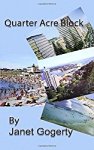
My novel Quarter Acre Block is based on our family’s experiences as Ten Pound Pommies migrating to Perth, Western Australia, but is not autobiographical. Readers ask which parts are real? Some people say ‘weren’t your parents brave.’

Brave is going to a country with a different language or as an asylum seeker, being invited by the Australian government and given free passage with only £10 per adult to pay for administration costs, is not in the same league. Of course leaving your relatives behind and burning your boats with no job to go to and little capital is braver than staying put…

I needed my mother’s help to get the adult point of view, but the Palmer family are not my family. I wanted the story to be realistic, so the Palmers follow the same journey as we did. The ‘six week holiday of a lifetime’ sounded fun and I was envious of those who had come by ship, crossed the equator and met King Neptune, but the Palmer family had to fly.

I knew no one who had been in the migrant camps: I don’t think my father would have persuaded Mum to go at all if she had to face the prospect of a camp! She hadn’t been in the services during the war and had gone from home straight to marriage, so barracks and camps did not fall within her experience. Dad knew ‘someone from the office’ who had migrated and they sponsored us. The chap met us at the airport well gone midnight and as we drove across to the other side of the little city Mum was already looking out of the ‘station wagon’ in dismay. Once on our own, inside the caravan booked for us, she was soon saying ‘Rob, what have you brought us to’. We hadn’t seen much in the dark, but Mum had apparently focused on endless rows of electricity poles. Full of the whole big adventure I was exasperated that she was complaining when we had only been in Australia two hours.

The friend returned at nine am to take us down to Scarborough Beach. His family had taken to beach life and were living ‘the dream’. My younger brother and sister were terrified of the waves and I clung to a plastic surfboard, too embarrassed to tell their children I couldn’t swim. After that experience the only beach my parents wanted to sit on was Crawley Beach by the Swan River. It was very pleasant and Mum and Dad treated this first week as a holiday, we even had an ice cream every day, unprecedented, though it was not like Mr. Whippy and tended to have lumps of ice. Perth City was small then and you couldn’t get lost. Supreme Court Gardens were very pleasant and down by the Swan River was the wide open esplanade, so far we were living the dream.

DSCN4070

After one night in the cramped caravan I had been despatched, or invited, I’m not sure which, to stay with the family of our sponsor. I was to be in the boy’s class at school and his younger sister did ballet, so I had nothing in common with her! I cringe now to think of my prepubescent self wandering around a house of strangers in my flimsy baby doll pyjamas, but all was above board.

After a week Mum and Dad had found a house to rent; as the venetian blinds were closed they didn’t see properly what it was like until Mum pulled the blinds up when we moved in. The only neighbour to speak to Mum was a Dutch lady. It was also time for me and my younger brother to start school, where their summer term was in full swing. This was nothing compared to the reality that Dad had to find a job and a house to buy and our packing cases were not going to arrive… more next week.

DSCN4068

Read about the strange year leading up to our departure from England in last year’s blog.

https://tidalscribe.wordpress.com/2018/03/19/quarter-acre-blog/

Read more about my novel at my website.

https://www.ccsidewriter.co.uk/chapter-six-fiction-focus/

Peek inside the book.


The Ghosts of Christmas Past – Episode One

What was your worst Christmas, your strangest? Some Christmas memories blend in, others are never forgotten. For those of us who had a happy childhood Christmas remains in our memories as a time of heady excitement; dark winter days brightened with nativity plays, school parties and candlelit churches. There was one traumatic experience that dulled the excitement when I was seven. At school we were told to write a letter to Father Christmas, the girl sitting in front of me turned round and said ‘What’s the point of writing to Father Christmas when he doesn’t really exist?’ I tried to appear nonchalant, I was not going to admit my ignorance, but I was devastated. As soon as I got home from school I asked my mother if it was true; my last hopes were dashed and she swore me to secrecy, not to spoil it for my younger siblings. I soon recovered, the Christmas atmosphere remained and there was still the thrill of presents to unwrap.

30769005_10212869667870120_1043963808_o

When I was eleven we emigrated to Western Australia; our arrival was in October, we moved to our new house in December and my childhood Christmases disappeared forever. This was not the fault of Australia or my parents; I was growing up, the dark mystery of winter days was replaced by bright sunshine, we knew nobody, there were no gift bearing relatives visiting and my parents’ budget was tight. But by the following year Christmases were settling into a new pattern and we acquired family friends to celebrate with.

32446751_10213022320966352_3869735468924928000_n

My first Christmas away from home, when I was nineteen, came about when my best friend and I planned a six week summer holiday trip across Australia, inveigling a mutual friend to share the driving and his car across the Nullabor Plain. She assured me her relatives in South Australia would be delighted to have the three of us for Christmas and indeed they were very welcoming. A collection of aunts and uncles had orchards and shops. On the first morning of our stay my two friends were commandeered to take one of the aunts to hospital with a miscarriage, I was left behind to look after her young children who I had never met before. More relatives arrived and unbeknown to us they had spotted a freezer that didn’t work properly in uncle’s shop, they warned each other not to eat the chicken. A very pleasant Christmas Day was followed by food poisoning on Boxing Day.

Next week – what was I doing at Heathrow Airport 6am one Christmas morning?

Quarter Acre Block follows the Palmer family as they emigrate to Western Australia in October 1964. At  Christmas they realise how much they have left behind.


Tackling Taboos

Mum and Dad bought their first house when I was six; they were very happy to live on the ground and have a garden and Mum said we wouldn’t move again now we had our own house. But the new estate was a long walk from the shopping parade in the little town. Luckily the greengrocer came round in his van, the butcher’s boy came round on his bike and the milkman delivered a box of groceries weekly.

 When I was old enough to go cycling off on my own I would be sent on urgent errands to the little parade of shops on the next estate. Sometimes Mum would give me a note to hand to the lady in the drapers. She would reach under the counter, put a packet in a brown paper bag and give it to me, these were Mum’s sanitary towels.

We emigrated to Western Australia when I was eleven, exactly five years after Mum said we weren’t going to move again. After a few weeks at school the summer holidays started and so did my first period. I was not shocked because my mother had told me what to expect, but I was mortified and furious that it had happened so soon, ruining the holidays. One day I came home and said Christine’s mother wanted to take us all swimming. Mum said Did you tell her you had your period. I replied that I had been too embarrassed. Going to the local chemist was also nerve racking, the sanitary products were not hidden away, far from it, illuminated signs advertised Modess in larger stores. But if I went into the chemist and there was a man behind the counter, or a male customer walked in, I sneaked out empty handed.

I started at my new high school of fourteen hundred pupils. One day all the boys were ordered to stay in the classrooms and all the girls ordered to the largest quadrangle to be addressed by the headmistress. The talk was about the correct use of the new incinerets being installed in the girls’ toilets. I was always rather nervous of these machines.

By strange coincidence they were discussing periods on Woman’s Hour, BBC Radio Four, just as I started writing this blog; no taboos on this daily programme, they talk about everything, but modern schoolgirls still feel periods aren’t treated a normal.

 Men would not put up with it, or perhaps not survive. Forty years or more of our bodies getting ready to conceive every month, keeping the equipment working when we may want to use it only once, twice or never. Suffering varying from cramps to endometriosis laying you up every month. In my mother’s young days at the bank she was dispatched every month in a cab to deliver her poor colleague home, ill with her period. They must have had an understanding boss. Modern life has not dispatched with the age old problems, but recently there has been a flurry of discussion from every angle.

A while ago a marathon runner apparently decided to run without period protection, I’ll leave the rest to your imagination. It sounds like my worst school PE nightmare come true and I’m not sure what she was trying to prove, that we shouldn’t be ashamed presumably. There are plenty of cultures where women were and still are ( according to the posters in Ladies’ toilets at motorway services ) expected to go and sit out in the desert till their period has finished. Some major religions connect menstruation to spiritual impurity.

But even when periods are treated as normal and healthy there are other aspects which have come up for serious discussion lately.

 There is the environmental issue and some women are making their own reusable pads; things have turned full circle, my mother and her sisters made their own pads out of torn up old sheets and had to soak them in a bucket of salt water.

Then there is period poverty. At first we smugly thought it only happened in third world countries and to refugees on the move with none of life’s necessities. Then it turned out many school girls in Britain can’t afford to buy sanitary protection, making my teenage trials and tribulations seem petty. Scotland is leading the world in supplying free products to all schools and colleges. In the rest of Britain charities are donating products to schools and food banks. 

My novel Quarter Acre Block is inspired by our family’s migation to Austalia. The story is told from two points of view, eleven year old Jennifer’s and her mother’s.

https://www.amazon.co.uk/Quarter-Acre-Block-Janet-Gogerty-ebook/dp/B00A6XDUQM

Tidalscribe’s Tiny Terrors

As I sat reading a book I felt and heard the reassuring rumble of the underground. But I was not on a London tube train, Mum and Dad were in the kitchen next door washing the dishes. We were in our little suburban house in Perth, Western Australia.
It was 10.59am, a bank holiday on the 14th October 1968, we had just experienced the Meckering Earthquake, my mother said she had to cling to the kitchen sink. The small town of Meckering was 130 km away in the wheat belt, the 45 second earthquake was magnitude 6.9 on the Richter Scale making it one of the largest recorded in the seismic history of Australia. A few buildings in Perth were damaged. A baby had a miraculous escape in Meckering, their town fell down, but no one was killed. Had the epicentre been in a big city it could have been a major disaster. For us it was exciting, proof that Man cannot control nature.

At school the next day the earthquake was the only topic of conversation. In the classroom we were all startled to feel an aftershock, this time we knew what it was and we were scared. The teacher told us to calm down. There was no evacuation or talk of emergency procedures. It was unlikely the one storey asbestos building would collapse dramatically.

DSCN4070

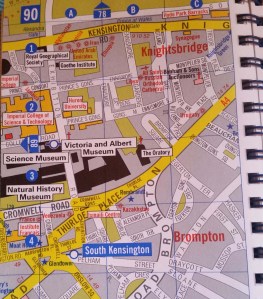
Fast forward to December 1974, Knightsbridge, London; I had a Christmas job as a floorwalker in Harrods toy department. It was the Saturday before Christmas and that afternoon I had the last tea break. The staff restaurant was on the top floor. As I stood in the Ladies combing my hair I heard a muffled thud and assumed it was an IRA bomb going off somewhere else. Of importance later was the fact that I had my handbag with me.

I walked out to see the busy shop deserted, the escalators switched off and a couple of security guards annoyed to see me still in the building, everyone else had been evacuated. Somehow I caught up with colleagues as we poured out of the building; it was only as we looked up and saw thick black smoke pouring from the corner of the iconic department store that the shock hit us. No one was hurt that day, the heroes were the staff who had noticed something suspicious in their department and evacuated customers safely. Heavy fire doors had contained the explosion. Once again I had had a wide escape. We sat in a nearby pub waiting to go back in and fetch our coats, but nobody would return to work that evening. Lucky for me I had my handbag with my season ticket for the train, even if the journey home was a bit chilly without my coat.

39799723_488185681646015_9009656414120968192_n

News is with us in all the media twenty four hours a day and this year fire, flood, hurricanes and earthquakes have been regular events and of a magnitude hard to comprehend. We wonder what it is like to be at the heart of a major disaster. Reporters find their way to the most unreachable scenes of devastation only to ask victims how they feel.

P1040747

Back to Perth, Western Australia, when my fourteen year old self was riding her bike. The suburbs were laid out in a grid design with long straight roads, there was a ‘Give Way To The Right’ rule, logical as long as everybody obeyed; there were always accidents at intersections. I was pedalling towards a corner when suddenly two cars collided in front of me, one of them rolled over. The two young drivers clambered out with some difficulty, but both were laughing, unhurt. When I tried to get back on my bike my legs were shaking so much I couldn’t lift my foot onto the pedal. I have always wondered if everyone benefits from adrenalin when faced with real peril, or if some people turn to jelly. How many writers secretly long to be in the midst of a disaster and emerge unscathed, or just a bit hurt so they can tell their dramatic story from a comfortable hospital bed?

Our family’s migration to Western Australia inspired my novel Quarter Acre Block – only 99 pence on Amazon Kindle, also available as a paperback.


Sunday Salon – the alternative to the Sunday Supplements

Dip into two books and two television dramas.

I review every book I read on Amazon and Goodreads and also share my reviews here.

This week, two very different English novels; one dark, one light.

Out of Time  by Jaye Marie

4.0 out of 5 stars In the mind of a killer.

By Janet Gogerty on 21 September 2018

Format: Kindle EditionVerified Purchase

I hadn’t read the previous novel about Kate, so knew nothing about her, but Kate knows nothing about herself either when she wakes up. This is a thriller with no heroes, the Snowman is desperate to help her and it seems at last he can, but it is not to be. If this was a television thriller the Snowman would save the day, but the story becomes more complex. We follow the killer’s thoughts as well as the other main characters, an advantage of books over screens. The reader will never sympathise, but we might comprehend what’s going on in Jack’s mind. Michael is another character who we think might save the day, but he is a mix of flaws and must face up to the grief he has caused the woman he loved and the other woman who loves him. This is not a novel for the faint hearted; what starts as a mystery of unconnected murders is also the story of those unfortunate enough to be in the path of a killer or know his intended victim. We know from the news that bizarre killings can occur when a murderer becomes obsessed and this murderer is obsessed with Kate.

Mum in the Middle by Jane Wenham-Jones

5.0 out of 5 stars Entertaining and humorous.

ByJanet Gogerty on 8 October 2018

Format: Kindle EditionVerified Purchase

I downloaded this novel onto my Kindle as it sounded fun and we have relatives who have become DFLs* on the Isle of Thanet. But this is a story that would make an enjoyable read for anyone with family or lively family as neighbours. Whether you are married, divorced or thankful to be single, the lives of Tess and her family and friends will probably sound familiar. The story bowls along, with prospects of romance dashed at every twist and turn and plenty of modern life problems.

*‘Down From London’ – a good train service from St. Pancras, lower property prices and the seaside have made the Isle of Thanet, Kent a popular choice for workers needing to commute and also artists and entrepreneurs.

closeup photo of person holding panasonic remote control in front of turned on smart television
Photo by freestocks.org on Pexels.com

How do you watch television these days, perhaps not even on a television set? But drama serials are still ever popular, whether we sit down each week, catch up digitally or binge watch. I like the idea of the TV schedule, but inevitably if we’re out or have visitors I am thankful we can record or catch up. PAUSING programmes is also a brilliant asset as my good intentions to leave the computer or the kitchen by 9pm always fail.

There have been so many good dramas lately we have some still to watch. My two recent favourites were very different.

Vanity Fair by William Makepeace Thackeray is a long novel that many people on social media have confessed to not having read. But with a film and at least four television adaptations we can be forgiven for not being sure if we have actually read the book. BBC 1967, 1987 and the one I remember really enjoying was a few years ago – no it was 1998! So how would ITV’s new production compare?

Thackeray, played by national treasure Michael Palin, took his rightful place as the narrator at the beginning and end of each part; he watched his characters go round and round on a carousel.

The story starts in 1813 England, a turbulent society embroiled in war for twenty years. Thackeray introduces a world where everyone is striving for what is not worth having. The impossibly smart red and white soldiers, beautiful women, lovely horses and clean streets were not out of place because he wanted us to watch his characters in a performance. The battle field sequences contrast with this.

Becky Sharpe has nothing, but is determined to have everything, whoever she hurts on the way. We are whirled through years of love, heartbreak, family troubles, business disasters and tragedy with one love story ending happily.

https://www.radiotimes.com/news/tv/2018-10-12/vanity-fair-cast-itv-amazon

BBC4 on Saturday nights is a must if you love Scandi Noir or anything with sub titles. We have followed Danish politics, Swedish thrillers, Sicilian detectives, Paris police, Belgian undercover in French and Flemish, but most recently it has been Outback Noir.

Mystery Road in six episodes, was filmed in the Kimberly region of north Western Australia. Having lived in Perth, Western Australia and with family there, I try and watch any Australian series that come our way. I have never been to that part of the state, another country to suburbanites in the city. The series was worth watching for the scenery alone, wide landscapes of dusty red soil and long roads, a fascinating country town and a cattle station homestead that makes you yearn to live somewhere with endless space. A great cast did justice to a complex story linking past and present with layers of secrets. The old landowning family, the indigenous people and European backpackers all find their lives bound together in small town life.

https://www.bbc.co.uk/mediacentre/latestnews/2018/mystery-road


Friday Flash Fiction -A Shot Rings Out

This week, flash fiction from an occasional guest blogger; my sister from down under takes you into the Australian Bush.


A shot rings out, a sharp pure crack across the cold night air. It is impossible to tell how far it has travelled, but I know it must be from somewhere within the bush conservation reserve only a paddock’s width away; somewhere within its 3,000 acres. I don’t know how to feel. Glad that someone has killed one of the wild pigs that root around the delicate orchids sheltering beneath the carpet of she-oak needles? Angry that someone has shot a kangaroo, going about its rightful business? Or scared? I have always said I felt safe alone in the shed.  A big shed, a home from home, lined with straw bales and furnished with beds and comfortable chairs. It was so isolated, why would anyone come down this road? But they have. They are near and I know nothing about them. Him? It will be a him, I’m sure. Not a her. Just him, or was he with friends? A disturbing thought. No, I’m letting my imagination run away with me. It’s probably just a local farmer, after foxes.

Another shot cracks the air, reverberating through the darkness. Stay calm, of course it’s a farmer. It all goes quiet and stays quiet. Ten minutes go by, nothing to worry about. Go back to sleep I tell myself, and I do.

32446751_10213022320966352_3869735468924928000_n

Then, suddenly, I am awakened by the sound of tyres on gravel, not just driving, but ripping into the gravel, tearing around a corner and onto the road, my road, and coming nearer. I hear whooping, with the wildness of the inebriated, a sound that confirms my worst fears. This is no farmer, this is a group of men, and they are drunk. The most frightening animal on the planet, the human male, drunk and hunting in a pack. I lay still, like a frightened rabbit, as if they might hear me if I move. I tell myself to not be stupid. All the lights are out, they won’t be able to see the shed on this moonless night. Or so I thought, but the sound of the revving, roaring engine comes ever nearer, too near to be on the road; they have turned into my driveway. I remember the solar powered garden lights that line the long driveway, like runway lights, guiding a plane in to land. And now it is guiding them inexorably towards me, until I see another light splitting the darkness, the spot light fixed to the roof of the car, the spot light they use to dazzle their prey. Then the skid on the gravel as the car comes to a halt. They spill out with raucous laughter and joking.  One.  Two.  Three voices.

‘Here’s a place to stay!’  one shouts, and then the final act that completes my terror. The door handle moves. They are here. And I have no escape.

by Kate Doswell

Sunday Salon – Guest Blogger

Second in the series of occasional blogs by my Sister Down Under

Return To Sender

I often send Birthday cards to relatives in England, and as I seal down the envelope and stick my address label on the flap, I always find myself wondering if there is any point. If the address was to be incorrect, would they take the trouble and expense to send it all the way back to Australia?

37072684_10213413731471370_3835982618025787392_nI now have my answer. The other week, I received a blue envelope with an air mail sticker and an Australian stamp on it, and it was addressed to me. Someone had crossed the address out with a blue pencil, and there was a red Royal Mail sticker on it declaring that the address was unknown. It wasn’t a surprise that the address was incorrect, as it belonged to the youngest of my nephews, the inventor in the family, the itinerant creator of firework displays with a bedroom full of enough electronic equipment to drain the power grid of the Southeast of England. What was surprising was that the Australian postmark said it was posted at 6 pm on the 26th of July, 2011. Seven years ago. 

37065444_10213413736551497_5748848274412929024_n.jpg

So, yes, they do go to the trouble of returning letters. And an awful lot of trouble by the looks of it. Not for the Royal Mail the conventional route of placing it on a plane to fly half way around the world. No, this was more like the challenge taken on by Michael Palin to go around the world in eighty days without flying. The Royal Mail Postman was to get to Australia travelling overland, and taking sea journeys only when it was unavoidable.

What a tale that post man must have to tell! Imagine the deprivations and adventures he must have encountered on his 7 year odyssey! Crossing the channel to France was probably easy, but was he then waylaid by a French temptress, dallying with her for many months before silently slipping out at dawn one morning to continue his journey? Did he scale the Alps and get caught in a storm, to be nursed back to health by a local farmer and his daughter?

 One imagines him crossing the Mongolian plains, joining the Mongol herders, living in a Yurt and learning to survive off the land. He would have regretfully had to say goodbye, explaining the Royal Mail always gets through, and he would put his uniform back on with pride, not withstanding that it was getting a little threadbare. He would have gone on a pilgrimage through India – retracing the steps of his colonial forefathers who had first brought British law and the British postal service to that teaming and untamed land. Then on to South East Asia, tiring now of the crowds and the jostling, longing only to reach that wide, open land of Australia.

37033862_10213413735791478_6723459611816361984_n

What a relief he would have felt as he stepped off the small fishing boat at Darwin, only to be arrested as an illegal immigrant. He would have spent quite some time in detention, and despair would have been his companion as he waited for his superiors in London to confirm who he was and what his mission involved. There would have been a delay at their end, while they overcame their incredulity and double checked his credentials before rejoicing that he was not, as believed, dead – the first (or so they thought) postman to die in active overseas service.

And finally, catching a cruise ship (courtesy of the Royal Mail in gratitude for his services) around the coast to Fremantle. What a reception he would have from his Australia Post colleagues – glad to see him, but at the  same time a little jealous that they could no longer boast they had the longest mail routes in the world.

And as for me – time to tell my nephew that he isn’t unloved, and that I did send a card, but something happened to it along the way

Kate Doswell,  15/07/2018.

ANZAC Day

Today is ANZAC day and what better way to mark it than with these poignant words from a special guest blogger. In the first of an occasional series my Sister Down Under writes about a unique island.

A Very Humble Monument   by Kate Doswell

Some thoughts for ANZAC day   25th April, 2018.


30772291_10212842443909538_1334244612_o

I’m not sure what it’s like in other Commonwealth countries, but in Australia we take our war memorials very seriously, and rightly so. “Lest We Forget” is inscribed on most of them, and as we read down the long, alphabetical lists of names, we are reminded of the truly terrible cost of war. Even in tiny outback towns, the list seems far too long, far too many of the youngest and strongest of the community taken from those that are left behind to carry on.

Most of these monuments are made of stone, imposing obelisks in bluestone or limestone or granite, depending on where they are situated. They are usually in the centre of town. Running around the monument and integral to its form is a ledge wide enough to sit on. People may sit and contemplate awhile, or simply pass by on their daily business or as a visitor to the town. How many, I wonder, stop and read the names and wonder at the fate of these lost men? Do the locals become so used to it that they just pass by?

30546417_10212842451869737_1397495450_o.jpg

However, not all monuments are as striking or as prominent, and last week I found one that was truly humdrum. It was on the Island of Rottnest, 20 km from the West Australian Port of Fremantle. For many years this Island has functioned as a much loved holiday playground for the people of Western Australia, and the tourists who come to our isolated part of the world. It has a rather grand Roman Catholic church high on a hill, but the Anglican church is represented by a much older, but more modest chapel of limestone and whitewashed render.

30767987_10212869608108626_1610926664_o

30772440_10212869676350332_1722123227_o

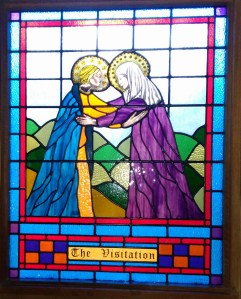
I visited the chapel late in the day, as there were other tourist activities that had claimed my attention. The door was stiff to open, and the interior gathering the gloom of the impending sunset, so the first thing I noticed was the distinctive smell of very old (to our European Australian eyes) limestone buildings from the early settlement era. Above the altar, I could see a simple, but attractive stained glass window depicting The Annunciation. Turning from there I looked at the pews, some thought to have been made by the Aboriginal Prisoners for whom this Island acted as a prison for 60 years. There were brass plaques on the wall in memory of various European families who had played important roles in the Island’s history, but the one that caught my eye was one on the door of a storage cupboard at the back of the chapel. It looked relatively new – certainly not crafted by the Aboriginal men in the 18th century – and I guessed it had been built and installed after the chapel was reconsecrated in 1965. It was utilitarian – capacious and solidly built but without ornament or distinctive features. Except for the plaque. A simple paper notice, its words carefully handwritten in Old English script, and framed with a plain wooden frame, so small it could be covered by two hands.

“This cabinet is dedicated to the memory of those Rottnest Islanders who served their country in times of war and peace.”

I have never seen such a monument before, if I can even use the word monument. Is this the only place in the Commonwealth to have such a homely reminder of the dead?


30771997_10212869673830269_2127583472_o

30769005_10212869667870120_1043963808_o.jpg

30550196_10212869673910271_984660608_o

30825116_10212869673870270_2125740430_o


I didn’t open the cupboard, I had no business to do so, but I imagined it containing vestments for the visiting priest, the chalice and paten, hymn books and orders of service, all the paraphernalia of a functioning chapel. I thought of those remembered by this most humble of monuments, and wondered if they would have been disappointed, aggrieved, or even angry that they had nothing grander built in their memory? But then again, maybe they would have been pleased that, having it placed on an object that was in regular use for the worshipers, they would readily and frequently come to people’s minds. These people, no doubt, would have attended this chapel, maybe some even came in the week before they left to sail away to war. Now, each time someone opens the cupboard and sees that little plaque, they are back here again. Back home to stay.

30547133_10212864000568441_1695530355_o


Observed on 25 April each year, Anzac Day was originally to honour the members of the Australian and New Zealand Army Corps (ANZAC) who fought at Gallipoli against the Ottoman Empire during World War I. It is one of Australia’s most important national occasions. It marks the anniversary of the first major military action fought by Australian and New Zealand forces during the First World War.

30550812_10212842448149644_161802627_o