Flash Fiction Friday – Flashback

Simon Simmons, the Radio Three presenter, looked forward to the rest of the day. He had enjoyed a pleasant lunch and he was on time for the afternoon rehearsal. Another town, another concert hall, another orchestra and a conductor he had never met before; Ukrainian, Polish or Scandinavian? It didn’t matter; one of those brilliant young polymaths who spoke several European languages perfectly and had studied in all the major cities.

The music was well known to Simon, he had his notes ready for the seven thirty pm live broadcast; all he had to remember was the conductor’s name and how to pronounce it.

The conductor looked older, shorter than he expected and if he dressed that flamboyantly for a rehearsal, the audience could look forward to a colourful concert. He was checking the music on the stands, a punctual and efficient man thought Simon as he approached him with arm outstretched.

But the conductor did not shake his hand, instead he peered arrogantly at him and spoke volubly in German. Perhaps he had forgotten what country he was in, not surprising the way these maestros charged around the globe.

‘Welcome to England.’

The conductor ignored him and stepped up onto the rostrum to examine the music. They both turned to the sound of approaching footsteps. A young man in jeans and T-shirt appeared from backstage, he spoke in perfect English with a precise East European accent.

‘Good afternoon, you are from the BBC? I am glad you could come to the rehearsal.’ He lowered his voice. ‘Is that your sound man on my rostrum?’

‘No, I thought he was the…’ Simon did not want to offend the world famous conductor. ‘He’s not with us, so he is obviously not meant to be here, though he does look familiar, shall I call someone…’

Before he could finish they were interrupted by the sharp guttural tones of the stranger. The conductor looked puzzled, but replied in German and approached him. The two engaged in lively conversation; the conductor patted the man’s arm and turned to Simon.

‘I presume he can’t understand English, I think he’s German, but I can’t grasp his accent. We may have a, how do you say, ‘nutter’ on our hands, he thinks he is Beethoven.’

Simon felt a lurch in his stomach, that’s where he had seen the man before, in paintings.

The conductor laughed. ‘He does look like him.’

The stranger scowled, well aware they were laughing at him.

Simon had an idea, it seemed a shame not to harvest the situation for future broadcast anecdotes, especially if they let him do The Proms this year. He motioned to the Steinway piano at the side of the stage.

The conductor smiled in agreement. ‘Let Beethoven prove by playing to us.’

He turned and spoke in German to the stranger, who strode over to the piano, then halted. He examined the instrument, lifted the lid carefully and propped it open, then fingered the keys as if they were a lover’s body. He played a few chords, held his ears, then nodded in approval.

As he played exquisitely, both men recognised a Beethoven sonata, though the tempo was faster than they expected and he added extra flourishes.

‘So he’s a brilliant musician,’ said Simon ‘as are many visiting soloists. Ask him what today’s date is.’

A few brief words were exchanged.

‘Twenty Seventh of February’

‘That’s today’s date.’

‘1813…’

ooo000ooo

An extract from Maestro, one of the short stories in Times and Tides.


Rang-Tan: Greenpeace launch animated story to raise awareness of the story of dirty palm oil

Eco film of the week – Rang-tan’s story. It’s hard to keep up with what we shouldn’t be buying. At our end busy shoppers need to buy food and worry about their budget and at the other end people need jobs, they take jobs that supply a product in demand. It’s companies with the money and power that need to see the bigger picture and take responsibility.

Pause and Applause

We were at a matinee concert at Bournemouth Pavilion, near the front was a young mother with a little boy who was chatting excitedly, when the music started he quietened. After a few bars the conductor raised his baton for a pause in the music; the little boy called out in a loud voice STOP. It was so funny. The conductor lowered his baton unperturbed and the orchestra carried on playing, but before the next piece of music a busy body usherette came bustling down and moved the mother and child further back and to the side. I hope it didn’t discourage them from live concerts.  After all, the child was better behaved than some adults and Bournemouth Pavilion seems to attract more than its fair share of odd people when Bournemouth Symphony Orchestra are playing.

The seats are very close together with little leg room, not surprising in a building nearly a hundred years old, so just getting to one’s seat involves lots of very English ‘excuse me’s and ‘sorry’s. One afternoon in the foyer, an ‘odd chap’ was already causing confusion in the queue for programmes. Soon after I sat down he came shuffling along, huffing and puffing, treading on toes as he made his way to the middle of the row in front, then with much shuffling, grunts and elbows flying finally sat down. Nobody could believe it when in the middle of the first piece of music he stood up and reversed the whole procedure till he finally reached the aisle again.
One evening the lady in front of me started rummaging in her bag the moment the first notes were played, her friend whispered advice ‘In my experience the more you look the less likely you are to find what you are looking for.’ The rummaging continued until the last note when she triumphantly held aloft what she had been looking for – her glasses.

Surely no one would unwrap sweets noisily? Yes, perhaps they can be excused if they have just had a coughing fit. But why would anyone eat a packet of crisps in a concert? One evening, across the aisle from us, sat a lady who we assumed had come along as carer or friend with a very disabled lady in a state of the art wheelchair. The disabled lady sat quietly enjoying the concert and needed no attention from her friend, so what on earth was her companion doing digging in her bag, rustling around, disturbing everybody and probably the orchestra as well?
Visit another Pavilion concert in a previous blog.

https://tidalscribe.wordpress.com/2018/02/26/wagner-elgar-and-all-star-superslam-wrestling

28423837_1994523800577400_5819792682395197918_o

Not everyone intentionally causes havoc at a concert. We were at the Lighthouse in Poole, the BSO were at full throttle in a lively movement of a Tchaikovsky symphony when we felt our seats vibrating. It wasn’t the music; several well built Saint John’s Ambulance people were wheeling a stretcher down the aisle, with even more disruption as they tried to get to the collapsed man; finally they wheeled him off with his poor wife, clutching her handbag, following after them. The orchestra played on valiantly, presumably the conductor would not have seen all the action, some of the orchestra must have, unless they were totally absorbed in the music.

Some people enjoy a night out without hearing the concert. I knew an elderly couple who came to the Lighthouse throughout the season. He loved music, she did not and figured they could afford for him to go to more concerts if they didn’t buy tickets for her. She was quite happy to sit in the foyer with her knitting, holding court, chatting to the Saint John Ambulance and bar staff. At one stage she made a friend who also sat out the concert waiting for her husband.

26982451_1950181711678276_1013422918_o.jpg

If you have never been to a live concert before don’t worry, you won’t draw attention to yourself if you follow two simple rules. Don’t clap till you are surrounded by applause; even regulars don’t always know when a piece of music has ended. Second rule, don’t stand up, don’t move a muscle until the orchestra leaves the stage. You may think the concert is over because the conductor and soloist have been applauded and left the stage. Don’t be deceived, they will return, perhaps several times to more frantic applause and just when you really think it’s over and you will be in time to catch your train or get to the car park before your ticket expires, the pianist will sit down smiling and play an encore. At one concert the flamboyant pianist played three encores, each with enthusiastic flourishes, did I detect  a look of panic on the faces of the orchestra members, was she ever going to go home?


Sunday Salon – Recent Reviews

Two angels and a healer, an autobiography, a novelette and a novel; the three books I recently finished reading and reviewed on Amazon and Goodreads.

Or at least that was the plan, but for some reason Amazon would not accept my review of Angels Landing. I’m not sure why and won’t bore you with extracts from their ‘community help’. People have problems of all sorts with Amazon reviews, one of the reasons I decided to post  my book reviews on Tidalscribe.

DSCN4601

Angels Landing   by Christina Sandler

An autobiography inspiring on many levels, I gave it five stars on Goodreads

Sadly in the Twenty First Century we are too familiar with images of soldiers who have had limbs blown off, but stoically work hard at their rehabilitation with the support of others in the same situation. When we imagine what that would be like we probably have degrees of what we could bear, one limb lost is surely better than all, but most of us would no doubt make an awful fuss if we just lost a few fingers. People lose limbs in various ways, including through illness; Christina Sandler’s accident left her far removed from the instant medical response we see on hospital programmes.

On holiday in Australia, a car accident in a remote spot in the Northern Territory results in terrbile injuries. Christina’s recovery in the Darwin hospital took a long time because of the way her arm was lost, but it was excellent care, the staff at the hospital sound wonderful. The hospital became her world, though through her eyes we have glimpses of the life of the people of Darwin.
Back in England there was much more treatment needed, working up to the day she got her first artificial ‘pink Barbie hand’. This was still the eighties, artificial limbs have come a long way since then. Most of us would regard a serious accident as a good excuse to coast through life without too much being expected of us, but getting back to the teaching job she loved was not enough for Christina, she needed a new challenge, flying.
Looking up this book I see it was first published successfully in 2000 as a paperback and reviewers included one of her former pupils. A reminder that this is a true story. I would be so interested to know how life has been for her since that first solo flight.

https://www.amazon.co.uk/Angels-Landing-memoir-Christina-Sadler-ebook/dp/B077ZW34YK


6


Where Angels Tread: a novelette

by Loretta Livingstone

4.0 out of 5 stars  A modern day fairy tale

By  Janet Gogerty  on 10 August 2018

Format: Kindle Edition|Verified Purchase

A very different take on the homeless; most people walk by, but some stop to talk. This novelette tells the tale from each character’s point of view and some will surprise you. There is a happy ending and redemption, but not for all. This little book is rounded up with three delightful poems; from a creme egg to a rose.

DSCN6303


The Healer (Fraud or Miracle? Book 1) Kindle Edition

4.0 out of 5 stars    Is everyone being decieved, including the reader?

By  Janet Gogerty  on 11 August 2018

Format: Kindle Edition|Verified Purchase

There is nothing straightforward about this novel, we may think we are following Erica’s journey towards enlightenment, but it is not as simple as that. Gradually we realise we are not sure who to believe, perhaps the final truth will come out in Book 3. What is intriguing is that it does not matter how real the illness or the cures are, it’s how they affect Erica and those around her. I don’t think I liked any of the characters and certainly would not have enjoyed working for Erica. In her ruthless world of work she is surprised that even one person cares when she is ill. When she tries to return there is no welcome, the company has moved on, former colleagues expected her to die and appear affronted that she turns up to announce she is fine. Her personal life fares little better, even without the complications of secrecy we realise that being given a second chance of life does not necessarily make anyone a better person. Erica knows no other way of life and doesn’t have the resources to recreate herself as a lover of nature and humanity; events and new revelations also conspire against her.


35749717_2133314443365001_3886824946227216384_n

Friday Flash Fiction – One Fifty

The Diary

JD turned on his reading lamp and checked his diary.

Tuesday: meeting with the PM and Chief of Staff, 1400hrs Downing St.

Wednesday evening: banquet at Buck Palace, state visit.

Friday evening: with wife to Chequers, informal working weekend.

He stretched his legs out towards the fire; this was his favourite room in the house, his study, his den.

A sharp rap at the door irritated him as his wife entered without invitation. Her febrile state suggested important news, but he couldn’t rouse himself to give his undivided attention to what she was saying.

‘You’re not reading those old diaries again? I can’t see you ever starting that autobiography.’

He pretended not to hear.

‘Don’t forget we’re going to Waitrose tomorrow, shall we buy the beef there or at the butchers? We could have morning coffee, or would you rather try the new café at the garden centre?’

He sighed heavily.


Chords and Discord

Do you like those music quizzes on the radio where you have to listen to the opening or closing notes of a pop song or piece of music and see how quickly you can guess what it is? If you listened to an opening chord strummed on guitar for less than three seconds and not a single note more, would you guess the song? For many of us A Hard Day’s Night by the Beatles is instantly recognisable, probably bringing memories of the cinema where you saw the film of the same name. Paul McCartney famously never learned to read or write music, instinctively using chords, complex harmonies and change of key without ever learning the mathematical theory of music. Songs have always passed down through the generations without needing to be written down and we all learn to talk before we write. Perhaps McCartney feared the magic would be broken if he tried to learn music properly. Straight to fame without the years of study at music school, the only downside apparently being that he needs help to write his orchestral pieces.

In the days before recorded music, Bach’s astonishing output would have been lost forever if he had turned up every Sunday morning at Thomaskirche in Leipzig, expecting the Thomanerchor to perform his new cantatas off by heart, because he couldn’t write them down.

dscn0004.jpg

For most of us, our attempts at learning an instrument bring our first contact with musical notation. I still feel aggrieved that I always ended up with the triangle and not the drums on the rare occasions when we had ‘the instruments’ out in junior school. But another opportunity presented itself when I was seven or eight. I waited till bedtime to ask my parents if we could get the violin out of the loft as I had to take it to school the next day. We had been told in class that if anyone had a violin they could have violin lessons, this was the first my parents knew about it. How I even knew that Dad had an old violin he had bought for half a crown in his youth remains a mystery, he had never shown us, let alone played it. But the instrument was duly produced and at school the violin tutor took it away and exchanged it for a quarter size. Maybe Dad’s original instrument was a Stradivarius and she made a fortune, we will never know.

Violin lessons took place in the same room as school medicals, the headmaster’s office up a narrow staircase in the old Victorian building, in winter an ancient bar gas fire was lit. I memorised the four strings GDAE, put rosin on my bow, learned the treble cleff  and did give one public performance; in our garage in the back garden. Mum’s friend round the corner had six children and we put on a variety concert when aunties and uncles were visiting. I played a solo, Three Blind Mice. The audience had paid sixpence each for the excruciating experience. That was the height of my career as a violinist.

Like the rest of my family I later attempted to learn various instruments, with little success. The guitar can sound impressive merely by learning a few chords, or that’s what I hoped, but I had the wrong hands, fingers not long enough. At college I was in a recorder consort, playing descant while the more proficient played alto, tenor and base. We performed at our lecturer’s wedding … and that was the summit of my musical career.

Since then I have attempted to teach myself on the electronic keyboard and piano, at least progressing to learning the bottom line, base cleff, but never getting up to speed or coping with any music that has more than an f sharp or b flat to deal with.

The fun of being a writer is that if you can’t be a brilliant musician yourself, you can create one. Emma Dexter is a famous young violinist, pianist and composer from a very ordinary unmusical family. In Three Ages of Man, second of the Brief Encounters Trilogy, a stranger has made an impossible journey to find out what really happened to the woman whose music he loves so passionately.

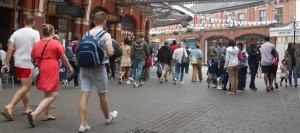
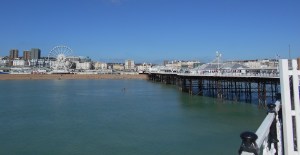
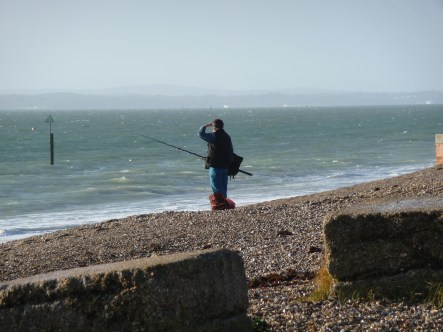
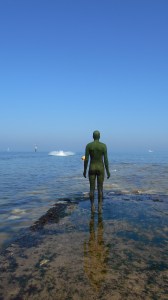
Silly Saturday – Where do you think you Were?

Answers at the end.

DSCN7854

34581733_2115415835154862_4465963687949107200_n

Salisbury Cathedral

DSCN4238

33237689_2100284010001378_563722119821656064_n

12

DSCN5859

DSCN1928

4

DSCN4541

Time for the answers.


DSCN3736

Windsor, Royal Berkshire

Ten Downing Street, London, SW1

Salisbury Cathedral, Wiltshire

Hastings, Sussex

My garden

Bournemouth, Dorset

Stratford-upon-Avon, Warwickshire

Broadstairs, Kent

Margate, Kent

Brighton, Sussex

Sheerness, Isle of Sheppey

HOW MANY DID YOU GUESS?

2

IF YOU LIKE PICTURE QUIZZES TRY THE TWENTY QUESTIONS AT MY WEBSITE.


https://www.ccsidewriter.co.uk/chapter-three-picture-quiz