

Are you shore you know where you are?

Whether the weather will be…

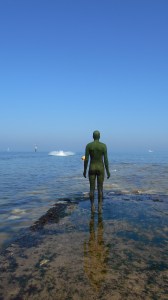


Wild, wet, windy…
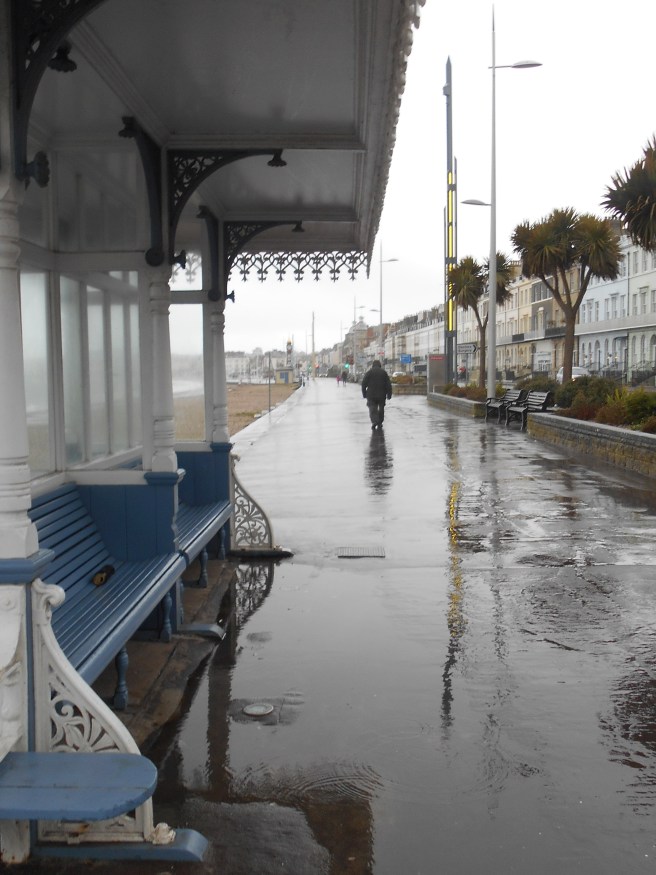

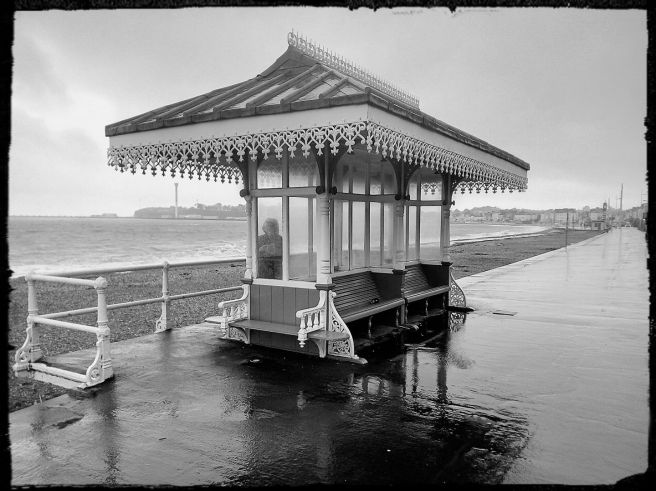
or sunny and sandy

https://www.ccsidewriter.co.uk/chapter-five-beach-writer-s-blog
Visit my website to see more seaside…




https://www.ccsidewriter.co.uk/chapter-five-beach-writer-s-blog
Do you like those music quizzes on the radio where you have to listen to the opening or closing notes of a pop song or piece of music and see how quickly you can guess what it is? If you listened to an opening chord strummed on guitar for less than three seconds and not a single note more, would you guess the song? For many of us A Hard Day’s Night by the Beatles is instantly recognisable, probably bringing memories of the cinema where you saw the film of the same name. Paul McCartney famously never learned to read or write music, instinctively using chords, complex harmonies and change of key without ever learning the mathematical theory of music. Songs have always passed down through the generations without needing to be written down and we all learn to talk before we write. Perhaps McCartney feared the magic would be broken if he tried to learn music properly. Straight to fame without the years of study at music school, the only downside apparently being that he needs help to write his orchestral pieces.
In the days before recorded music, Bach’s astonishing output would have been lost forever if he had turned up every Sunday morning at Thomaskirche in Leipzig, expecting the Thomanerchor to perform his new cantatas off by heart, because he couldn’t write them down.

For most of us, our attempts at learning an instrument bring our first contact with musical notation. I still feel aggrieved that I always ended up with the triangle and not the drums on the rare occasions when we had ‘the instruments’ out in junior school. But another opportunity presented itself when I was seven or eight. I waited till bedtime to ask my parents if we could get the violin out of the loft as I had to take it to school the next day. We had been told in class that if anyone had a violin they could have violin lessons, this was the first my parents knew about it. How I even knew that Dad had an old violin he had bought for half a crown in his youth remains a mystery, he had never shown us, let alone played it. But the instrument was duly produced and at school the violin tutor took it away and exchanged it for a quarter size. Maybe Dad’s original instrument was a Stradivarius and she made a fortune, we will never know.
Violin lessons took place in the same room as school medicals, the headmaster’s office up a narrow staircase in the old Victorian building, in winter an ancient bar gas fire was lit. I memorised the four strings GDAE, put rosin on my bow, learned the treble cleff and did give one public performance; in our garage in the back garden. Mum’s friend round the corner had six children and we put on a variety concert when aunties and uncles were visiting. I played a solo, Three Blind Mice. The audience had paid sixpence each for the excruciating experience. That was the height of my career as a violinist.
Like the rest of my family I later attempted to learn various instruments, with little success. The guitar can sound impressive merely by learning a few chords, or that’s what I hoped, but I had the wrong hands, fingers not long enough. At college I was in a recorder consort, playing descant while the more proficient played alto, tenor and base. We performed at our lecturer’s wedding … and that was the summit of my musical career.
Since then I have attempted to teach myself on the electronic keyboard and piano, at least progressing to learning the bottom line, base cleff, but never getting up to speed or coping with any music that has more than an f sharp or b flat to deal with.
The fun of being a writer is that if you can’t be a brilliant musician yourself, you can create one. Emma Dexter is a famous young violinist, pianist and composer from a very ordinary unmusical family. In Three Ages of Man, second of the Brief Encounters Trilogy, a stranger has made an impossible journey to find out what really happened to the woman whose music he loves so passionately.





https://www.ccsidewriter.co.uk/chapter-three-picture-quiz
‘Mother’s decided what she would like to do for her birthday.’
Roger had come home to find leaflets spread all over the coffee table and his wife and mother-in-law enjoying tea and cake.
‘She wants to go to a concert.’
‘How about Melodies From The Musicals,’ said Roger ‘or this piano recital at the town hall?’
‘Too dull; next Wednesday night at the concert hall sounds wonderful’ the old lady passed the brochure to her daughter.
‘Shostakovich, an hour and a quarter, are you sure?’
‘Yes, is that the symphony with the big orchestra and lots of drums? Good, let’s go to that, it may well be my last birthday.’
‘It might be rather loud’ said Roger hopefully.
‘Not for someone hard of hearing’ she retorted.
‘I’m not sure if you will like the second half’ said his wife ‘…a new commission, can’t pronounce the composer. Making full use of the percussion section, this exciting new composer takes Shostakovich as his inspiration. The fifty five minute work is a profound comment on post Soviet, Twenty First Century Russia, sounds a bit heavy.’
‘You’re never too old to try something new’ her mother chuckled

The old lady was pleased with her seat in the front row and settled back to watch the orchestra manoeuvre onto the stage. Shostakovich lived up to her expectations; the percussionists put their heart and soul into the performance. She tapped her feet and strummed her fingers on the arms of the seat. The vibrations shook every ache and pain out of her body, she hadn’t felt so alive for years. As the applause died down she turned excitedly to her daughter and son-in-law.
‘You didn’t fall asleep in that Roger. Do you remember the last time we came here, that poor chap only pinged his triangle twice; tonight he was in his element.’
‘Do you want to pop to the ladies Mother?’
She shook her head. ‘I wouldn’t mind an ice cream.’
‘We’ll try not to be too long.’
The old lady nodded and watched everyone get up to stretch their legs; she was soon sitting alone staring at the empty stage, wondering how steep the side steps were. She stood up; within moments she was perched on the seat behind the timpani, how different everything looked from up here. She admired the array of instruments, drums, xylophones, glockenspiels and chimes; just as fascinating were the selection of implements to strike them. She picked up a stick and hesitantly tapped the drum, then struck it firmly.
A young man in tails strode onto the stage then stopped in surprise.
‘You don’t mind do you dear, it is my birthday.’
He looked round nervously, then demonstrated each instrument and let the old lady try.
Backstage the conductor was glad to hear the percussion section having a last minute practice for the difficult new piece.
As Roger returned with three tubs of ice cream he was surprised to see his mother-in-law being escorted back to her seat by a member of the orchestra. Settling down, he read the programme with dismay.
‘Oh dear, I don’t think we’re going to enjoy the next piece, we could leave…’
‘Certainly not, I wouldn’t miss it for the world’ his mother-in-law replied.
In high school our music teacher said he was once at a concert where the conductor fell backwards off the podium. Whether this story was true or not, it was a good way to encourage us to go and see a real live symphony orchestra in the hope of seeing the conductor fall. Perhaps that was why I was happy to go along with my parents and younger brother and sister to see the West Australian Symphony Orchestra give their free Sunday afternoon concerts at His Majesty’s Theatre in Perth. As my parents loved classical music, but had a tight budget, this was a welcome treat.
The greatest classical music festival in the world, the BBC Proms, is now well under way and it was to a prom concert that my parents went on one of their first dates. Dad wasn’t interested in concerts, he just asked Mum where she would like to go for an evening out. Beethoven’s Fifth Piano Concerto was one of the pieces played and Dad loved it.
Unless we are lucky enough to be born into a family of musicians, most of us first hear and absorb music from the radio or themes from television programmes. What is registered in our brains forever depends on our parents’ taste and the decade we were born. Don’t give your age away by mentioning The Lone Ranger when you hear the William Tell Overture.
Despite their love of music my parents never acquired a record player, but just as cassette tapes were being invented Dad acquired a large reel to reel tape recorder for which you could buy classical music tapes. I still had to listen to pop music on friends’ record players. The hefty machine made its way to Australia in our packing cases when we emigrated. Later on, my best friend Marjorie and I commandeered it to record our favourite pop programme, we then did endless GoGo dancing in our little lounge; we must have driven my parents mad.

Promenade concerts had existed in London’s pleasure gardens since the mid 18th century, but The Proms as we know them were inaugurated on 10 August 1895 in the Queen’s Hall by the impresario Robert Newman, seeking a wider audience for concert hall music by offering low ticket prices and an informal atmosphere, where eating, drinking and smoking were permitted to the promenaders! You can still buy £6 tickets on the day of every concert to stand in the arena, but smoking is certainly not on.
If you can’t get along to the Royal Albert Hall all the concerts are broadcast live on BBC Radio 3, repeated and available on iplayer. Some are broadcast on television, complete with background film and chats with musicians. We are told that people all over the world will be listening; in Australia my mother once watched the Last Night of the Proms at Christmas, while my sister told me she listened to a prom while driving along a road in the bush.
This is a true festival and there are orchestras and artists from all over the world playing many sorts of music. The first night of the proms featured Anna Meredith/59 Productions’ Five Telegrams, a response to the centenary of the end of the First World War, with specially produced digital projections. It looked fantastic on television, but to fully appreciate it one surely had to be there. Another completely new experience was Jacob Collier and Friends; Jacob, a young vocalist and multi- instrumentalist, became an online sensation with his one man multi tracked arrangements of well known songs.
The musical theme at Tidalscribe continues on Friday with flash fiction ‘Musical Chairs’.

Music inspired my character Emma Dexter in Brief Encounters of the Third Kind. Her mother has good reason to fear her daughter is not human and among her phenomenal abilities she has become a brilliant composer, pianist and violinist.





 Times and Tides of a Beachwriter