Windsor After That Wedding

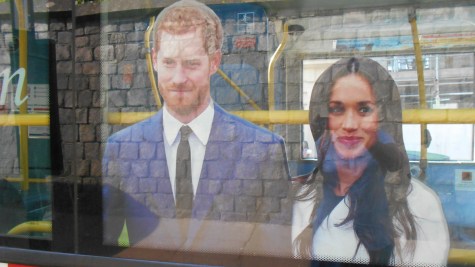
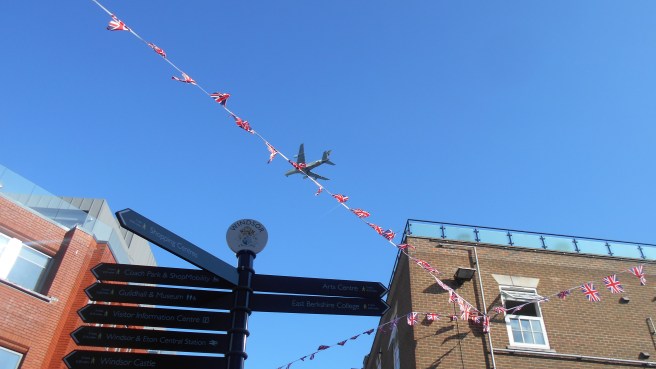
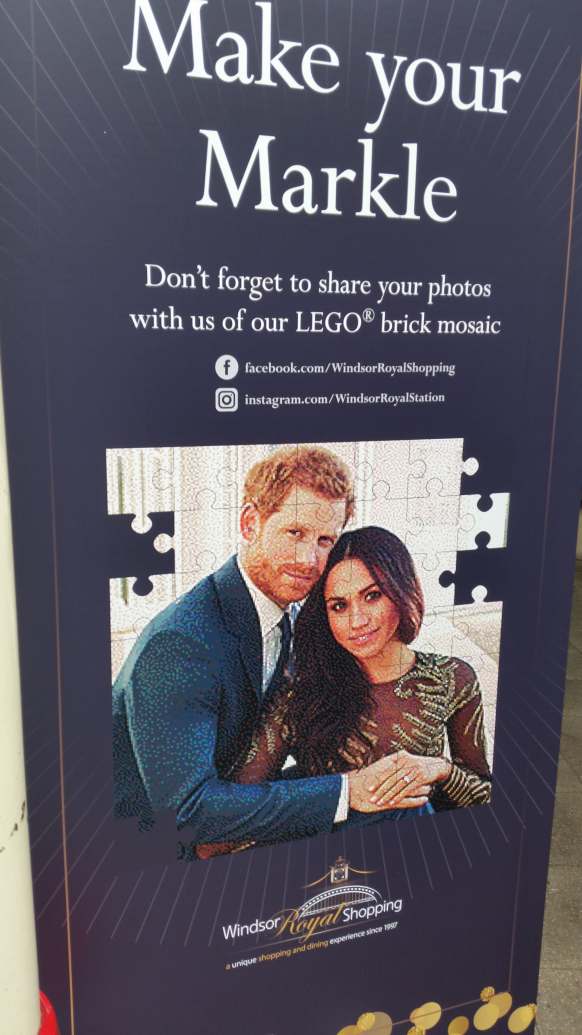
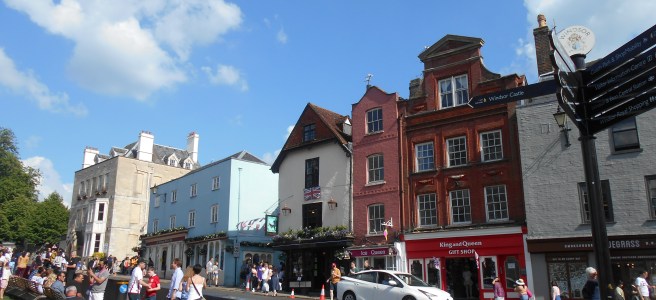
Eight days after the royal wedding we are in Windsor to catch up with friends, not at the castle, though they are staying opposite the castle. We are down the road in a pub bed and breakfast. Flags are flying everywhere and Windsor is busy, like it is every weekend, especially a bank holiday weekend. A sunny Sunday afternoon and everybody is happy, except the odd crying child; crowds, sightseeing and family outings don’t always work. We hear a father saying to his young son ‘We are here to discover the town, not to go to Legoland.’

6

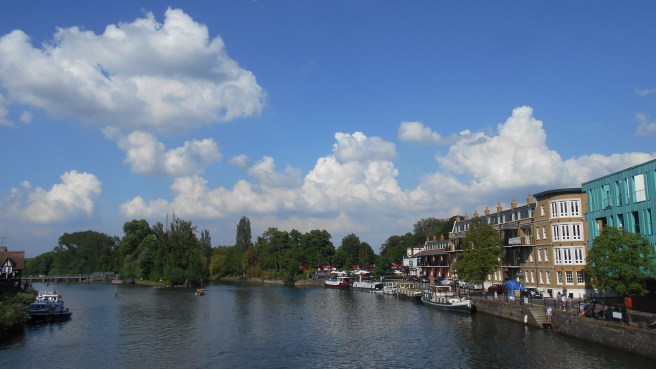
Legoland is way out of town, though you can catch the bus near the castle. We had already seen signs for motorists saying Legoland was full. But Windsor is not about plastic bricks, the castle is made of real stone with thick walls to keep out the aircraft noise; along with many other people the Queen lives under the flight path to Heathrow. The blue sky today is heaven for plane spotters. We sit on the footbridge over the River Thames, the bridge links Windsor and Eton, the little town is part of the school rather than the school being in the town and is well worth a wander. Today the river is busy, you can dine aboard a big boat or hire a little boat and get in the way of the sightseeing riverboats. You can also ride in the Windsor Duck for an amphibious tour.

DSCN6241

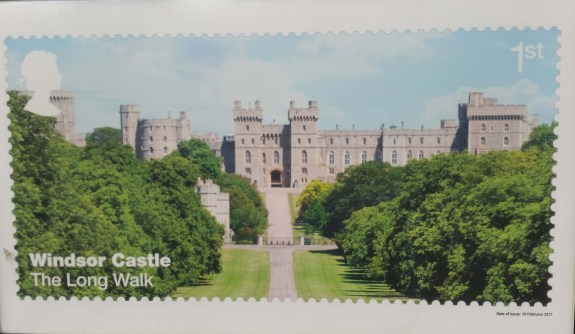
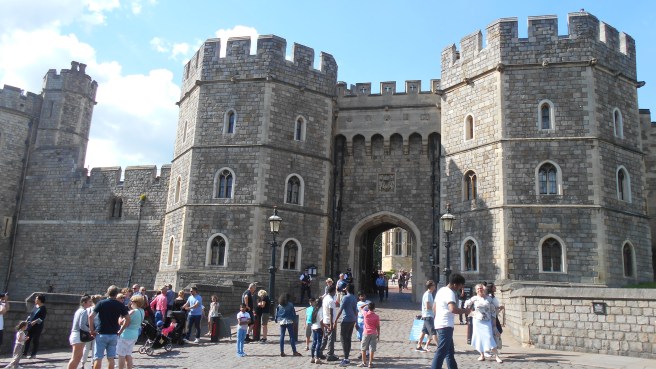
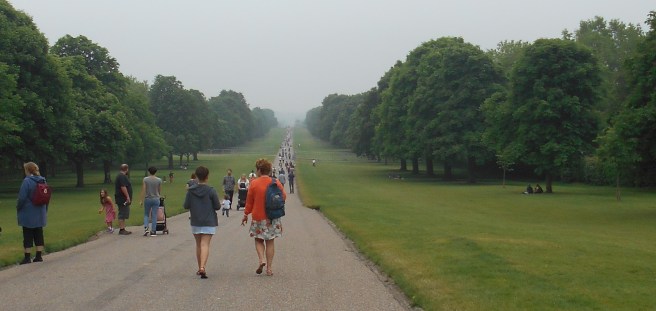
On Bank Holiday Monday morning the sky is heavy, the air misty. We can hear the roar as we step outside, but the clouds are so low the aeroplanes above us are invisible. We stroll the same way the royal wedding carriage drove and arrive at Windsor Great Park. The scaffolding is coming down where the cameras were last week and the Long Walk is back to normal, no crowds, just people and dogs enjoying The Queen’s back garden. If you wanted to you could keep going towards the bronze horse, away from the crowds; beyond lie gardens, forests and lakes. We walk up to the castle gates, open for royals, locked to the public. Everyone is taking photographs. Round the town side there is a queue for the castle, but only for ticket holders. There is another queue for people wanting to buy a ticket, it stretches down the hill out of sight, but all is civilised, plenty of people in uniforms to direct or advise you to come back first thing in the morning. Everyone wants to see the setting of the wedding.

dscn6287.jpg

DSCN6298

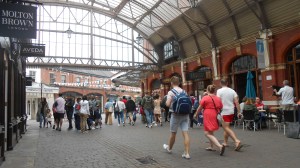
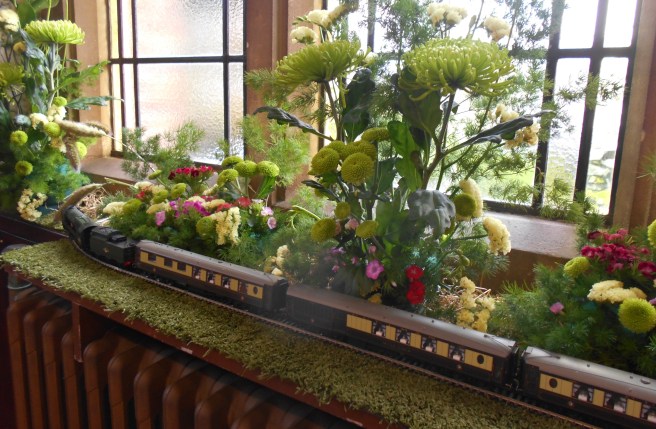
Opposite the castle is Windsor and Eton Central railway station, the branch line from Slough was built for Queen Victoria. The three carriages go back and forth all day, curving across the river. Below the station is the main coach park; visitors are funnelled in through the station concourse and out onto the busy street. We sit with our coffee just inside the entrance and people watch. Tour guides now have microphones and their followers have earpieces and a receiver hanging round their necks. Each guide has their own flag or totem to wave above their heads, we wonder if there will be jostling or fighting for the best spots.

DSCN6303DSCN6304

Down by the river the sun has come out. In the gardens there are fountains and children’s play areas, lots of families are having big picnics, or big families are having picnics. We buy an ice cream and watch a chap potting up plants for the roof of his narrow boat. The scene is peaceful and far removed from the tourist frenzy at the top of the town. On the other side of the river boat owners enjoy picnics on the fields of Eton.

DSCN6343

You can see more pictures of Windsor on my Beachwriter’s Blog at my website.

https://www.ccsidewriter.co.uk/chapter-five-beach-writer-s-blog/

As it’s Windsor Week at Tidalscribe look out for Flash Fiction Friday

and Silly Saturday – Not The Royal Wedding

A Good Day Out

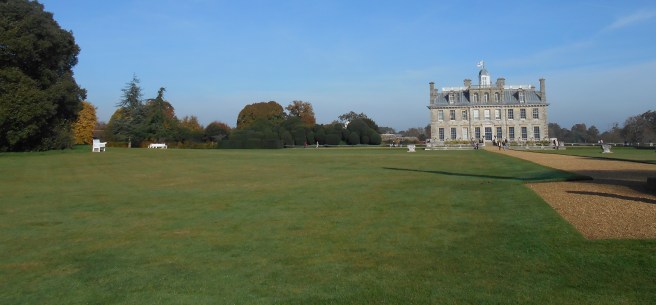
Where would you like to go for a day out? A popular choice in England is to visit a National Trust House. The National Trust is a charity which is over one hundred and twenty years old and owns and cares for 59 villages, 775 miles of coastline and vast tracts of hills and fields, all free for everyone to roam. Whatever your political leanings and thoughts on charities, I’m sure many would agree that these lands are safer with the National Trust than with governments, big businesses or greedy billionaires.

OLYMPUS DIGITAL CAMERA


Despite all their other conservation work, Big Houses are what people most often associate with the National Trust, donated by landowners come upon hard times, or just moving with the times. Whatever their ancestors would have thought, the common people are now free to roam their estates.  Not actually free; you have to pay to go in A Big House, unless you are one of the four million members; a few visits each year will make your membership worthwhile.

https://www.nationaltrust.org.uk/lists/fascinating-facts-and-figures


dscn1311.jpg

One thing is never guaranteed on your day out, the weather, but that would never deter the average member.

DSCN5941

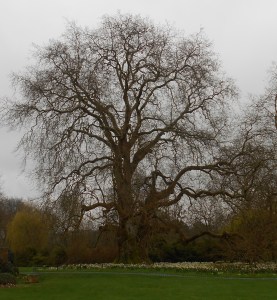
Once you have passed through the portal, you will enter a traffic free zone, except for the occasional buggy for those not up to striding round the whole estate.  Your children can run around on vast lawns, visit the adventure playground, do school holiday  activities or say hello to some pigs. Gardeners can admire walled vegetable gardens and beautiful borders, nature lovers can enjoy very old trees.

DSCN7098

DSCN7108.JPG

DSCN7039

dscn1356.jpg

DSCN5942DSCN5954

dscn5422.jpg

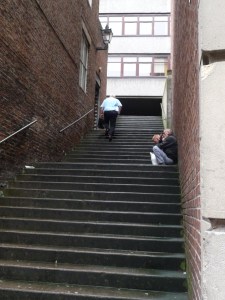
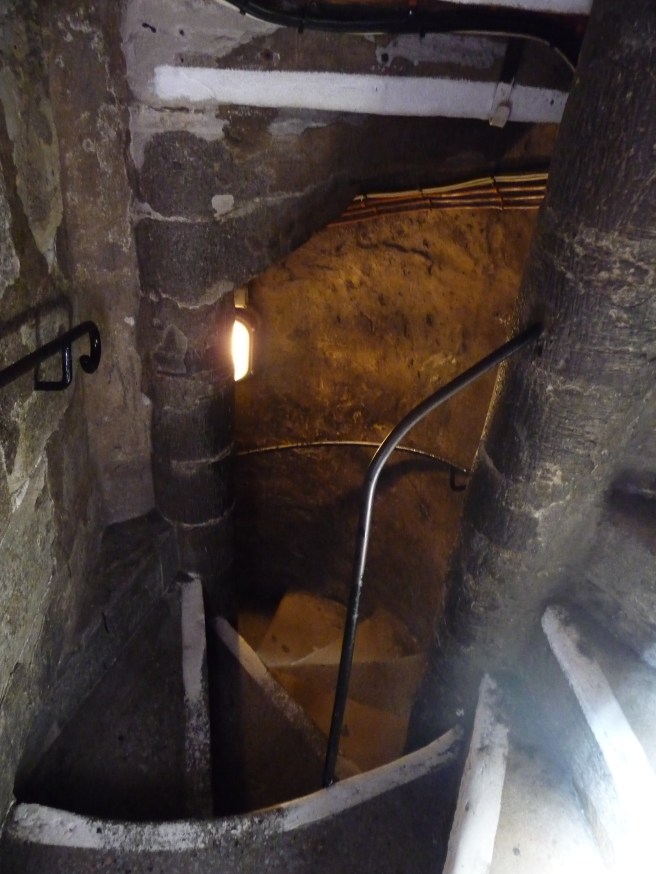
If it pours with rain go and look around the house, read about the owners, peep at family photos and ask volunteers questions. There will probably be an interesting exhibition to look at. There will certainly be sweeping staircases to ascend and descend and narrow stairs to climb as you visit downstairs where the servants worked, or upstairs where they lived.

DSCN5933

DSCN7121

DSCN7123

DSCN5935

DSCN7124

DSCN1351


DSCN5940

dscn5939.jpg

No visit would be complete without tea and cake or a nice lunch. This will be in the stable block, the old kitchen or the orangery, always a restaurant with character. Then you can rummage through the second hand bookshop which could be tucked away in an outbuilding. The Shop is a must; tasteful and expensive souvenirs, tea towels to bone china. Don’t miss the books, there are bound to be real life stories about the lady of the  house or the black sheep of the family.

dscn7096.jpg

Perhaps you have visited Durlswood, you may or may not find it in the National Trust guide book, but you can read the mysterious happenings of 2014 in the novella Durlswood, part of the Someone Somewhere collection.


Silly Saturday – Wet and Windy

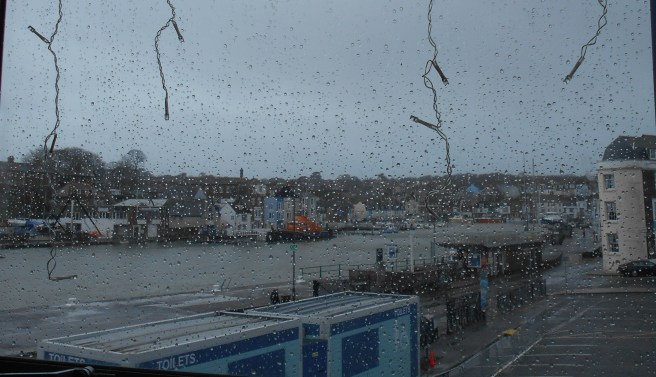
1Taking a trip to the seaside? No holiday is complete without a rainy day or several…

2

Looks like it’s brightening up, should be fine by the time we get there.

3

There’s a nice pub by the river we can stop for lunch and sit outside if…

4

Looks like it’s set in for the day, tomorrow’s forecast is better.

52.jpg

At least someone’s smiling.

62.jpg

Holiday time!

7

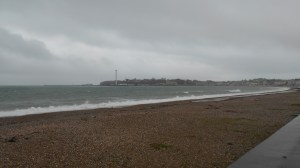
No holiday is complete without battling against wind and rain along the promenade.

8

Don’t forget to post on Instagram and Facebook so your friends will be envious.

92.jpg

Look around and take in the views.

11

10

12


13

This is exhilarating.

14

Wonder if anywhere’s open for a hot chocolate.

152.jpg

16

17

18

Looks like we should be able to find somewhere to sit…

191.jpg

…and a window with a view.

20.jpg

dscn5741.jpg

Looks like it’s brightening up.

ANZAC Day

Today is ANZAC day and what better way to mark it than with these poignant words from a special guest blogger. In the first of an occasional series my Sister Down Under writes about a unique island.

A Very Humble Monument   by Kate Doswell

Some thoughts for ANZAC day   25th April, 2018.
 

30772291_10212842443909538_1334244612_o

I’m not sure what it’s like in other Commonwealth countries, but in Australia we take our war memorials very seriously, and rightly so. “Lest We Forget” is inscribed on most of them, and as we read down the long, alphabetical lists of names, we are reminded of the truly terrible cost of war. Even in tiny outback towns, the list seems far too long, far too many of the youngest and strongest of the community taken from those that are left behind to carry on.

Most of these monuments are made of stone, imposing obelisks in bluestone or limestone or granite, depending on where they are situated. They are usually in the centre of town. Running around the monument and integral to its form is a ledge wide enough to sit on. People may sit and contemplate awhile, or simply pass by on their daily business or as a visitor to the town. How many, I wonder, stop and read the names and wonder at the fate of these lost men? Do the locals become so used to it that they just pass by?

30546417_10212842451869737_1397495450_o.jpg

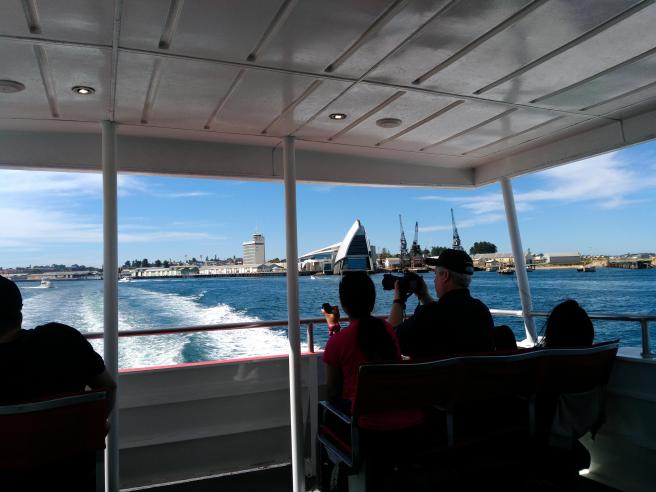
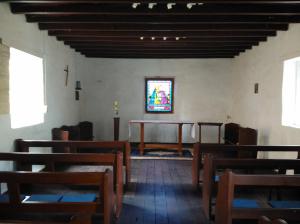
However, not all monuments are as striking or as prominent, and last week I found one that was truly humdrum. It was on the Island of Rottnest, 20 km from the West Australian Port of Fremantle. For many years this Island has functioned as a much loved holiday playground for the people of Western Australia, and the tourists who come to our isolated part of the world. It has a rather grand Roman Catholic church high on a hill, but the Anglican church is represented by a much older, but more modest chapel of limestone and whitewashed render.

30767987_10212869608108626_1610926664_o

30772440_10212869676350332_1722123227_o

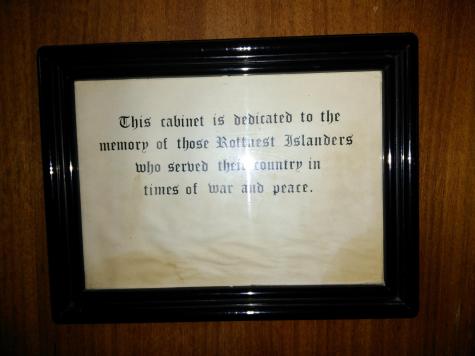
I visited the chapel late in the day, as there were other tourist activities that had claimed my attention. The door was stiff to open, and the interior gathering the gloom of the impending sunset, so the first thing I noticed was the distinctive smell of very old (to our European Australian eyes) limestone buildings from the early settlement era. Above the altar, I could see a simple, but attractive stained glass window depicting The Annunciation. Turning from there I looked at the pews, some thought to have been made by the Aboriginal Prisoners for whom this Island acted as a prison for 60 years. There were brass plaques on the wall in memory of various European families who had played important roles in the Island’s history, but the one that caught my eye was one on the door of a storage cupboard at the back of the chapel. It looked relatively new – certainly not crafted by the Aboriginal men in the 18th century – and I guessed it had been built and installed after the chapel was reconsecrated in 1965. It was utilitarian – capacious and solidly built but without ornament or distinctive features. Except for the plaque. A simple paper notice, its words carefully handwritten in Old English script, and framed with a plain wooden frame, so small it could be covered by two hands.

“This cabinet is dedicated to the memory of those Rottnest Islanders who served their country in times of war and peace.”

I have never seen such a monument before, if I can even use the word monument. Is this the only place in the Commonwealth to have such a homely reminder of the dead?
 

30771997_10212869673830269_2127583472_o

30769005_10212869667870120_1043963808_o.jpg

30550196_10212869673910271_984660608_o

30825116_10212869673870270_2125740430_o


I didn’t open the cupboard, I had no business to do so, but I imagined it containing vestments for the visiting priest, the chalice and paten, hymn books and orders of service, all the paraphernalia of a functioning chapel. I thought of those remembered by this most humble of monuments, and wondered if they would have been disappointed, aggrieved, or even angry that they had nothing grander built in their memory? But then again, maybe they would have been pleased that, having it placed on an object that was in regular use for the worshipers, they would readily and frequently come to people’s minds. These people, no doubt, would have attended this chapel, maybe some even came in the week before they left to sail away to war. Now, each time someone opens the cupboard and sees that little plaque, they are back here again. Back home to stay.

30547133_10212864000568441_1695530355_o


Observed on 25 April each year, Anzac Day was originally to honour the members of the Australian and New Zealand Army Corps (ANZAC) who fought at Gallipoli against the Ottoman Empire during World War I. It is one of Australia’s most important national occasions. It marks the anniversary of the first major military action fought by Australian and New Zealand forces during the First World War.

30550812_10212842448149644_161802627_o