Seasonal Short Story – Music Festival

Julian Mountjoy was on top of the world, or at least almost at the top of the Royal Albert Hall. At last his dream to be a BBC presenter at The Proms had come true. He could combine his two dearest interests, music and talking. In his eerie close to the gods he could look around the glorious plush red interior and the tiers of seating, then down at the tiny figures of the Prommers in the arena. With the first piece of music just finished there was time to chat with his two musician guests while the orchestra jiggled positions and the grand piano was carefully wheeled into place.

Ariadne, what did you think of that stunning premiere of John Smith’s Symphony in one movement for strings and mobile phones?’

‘George?’

Now let’s move on to the piece we are about to hear for the first time at the Proms. Composed in 1911 by Anton Slivervitz it is not often played, perhaps because of its reputation for being fiendishly difficult?’

‘No wonder this piano concerto has always been such a challenge. Tonight’s soloist has waited till this mature stage of his career to add it to his repertoire and this will be the first time he has performed it in Britain. Ariadne, what do we know about Torvig Absalom?’

‘Well the piano is in place now, there is growing excitement and anticipation in the audience as we wait for Torvig Absalom to step onto the stage. The leader of the orchestra has taken up his position and played that all important note to lead the orchestra in tuning up. All the players will need to be on their toes for this marathon piano concerto that lasts one hour and twenty minutes. Now we wait for the conductor to lead tonight’s soloist onto the stage. The string section are turning their heads obviously expecting tonight’s young conductor, Melody Fairweather, to lead her guest soloist on at any moment. Excitement is building as we all wait for the grand entrance. Daisy Fairweather is making her first appearance at the Proms and this will be a thrilling moment in her career no doubt. We can imagine the excitement back stage as they prepare for their entrance. At rehearsals this afternoon you could see and hear the very special connection she has made with this world famous pianist. If tonight’s performance repeats the wonderfully energetic rehearsal, we are all in for a treat. As we wait for them to appear, Ariadne can you tell us what it’s like in those last moments as you wait for the go ahead to walk on stage and be greeted by the best audience in the world?’

Backstage at the Royal Albert Hall there was a very different kind of excitement and tension. Daisy Fairweather was getting very nervous with the delay, she just wanted to get on stage and raise her baton. The bossy woman who seemed to be in charge of the crew was also getting edgy.

‘Alison, are you sure you gave Mr Absalom his final call? Is the intercom working, did you knock on his dressing room door?’

Don’t be ridiculous and where’s Jerry, it’s his job to escort him so he doesn’t get lost, ah you’re here Jerry, where is Mr. Absalom?’

‘Alison go and check all the corridors and you too Ben. Jerry go and knock loudly and if he doesn’t answer open the door.’

‘I think we need to call security, we can’t keep the audience waiting or the BBC, this is a live television broadcast. Ben get hold of security, Jerry get yourself back to his dressing room and… and…’

And this is Julian Mountjoy live at the proms for this very special concert. There seems to be a delay bringing on tonight’s highly esteemed soloist… George, as an orchestra leader tell us what it is like as you wait for your conductor and soloist to step forward to the front of the stage…’

‘Jerry, there you are, what the hell is going on?’

‘How bad?’

‘What do you mean, who’s dead?’

Silly Saturday – Guide to What’s Not On

When I wrote on Silly Saturday exactly a year ago How To Cheat At The Chelsea Flower Show, I never imagined that the BBC would be cheating this year.

https://tidalscribe.wordpress.com/2019/05/25/silly-saturday-how-to-cheat-at-the-chelsea-flower-show/
The presenters have been standing in their own gardens at home this week and showing clips of previous shows, because The Chelsea Flower Show is one of the many events that is Not On this year. We all know why, but I’m not going to mention Covid 19. Does it really matter? Thanks to television and television archives, unless you were planning to go and mingle with the heaving hordes, one flower show is much the same as the next on television. Lots of colour, same presenters, some more irritating than others and all that is missing is the scent of the blooms.

11
If you want to know what’s on this year, the answer is probably nothing. Those theatre tickets you got for Christmas and the whole season of your favourite orchestra you purchased months ago are all wasted. Nothing beats a live performance, whether you are squashed between two hefty modern patrons in a narrow row at a very old West End theatre or wading through mud at a pop festival, watching on television will not be the same. There are advantages to your humble or perhaps gigantic wide screen television such as comfort, no queues for the toilets, eating your dinner on your lap or enjoying a takeaway.

DSCN1406
Optimistically the BBC has apparently delayed announcing the 2020 Proms till the end of May. Will it really go ahead with all those people filling the Royal Albert Hall, or will they have a spaced out audience of a few dozen and only soloists or string quartets dotted on the stage. They could dress orchestras in full protective clothing, but any safe option would rather detract from the festival atmosphere. Most concerts are not broadcast on television, the BBC could get away with showing a few old concerts, though music lovers might notice the difference if they broadcast a black and white 1940s concert with Sir Malcom Sargent conducting.

https://www.bbc.com/historyofthebbc/research/the-proms-and-the-bbc

Whatever happens, the Sun will surely rise on June 21st BUT
‘This year’s summer solstice celebrations at Stonehenge have been cancelled because of the ban on mass gatherings prompted by the coronavirus.
Senior druid King Arthur Pendragon said it was disappointing but unsurprising. The sunrise will instead be live-streamed on English Heritage’s social media.’ 

P1060170
It won’t be quite the same.

DSCN3375
Bournemouth Air Festival has been cancelled so don’t come round to my beach hut in August this year. Air shows are best seen live. We may watch the Red Arrows doing a fly past over Buckingham Palace on television, but I’m sure it’s more exciting watching from the balcony of the palace.

DSC_8016

What events will you not be going to this year?

Friday Flash Fiction 200 – Debut

My eyes were glued to the screen as the credits rolled over the cheering audience and the presenter bade us farewell   …goodnight from the Albert Hall

In a few days I would be there, my debut at the Royal Albert Hall, at The Proms… of course I had plenty of concerts under my belt, but this would be special and I was ready. I knew the programme off by heart, I would be waiting back stage for my moment, fit and well, my hands in good shape, my best black outfit pressed.

68927589_345023936386978_5678226784294797312_n

At last my moment had come. I could hear the rapturous applause, even back stage a camera was on me. I counted the seconds nervously, judged the level of applause then opened the stage door.

Out he came, my hero, tonight’s soloist. My palms were sweating, but I managed to coolly hand him the bottle of water. He took a swig and smiled at me before going back on stage to more thunderous applause.

For thousands of years rainwater had filtered through limestone hills, seeping out at the precious spring to be bottled for this moment. He had smiled at me, little me; but where would the world’s great musicians be without the backstage crew to ensure their concerts went smoothly?

Read more about the Proms in Wednesday’s blog.

https://tidalscribe.wordpress.com/2019/08/14/impossibly-positive/

Open the book to read another musical tale ‘Blind Date’.


Impossibly Positive

One of my favourite parts of summer is the world’s greatest music festival, the BBC Proms.

It didn’t always belong to the BBC and it wasn’t always held in the Royal Albert Hall. The first Proms concert took place on 10 August 1895 in the newly built Queen’s Hall in London. The aim was to reach a wider audience by offering more popular programmes, adopting a less formal promenade arrangement and keeping ticket prices low.

The first radio broadcast of a promenade concert by the BBC was in 1927 and every prom is now broadcast live on BBC Radio 3 and repeated, so there is plenty of chance to listen at home.

The Queen’s Hall was destroyed by bombs in 1941, during WW2.

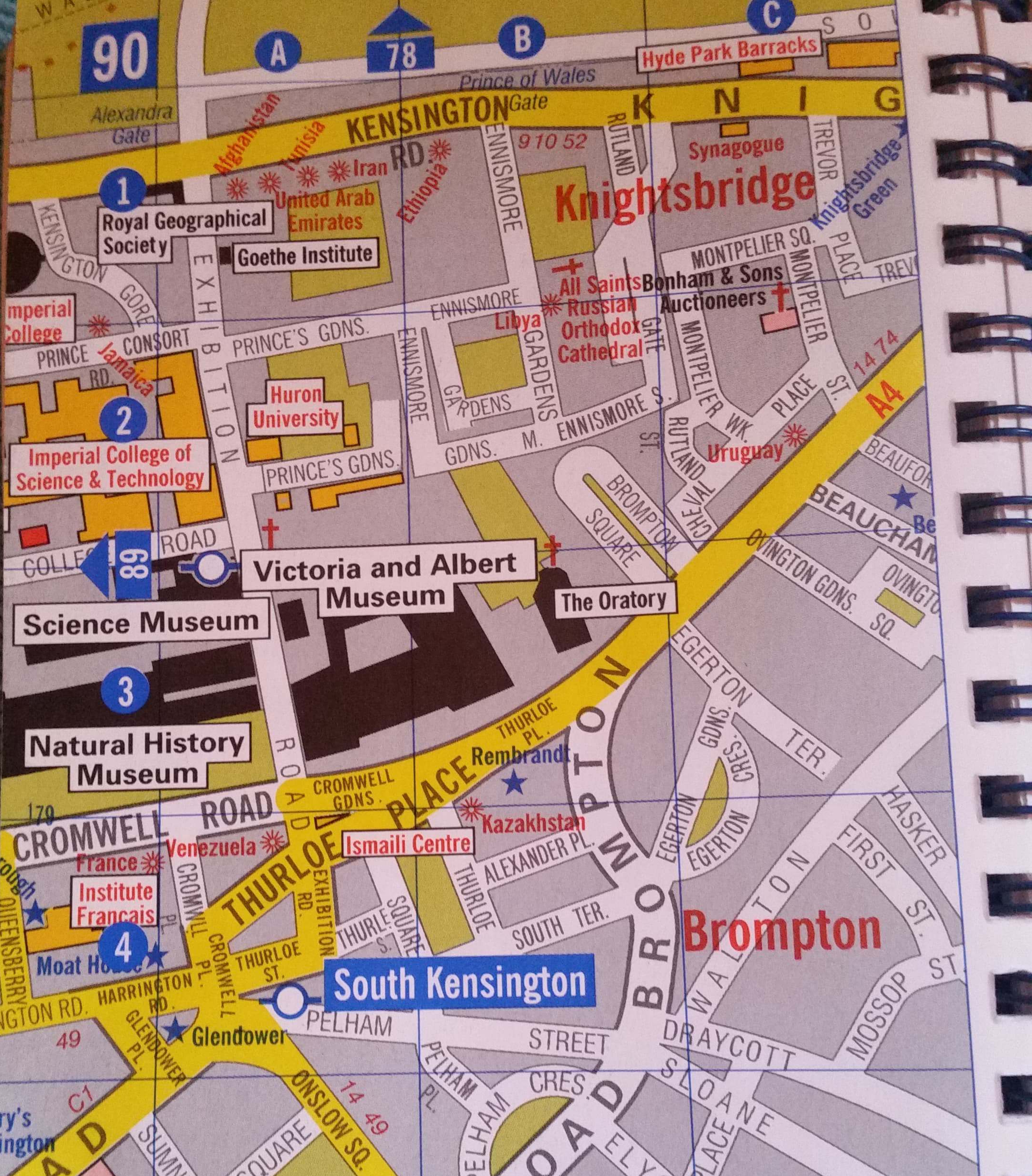
The Royal Albert Hall was opened by Queen Victoria in 1871 and is inextricably linked with The Proms. Even if you have never been to South Kensington you may recognise the famous round building and the warm red interior. Some of the prom concerts are broadcast on television and always of course the Last Night. When a camera pans down the height of the hall you feel dizzy and the top seats and gallery are very high. We once had cheap seats near the top for a concert with a famous pianist; we looked down as a tiny puppet tip toed over to a toy piano. The year we booked lots of concerts, so we could qualify for last night seats, we planned with care; big symphonies sit anywhere, but if you want to see your favourite soloist get the best seats you can afford nearer the stage. Live concerts are always different from listening to recorded music and The Proms have extra atmosphere; everyone is there to enjoy themselves and because they love music. At the end you emerge into a summer night and surge with the happy throng walking down Exhibition Road to South Kensington tube station.

68927589_345023936386978_5678226784294797312_n

But there is a lot to be said for watching on television. As happens every year, with life getting in the way, I have recorded more proms than I have watched since they started on July 19th, but I have enjoyed several very different concerts so far. What struck me this year was how wonderful it is to have two hours of positive thoughts and enthusiasm with no mention of Brexit, world leaders or general doom. Music is a universal language that brings us together.

The advantage of television is having presenters to tell you about the music and chat to musicians during the interval. Our presenters are impossibly positive; after all they are listening to the best musicians from around the world and being paid to share their love of music. One of them is so enthusiastic he talks at twice the normal speed, if he was a piece of music he would be ‘Flight of the Bumblebee.’ Often presenters get so excited they nearly topple off their high balcony.

If we are not musicians we may not always understand what presenters and musical guests are talking about, perhaps they don’t either, but that’s all part of the fun. They may spend longer talking about a new piece of music having its world premiere than the piece actually lasts. If you hear the words this wonderful sound picture it probably means there is no tune, but hearing pieces of music you don’t know is all part of the experience.

When the music actually starts, there is more entertainment. The camera pans over members of the orchestra, to the happy prommers standing in the arena, then round to the huge choir. We can wonder why the biggest bloke in the choir has been put next to the skinniest, we can make comments on the dresses of the soloists and we can marvel at the blur of bows in the string sections. It’s all very different from 125 years ago.

Read more about The Proms

https://www.bbc.co.uk/programmes/articles/1sgMxZvFzHQG3Y1HktMfg6w/history-of-the-proms

Have you been to The Proms? Are you a musician or a listener?

My novel Brief Encounters of the Third Kind follows the story of a golden couple of music. The Royal Albert Hall has a walk on part.

As the first in a trilogy you can download for just 99 pence.

sunshine-blogger


Albertopolis

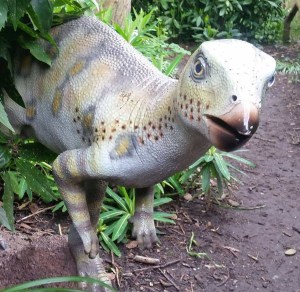
Everyone remembers the first time they see a dinosaur. For many of us it will have been on our first visit to the Natural History Museum in London. As you walked in the Great Hall there he was staring at you, the huge skeleton of Diplodocus. We were on a junior school outing, squashed cheese and tomato sandwiches in Kensington Gardens, then round the museum with our activity sheets. It wasn’t until I visited as an adult that I was disappointed to discover he was only a plaster cast of the original, uncovered in the plains of fossil-rich Wyoming.

One memorable visit was when two friends and I took our seven children, including three toddlers in buggies, on the tube train. On the way home in rush hour the poor passengers had to contend with four large plastic diplodocuses, their dangerously long tails waving in their faces. Diplodocus is now touring round the country and you can see a real Blue Whale skeleton instead.

https://www.theguardian.com/science/2017/jan/01/dippy-diplodocus-london-tour-replica-dinosaur-whale-natural-history-museum

7

But Prince Albert would have been pleased how many school children and families visit Albertopolis.  Over 150 years ago open fields and market gardens changed when two men had a vision to develop a part of London dedicated to the arts and sciences, using the profits of the Great Exhibition of 1851 held in nearby Hyde Park. Nicknamed ‘Albertopolis’, the area was designed to celebrate the achievements and grandeur of Victorian Britain, it is still thriving today with three museums, colleges and the Royal Albert Hall.

https://www.discoveringbritain.org/activities/greater-london/walks/albertopolis.html

39613703_397479757449518_5582809189551439872_n-e1534894085854.jpg

Prince Albert’s vision for the hall was to promote understanding and appreciation of the Arts and Sciences. When he died of typhoid fever in 1861, plans were put on hold until they were rekindled by Albert’s collaborator Henry Cole. The Royal Albert Hall of Arts and Sciences was opened on 29 March 1871 by Queen Victoria. Albert’s very ornate statue sits across the road in Kensington Gardens. The design of the Hall was inspired by Cole’s visits to ruined Roman amphitheatres and it was originally intended to accommodate 30,000 people, reduced to 7,000 for financial and practical reasons, and today to around 5,500. Every summer it is the main venue for the BBC Proms, the world’s greatest music festival, which surely would have pleased the prince.

39799723_488185681646015_9009656414120968192_n.jpg

Even if you have never been to London, the building will be familiar if you watch The Proms on television; a good way to enjoy the concerts as you get to meet musicians and find out about the music. There is something for everyone from ‘Cuba meets Jamaica’ to the first appearance of the Estonian Festival Orchestra founded in 2011. Premiers of new music are bundled in with old favourites so no one will be scared off. You will learn to interpret the words of the commentators; ‘what an amazing sound picture’ – no tune – ‘especially commissioned work’ – it’s only five minutes long…

But you can’t beat a live performance. I must confess I have never queued for cheap tickets on the day to stand in the arena with the Promenaders. I have not lived near enough and don’t like queuing or standing, is my excuse, but enthusiasts will tell you it is a wonderful experience and some go to every concert. If you are booking seats, all you need to know is don’t book the cheap seats near the top if you want to hear your favourite pianist or violinist  – the soloists look like tiny puppets going on stage. But if you are going to hear a big symphony or the Planet Suite, sit wherever you like, it will be fun. If you want to go on the famous Last Night plan well ahead and check how the ballot system works.

What are your museum memories? Have you been to The Proms?

Musical Notes

In high school our music teacher said he was once at a concert where the conductor fell backwards off the podium. Whether this story was true or not, it was a good way to encourage us to go and see a real live symphony orchestra in the hope of seeing the conductor fall. Perhaps that was why I was happy to go along with my parents and younger brother and sister to see the West Australian Symphony Orchestra give their free Sunday afternoon concerts at His Majesty’s Theatre in Perth. As my parents loved classical music, but had a tight budget, this was a welcome treat.37691213_2195243867172058_7940072414816239616_n

The greatest classical music festival in the world, the BBC Proms, is now well under way and it was to a prom concert that my parents went on one of their first dates. Dad wasn’t interested in concerts, he just asked Mum where she would like to go for an evening out. Beethoven’s Fifth Piano Concerto was one of the pieces played and Dad loved it.

Unless we are lucky enough to be born into a family of musicians, most of us first hear and absorb music from the radio or themes from television programmes. What is registered in our brains forever depends on our parents’ taste and the decade we were born. Don’t give your age away by mentioning The Lone Ranger when you hear the William Tell Overture.

Despite their love of music my parents never acquired a record player, but just as cassette tapes were being invented Dad acquired a large reel to reel tape recorder for which you could buy classical music tapes. I still had to listen to pop music on friends’ record players. The hefty machine made its way to Australia in our packing cases when we emigrated. Later on, my best friend Marjorie and I commandeered it to record our favourite pop programme, we then did endless GoGo dancing in our little lounge; we must have driven my parents mad.

37660230_2195243413838770_3666554254211940352_n

Promenade concerts had existed in London’s pleasure gardens since the mid 18th century, but The Proms as we know them were inaugurated on 10 August 1895 in the Queen’s Hall by the impresario Robert Newman, seeking a wider audience for concert hall music by offering low ticket prices and an informal atmosphere, where eating, drinking and smoking were permitted to the promenaders! You can still buy £6 tickets on the day of every concert to stand in the arena, but smoking is certainly not on.

https://www.bbc.co.uk/proms

If you can’t get along to the Royal Albert Hall all the concerts are broadcast live on BBC Radio 3, repeated and available on iplayer. Some are broadcast on television, complete with background film and chats with musicians. We are told that people all over the world will be listening; in Australia my mother once watched the Last Night of the Proms at Christmas, while my sister told me she listened to a prom while driving along a road in the bush.

This is a true festival and there are orchestras and artists from all over the world playing many sorts of music. The first night of the proms featured Anna Meredith/59 Productions’ Five Telegrams, a response to the centenary of the end of the First World War, with specially produced digital projections. It looked fantastic on television, but to fully appreciate it one surely had to be there. Another completely new experience was Jacob Collier and Friends; Jacob, a young vocalist and multi- instrumentalist, became an online sensation with his one man multi tracked arrangements of well known songs.

The musical theme at Tidalscribe continues on Friday with flash fiction ‘Musical Chairs’.

37732349_2195243683838743_1247184221299015680_n.jpg

Music inspired my character Emma Dexter in Brief Encounters of the Third Kind. Her mother has good reason to fear her daughter is not human and among her phenomenal abilities she has become a brilliant composer, pianist and violinist.