ANZAC Day

Today is ANZAC day and what better way to mark it than with these poignant words from a special guest blogger. In the first of an occasional series my Sister Down Under writes about a unique island.

A Very Humble Monument   by Kate Doswell

Some thoughts for ANZAC day   25th April, 2018.
 

30772291_10212842443909538_1334244612_o

I’m not sure what it’s like in other Commonwealth countries, but in Australia we take our war memorials very seriously, and rightly so. “Lest We Forget” is inscribed on most of them, and as we read down the long, alphabetical lists of names, we are reminded of the truly terrible cost of war. Even in tiny outback towns, the list seems far too long, far too many of the youngest and strongest of the community taken from those that are left behind to carry on.

Most of these monuments are made of stone, imposing obelisks in bluestone or limestone or granite, depending on where they are situated. They are usually in the centre of town. Running around the monument and integral to its form is a ledge wide enough to sit on. People may sit and contemplate awhile, or simply pass by on their daily business or as a visitor to the town. How many, I wonder, stop and read the names and wonder at the fate of these lost men? Do the locals become so used to it that they just pass by?

30546417_10212842451869737_1397495450_o.jpg

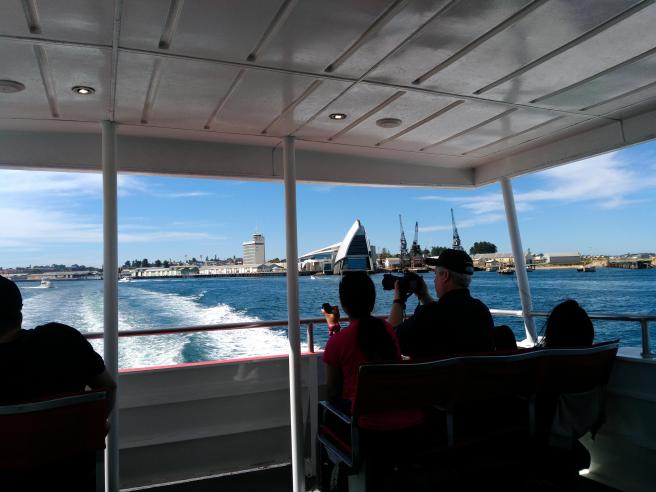
However, not all monuments are as striking or as prominent, and last week I found one that was truly humdrum. It was on the Island of Rottnest, 20 km from the West Australian Port of Fremantle. For many years this Island has functioned as a much loved holiday playground for the people of Western Australia, and the tourists who come to our isolated part of the world. It has a rather grand Roman Catholic church high on a hill, but the Anglican church is represented by a much older, but more modest chapel of limestone and whitewashed render.

30767987_10212869608108626_1610926664_o

30772440_10212869676350332_1722123227_o

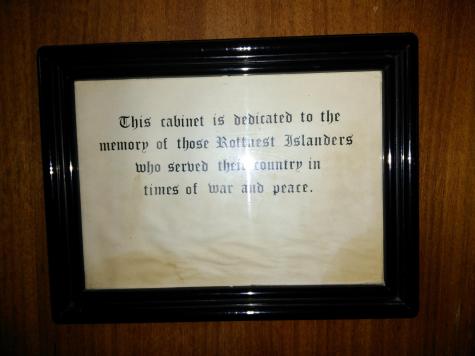
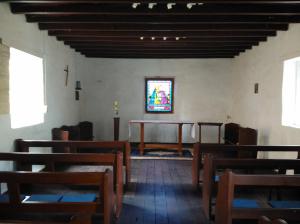
I visited the chapel late in the day, as there were other tourist activities that had claimed my attention. The door was stiff to open, and the interior gathering the gloom of the impending sunset, so the first thing I noticed was the distinctive smell of very old (to our European Australian eyes) limestone buildings from the early settlement era. Above the altar, I could see a simple, but attractive stained glass window depicting The Annunciation. Turning from there I looked at the pews, some thought to have been made by the Aboriginal Prisoners for whom this Island acted as a prison for 60 years. There were brass plaques on the wall in memory of various European families who had played important roles in the Island’s history, but the one that caught my eye was one on the door of a storage cupboard at the back of the chapel. It looked relatively new – certainly not crafted by the Aboriginal men in the 18th century – and I guessed it had been built and installed after the chapel was reconsecrated in 1965. It was utilitarian – capacious and solidly built but without ornament or distinctive features. Except for the plaque. A simple paper notice, its words carefully handwritten in Old English script, and framed with a plain wooden frame, so small it could be covered by two hands.

“This cabinet is dedicated to the memory of those Rottnest Islanders who served their country in times of war and peace.”

I have never seen such a monument before, if I can even use the word monument. Is this the only place in the Commonwealth to have such a homely reminder of the dead?
 

30771997_10212869673830269_2127583472_o

30769005_10212869667870120_1043963808_o.jpg

30550196_10212869673910271_984660608_o

30825116_10212869673870270_2125740430_o


I didn’t open the cupboard, I had no business to do so, but I imagined it containing vestments for the visiting priest, the chalice and paten, hymn books and orders of service, all the paraphernalia of a functioning chapel. I thought of those remembered by this most humble of monuments, and wondered if they would have been disappointed, aggrieved, or even angry that they had nothing grander built in their memory? But then again, maybe they would have been pleased that, having it placed on an object that was in regular use for the worshipers, they would readily and frequently come to people’s minds. These people, no doubt, would have attended this chapel, maybe some even came in the week before they left to sail away to war. Now, each time someone opens the cupboard and sees that little plaque, they are back here again. Back home to stay.

30547133_10212864000568441_1695530355_o


Observed on 25 April each year, Anzac Day was originally to honour the members of the Australian and New Zealand Army Corps (ANZAC) who fought at Gallipoli against the Ottoman Empire during World War I. It is one of Australia’s most important national occasions. It marks the anniversary of the first major military action fought by Australian and New Zealand forces during the First World War.

30550812_10212842448149644_161802627_o

Covert Coves and Continuity

P1090778

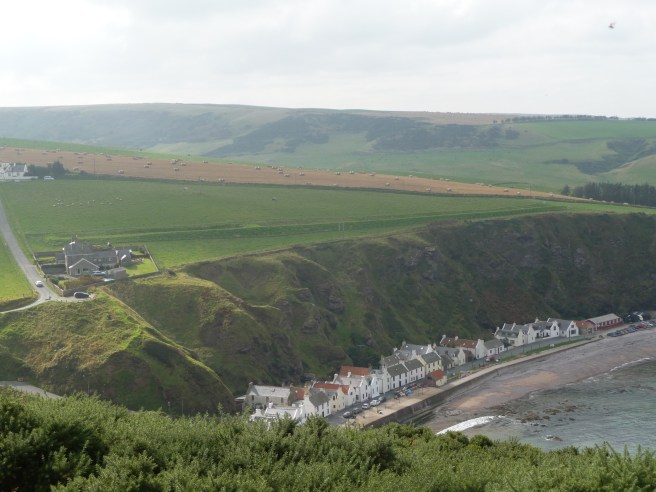
We once stayed for a week at a secluded Scottish cove where I was glad to discover there was no reception for mobile phones, nor was there a landline in the cottage. At the very top of the cliff, if you held your phone high in the air you could be lucky and get reception. A peaceful place for a holiday and proof for authors that there are still settings where mobile phones cannot be used; where characters can escape without being traced or where persons in peril cannot call for help.

P1090785


The plots of crime fiction, spy thrillers and romances changed for ever when mobile phones became ubiquitous. No running along dark lonely roads or knocking on strange doors to fetch help, a quick call on your mobile and an air ambulance or armed response unit could be with you in minutes. No wonder authors enjoy putting their heroes and villains in spots where there is no mobile reception.

P1090774

But you can’t always trust your characters. Reading through the third draft of one of the novels in the Brief Encounters Trilogy  I realised several of my leading characters, in several scenes, had casually used their mobile phones when they knew perfectly well there was no mobile phone reception at Holly Tree Farm. Some minor plot changes were needed for the fourth draft.

Proof reading and editing the manuscript of a novel is not just about lost commas, the wrong ‘their, there and they’re’ and ‘from’ turning to ‘form’ when you’re not looking. Continuity is just as important as on a film set.

Holly Tree Farm nestles in the quiet Wiltshire countryside; when Nathanial inherits the house it offers a refuge for his new friends and their secrets, but they never could have guessed the rambling old farm house had secrets of its own.

Read the first book in the trilogy for 99 pence.

Friday Flash Fiction Fantasy

                                      Andromeda Advertiser                           

       The Hotel Inspector

 How long would you spend in suspended animation to reach a one planet solar system? How many holidaymakers would be prepared to trek across the universe to visit the only habitable planet in a third rate solar system? Planet Gaia has only one moon and an outdated space station; what it does have is water and this is the main selling point in their first venture into intergalactic tourism.

The second unusual feature is its tilted axis, which gives it a great variety of climates to choose from. The downside? The brochures omit to mention the unpredictable nature of the locals, or even to explain which is the prime species.

Our tour started when we woke up on the moon, quaintly called Lunar Base. From here we enjoyed wonderful views of the shining blue planet; this alone made the trip worthwhile. We had yet to meet our hosts.

Next stop was the antiquated space station which must be pre booked due to lack of space, but essential if you wish to orbit Gaia.

By the time we landed on the planet we were ready for a meal. We had chosen a tiny island with a mild climate which boasted large colonies of homosapiens. The hotel itself was on the edge and not for the faint hearted unused to water.

This was when the tour began to lose some of its starlight. How do the locals expect to attract tourists without making any effort to learn their language? Even the sign language was limited by their possession of only two arms. It can only be presumed that the more intelligent species live in the oceans, but we did not have time for the underwater trips, nor was our travel agent accredited for this risky expedition.

Our meal was surprisingly tasty and we were soon ready for our guided tour. Having come this far I was determined to put my foot in the water which is called by many names; here it was flat, thin, perfectly safe and called sea. The sensation was not unpleasant and we also enjoyed watching the homosapiens splashing around making their mating calls.

Our party of three and a half was booked in for five days, but the brochure skimmed over the fact that the days are very short, making the stay poor value for money. The ablution facilities consisted of more water, with no sign of any hot dust. Our first night was cramped and uncomfortable; we should have been advised to book more than one room.

The most fascinating aspect was the rapid change of atmospheric conditions. We had not been guaranteed rain, so we were delighted on the second day when the hotel was pounded by strong air currents full of water. From our viewing platform we could see the water had now turned to waves and we were glad to be in the shelter of the hotel.

How did I rate the experience? Mixed; frankly we were glad that the days were so short. I gave our accommodation five suns.


Weather and Loungers

Weather and Loungers      by an anonymous guest blogger.

February is a dreary month in the Northern Hemisphere and many of us may listen with envy as retired friends and relatives set off on a cruise to the Caribbean, or working friends, who had the foresight to book a week’s holiday in winter, grab a bargain break on an island; anywhere from Cuba to The Canaries.

One rainy day I spotted an email from a relative that was much longer than the usual brief holiday update. I printed it out to enjoy reading properly and messaged back that he should join the blogging world. He suggested I edit it as a guest anonymous blog.

********

I lay on a sun lounger getting sun burn and wind burn at the same time. I remember saying before we came ‘I don’t mind if it’s not that hot, as long as it’s not too windy.’

Earlier this week we hired a car and drove round the entire island. One of our stops was at what I assume was the highest point; it had a visitor centre with lots of interesting facts to read.

As I move through the exhibition, learning about European colonialism, I’m also learning a lot about the geology and geography of the island. By the end of the exhibit my annoyance and unwarranted resentment starts to build from the facts that are becoming ever clearer.

Feurteventura has the lowest overall land height out of all the Canary Islands, this leads to clouds not being forced up as the blow in from the sea. Apparently this means there is less than average rainfall, although that did not stop it pouring down for two days when we arrived.

Right, sit down if you are not already seated. This thing with clouds and not having high mountains also means it is by far the windiest place for a hundred miles. It regularly gusts 70mph and explains a lot of those jaunty looking palm trees. In summary, this is what I have learned.

A: Do your research.

B: Despite what anyone tells you, unlimited beer will not make you cheerful. You have to be cheerful to start with.

C: You can’t blame anyone for the weather, though I bet someone on Trip Advisor will try.

Now to the title – Weather and Loungers.

I’m sitting here with the musings of Tom Wrigglesworth in my ear.

http://www.bbc.co.uk/programmes/b04pbwf3/clips

Occasionally I have a break to read my book. There must be 500 sun loungers round this very large pool and that’s not counting the adults only pool, the chill out pool and the nudists only pool which are all in turn smaller than one another and must culminate in a super relax puddle.

All these sun loungers are meticulously laid out every morning with a level of accuracy that suggests at least a small amount of forward planning. Every so often a couple leave their loungers to get food or sample some of the other wonders this place has to offer. Within no more than ten minutes two members of staff, dressed in white with blue latex gloves, will have reset those loungers to their starting positions; perfectly straight and with the back rest down – I learnt earlier in the week that this stops them blowing away.

As I write, two men have corrected the loungers next to me, the older man seems to be instructing the younger in the correct orientation and optimum lounger spacing. I don’t understand Spanish, but imagine it goes like this.

Look here young whipper snapper, I was arranging sun loungers when you were still at ‘all inclusive buffet’ school.

I imagine his father was a sun lounger arranger and his father before him and his great grandfather was a deckchair; the skills and lessons passed down through the generations. These include minimum distance from lounger to poolside, maximum relative distance between and most important; minimum amount of stacked loungers to prevent them blowing away overnight.

He’s surely a member of the Guild of Master Sun Longer Arrangers and sadly his son has shunned the lifestyle and gone to the mainland to be a jet ski salesman. He toils day after day, trying to pass on his skills to fellow workers, the Guild a dying breed pushed out by low wages and contemporary attitudes. Sometimes he reminisces about the old days; the great strike of 2004 when the lounger arrangers staged a walkout in support of the much abused banana boat operators. He hopes one day to save enough money to fly to a Sandals resort, where they still appreciate his very skilled profession.

So in summary of these thoughts; too much sun on a bald head makes you think up some strange things.


Return and Reboot

We have arrived home from our 24 days away to find the house still standing and unburgled. But I could not access my Command Control Centre (computer in the bedroom); due to my insistence on unplugging everything electrical while we were away lest lightning strike the house. Strange white messages appeared on a black screen, pressing F1 was not enough and long suffering Cyberspouse had to reset the computer’s body clock and re-boot it. But I still stand by my sensible precaution as our local area did have a dramatic storm while we were away. We also have the electrician in this week leading to more switching off and rebooting. But today I can get down to some writing as housework is out of the question with the electrician working in every room.

September brought a very hot late summer especially in Kent and there was only one rainy hotel afternoon when I actually got out my notepad. The rest of the holiday was spent with family or visiting interesting places and spotting ( and sneakly photographing) fascinating people. So I have returned with no progress on my novel, but plenty of ideas for more stories.

Pens, Paper and Preparation

Holiday preparation for an author? Packing notepads of various sizes and some pens is not enough. I have been busy working my way through reams of scribble for my current novel. I like writing in long hand first, but I can’t actually read my writing, hence the need to quickly transfer from microscrap paper and macrosoft brain to Microsoft Word. Then edit and put on several memory sticks in case a burglar steals my computer, or worse, the whole house blows up while we are away.

In the meantime there is work to do in the ether; refreshing my website so it looks as if I have visited it recently and am not dead, blogs to write…. just in case the various portable electronic gadgets we are taking with us do not connect to the internet. And where are we going? Find out in the next blog.