
With Halloween coming soon it’s handy to know which doors to avoid knocking on.




I thought the whole point of the Halloween Party was to scare the children, but when Becky the librarian introduced me I realised her head was filled with half baked ‘New Age’ rubbish. It was five pm, hardly the witching hour, but the clocks had gone back, my favourite time of year and it was dark.
‘Now children,’ twittered Becky ‘I’d like to introduce you to Amelia the Witch.’
‘She’s not a witch,’ interrupted the largest child, who was taking up too much space at the front of the carpet ‘she’s not wearing black.’
Becky touched my flowing white sleeve with over familiarity.
‘That’s because she’s a white witch, a good witch.’
I suppressed a snigger.
‘Amelia loves nature, trees and flowers, she is in tune with Gaia.’
The children looked up at Becky with incomprehension.
‘Would you like to ask Amelia any questions?’
A mealy mouthed little girl shot her hand up. ‘What are you favourite flowers Miss?’
‘Oh… Belladonna, a pretty little purple flower and Foxglove, a flower of the woods.’
‘Yes, but do you do magic?’ sneered the large boy.
‘Of course, but I’m not allowed to do it on library premises because of health and safety.’
‘People used to think it was magic in the olden days,’ simpered Becky ‘but the wise women just made cures with herbs and woodland plants.’
‘Are you a fairy godmother?’ asked a child of indeterminate sex dressed as a fluffy pumpkin.
‘I think you’re getting confused,’ interrupted Becky ‘that’s a fairy tale.’
The child was undeterred ‘But Miss, can you turn mice into horses and men?’
‘I can do better than that,’ I smiled ‘I can turn naughty boys into mice.’
The children giggled nervously, but the large boy just pulled on a rubber ghost mask and booed in the face of the girl next to him, who asked when her Mummy was coming to fetch her.
‘Do you mean wild mice or pet white mice?’ asked a solemn boy child.
‘Depends how naughty the boy is; a pet mouse would be pampered and kept in a nice, safe warm cage, but a wild mouse might get gobbled up by a cat.’
‘How could you do that if you haven’t got a wand?’ said the large boy, his voice muffled by the mask. ‘I bet your magic isn’t as strong as Harry Potter’s.’
‘A sprig of yew will do,
to make my spell come true.’
‘Amelia’s a poet as well,’ said Becky ‘shall we all go to the writing corner and make up some magic poems?’
‘No, we want to see some magic.’ A tall girl at the back of the carpet stood up.
I couldn’t resist whipping out a piece of evergreen from my gown pocket, I only intended to show them; usually I need complete quiet and concentration to perform a spell. I must have focussed for too long on the large boy.

The green smoke was very impressive, strong enough to set the fire alarms off and in the confusion that followed nobody noticed that the boy had disappeared. Further panic ensued when a girl screamed.
‘A big mouse ran over my foot!’
Becky and her assistants handled the evacuation very efficiently and we were soon gathered in the car park. The initial head count revealed one child was missing and it was the other children who were first to notice the absence of the large boy.
‘Did you really turn that horrid boy into a mouse?’ The solemn boy’s face lit up.
‘Of course not’ said Becky, looking worried ‘but if she did, I’m sure Amelia could turn him back into a boy.’
‘But the mouse ran away’ piped up another child.
‘Oh dear,’ I smiled at the children ‘I can’t perform the reversal spell if I can’t see the mouse.’
My words were drowned out by the sound of sirens. If the mouse was still in the library, he would soon be scared off by firemen’s boots.

As I sat reading a book I felt and heard the reassuring rumble of the underground. But I was not on a London tube train, Mum and Dad were in the kitchen next door washing the dishes. We were in our little suburban house in Perth, Western Australia.
It was 10.59am, a bank holiday on the 14th October 1968, we had just experienced the Meckering Earthquake, my mother said she had to cling to the kitchen sink. The small town of Meckering was 130 km away in the wheat belt, the 45 second earthquake was magnitude 6.9 on the Richter Scale making it one of the largest recorded in the seismic history of Australia. A few buildings in Perth were damaged. A baby had a miraculous escape in Meckering, their town fell down, but no one was killed. Had the epicentre been in a big city it could have been a major disaster. For us it was exciting, proof that Man cannot control nature.
At school the next day the earthquake was the only topic of conversation. In the classroom we were all startled to feel an aftershock, this time we knew what it was and we were scared. The teacher told us to calm down. There was no evacuation or talk of emergency procedures. It was unlikely the one storey asbestos building would collapse dramatically.

Fast forward to December 1974, Knightsbridge, London; I had a Christmas job as a floorwalker in Harrods toy department. It was the Saturday before Christmas and that afternoon I had the last tea break. The staff restaurant was on the top floor. As I stood in the Ladies combing my hair I heard a muffled thud and assumed it was an IRA bomb going off somewhere else. Of importance later was the fact that I had my handbag with me.
I walked out to see the busy shop deserted, the escalators switched off and a couple of security guards annoyed to see me still in the building, everyone else had been evacuated. Somehow I caught up with colleagues as we poured out of the building; it was only as we looked up and saw thick black smoke pouring from the corner of the iconic department store that the shock hit us. No one was hurt that day, the heroes were the staff who had noticed something suspicious in their department and evacuated customers safely. Heavy fire doors had contained the explosion. Once again I had had a wide escape. We sat in a nearby pub waiting to go back in and fetch our coats, but nobody would return to work that evening. Lucky for me I had my handbag with my season ticket for the train, even if the journey home was a bit chilly without my coat.

News is with us in all the media twenty four hours a day and this year fire, flood, hurricanes and earthquakes have been regular events and of a magnitude hard to comprehend. We wonder what it is like to be at the heart of a major disaster. Reporters find their way to the most unreachable scenes of devastation only to ask victims how they feel.

Back to Perth, Western Australia, when my fourteen year old self was riding her bike. The suburbs were laid out in a grid design with long straight roads, there was a ‘Give Way To The Right’ rule, logical as long as everybody obeyed; there were always accidents at intersections. I was pedalling towards a corner when suddenly two cars collided in front of me, one of them rolled over. The two young drivers clambered out with some difficulty, but both were laughing, unhurt. When I tried to get back on my bike my legs were shaking so much I couldn’t lift my foot onto the pedal. I have always wondered if everyone benefits from adrenalin when faced with real peril, or if some people turn to jelly. How many writers secretly long to be in the midst of a disaster and emerge unscathed, or just a bit hurt so they can tell their dramatic story from a comfortable hospital bed?
Anita and Jaye are great supporters of fellow writers and between them have written a fascinating selection of novels. Today they are sharing their new review of my novel.

In the nineteen sixties, many ‘ten pound pommies’ had never left England before and most expected never to return or see loved ones again.
George Palmer saw Australia as a land of opportunities for his four children, his wife longed for warmth and space and their daughter’s ambition was to swim in the sea and own a dog.
For migrant children, it was a big adventure, for fathers the daunting challenge of finding work and providing for their family, but for the wives the loneliness of settling in a strange place.
Our Review
I can remember the winter of 1962-63, also known as…
View original post 432 more words
Sunday Salon today shares a blog from my fellow local writer and Remainer. Approaching the library from the opposite direction I missed the opportunity of a brief appearance on local news.
An interesting thing happened on the way to the library.
On Monday afternoon I set off towards our local High Street in order to attend my monthly meeting of our writers’ group, The Spokes, which meets on the third Monday of each month. The meeting date had taken me by surprise, being only two weeks in to October because the first Monday was the first day. The result of this was that my reminder email to our group was not sent until very late on Sunday night.
When I reached the High Street, market trading was well underway as usual for Monday, but with the addition of a large, white, double-decker bus, next to which a small group of elderly people bearing leaflets was busy faffing around.
On the bus’s side slogans of the ‘Brexit means Brexit’ type had been placed.
That the bus was parked there in my own…
View original post 408 more words

Play the Gaia Game; how are you scoring at saving the planet, will you climb up or slither down?
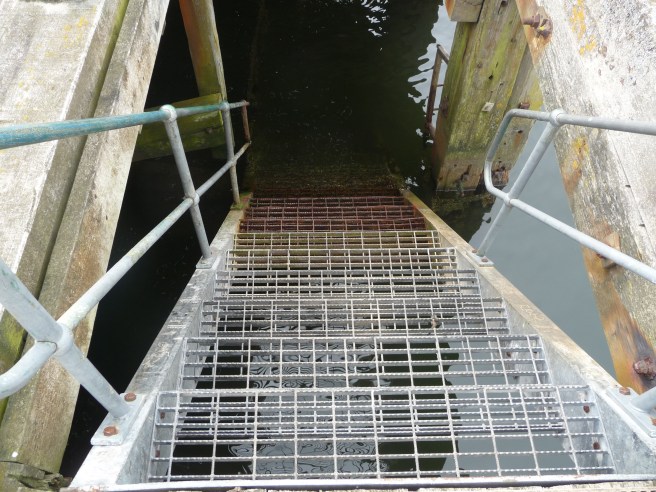
Round One: Life
1.Have you been born?
Slide down the Adder for adding another carbon footprint.
2. Have you given birth to more than two children?
Slip down the Viper
3. You have assisted in the conception of four children, but they have become doctors and environmental scientists.
Climb the stairs, you have contributed to humanity.
4. Have you lived more than three score years and ten?
Descend the Python.
5. You have lived four score years, but ride your bicycle to the allotment where you teach the local school children to grow vegetables?
Take your nimble legs up two flights of stairs.

Round Two: Home
1.Do you live in a city penthouse forty floors up?
Take the lift down to the basement – wait, you don’t own a car because you can cycle and walk everywhere in the city? Take the lift back up again.
2.Has your remote jungle village been discovered yet?
No? You are not contributing to world pollution. Take the escalator to the top floor. Oh, you haven’t got an escalator…
3.Have you installed solar panels on the roof of your house?
Take a flight of stairs.
4.You have concreted over your garden to park three vehicles and a caravan.
Go down the Cobra.

Round Three: Food
1.Would you describe yourself as a subsistence farmer?
Ascend the marble staircase… but you chop all the trees down for firewood?
Sorry, slide down the Anaconda.
2.Are you vegan?
Climb up to the moral high ground.
3.Are you vegetarian?
Stay where you are.
4.Do you eat meat?
Slip down the throat of the Boa Constrictor. No wait, there has been an appeal. You farm hill sheep and preserve the countryside and use some of your land for a wind farm.
5.Do you grow your own vegetables and keep chickens in your suburban garden?
Yes, but you’re so busy you use disposable nappies. Miss a go.

Round Four: Transport
1.Do you own a car?
No, climb two flights of stairs, easy for you as you are fit from walking everywhere…. but your partner has a car and chauffeurs you around? Topple down a flight.
2.You cycle everywhere and wear one of those vests that says one less car on the road.
Excellent, you earn enough points to eat meat.
3.You flew on holiday to Disneyland, return to Go.
4.You took your private jet to the other side of the world to help refugees?
Gaia says return to Go.

Round Five: Power
1.Do you write about the environment in your blog and sign petitions? Does your computer work on solar power? No – miss a go.
2.You got arrested for protesting about fracking. Climb the ladder.
3.You live as a hermit on a remote island.
Excellent, but before taking your next go describe your contribution to society.

Winner
The winner, Mr. Everly Green, has a small house just the right size for his wife and two children. His roof has solar panels, he has eight rain water butts, grows fruit, vegetables and bee friendly flowers among which roam chickens to fertilise the garden and provide eggs and roast dinners. He walks to work and does not go on holiday as he can’t leave the garden.
But hold on, his win is being contested; that bouquet of flowers he ordered from the florist for his mother’s birthday was composed of cut flowers flown in from Kenya and his prize winning front garden display used plants that came in plastic pots and trays on a pantechnicon from Holland.
Mr. Green must take the serpentine descent of shame.


It is easy to kill a man, not so easy to dispose of the body.
I never believed Tom had just left town, nor did his distraught wife, but there was no evidence of foul play.
Tom had evidence, he showed it to me; pictures on his phone, paperwork saved from the shredder. His supervisor told him to keep quiet, let the authorities do their inspections, it was not worth us all losing our jobs.
I was his supervisor.
I don’t believe our boss is a bad man, but he had become a small link in a long chain.
I had no intention of being a whistleblower, I know how easy it is for someone to disappear at Sunny Farm meat processing factory.
Now the men in white boiler suits are here to close us down; if I tell the police about Tom, can they guarantee my safety? No.


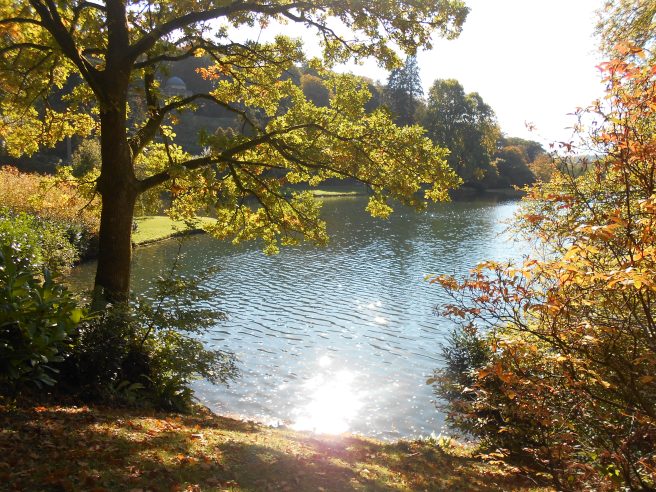
Last week we went on what could be the ultimate autumnal outing, certainly for those of us who haven’t been to New England in the fall. Thanks to modern weather forecasting the predicted blue skies and sunshine made the gardens of Stourhead picture perfect. It was a little early for nature and photography experts, the trees had not reached their full colour potential, but when a gentle breeze sends golden beech leaves floating to the ground it is like pennies from heaven and perhaps this is the closest to heaven on earth most of us will get.

Like most National Trust properties and other great houses and castles that you pay to enter, you are sealed off from real life. There is no traffic except the gardeners’ tractor and trailer, no traffic noise, no building work going on, no homeless people to remind you of the darker side of life and little likelihood of being mugged or caught up in a street riot. Your children can safely run around, as long as they don’t fall into the lake… Everybody is there to enjoy nature or a healthy walk. I guess there is always the chance a fight will erupt between photographers spoiling each other’s view, perhaps the loser rolling down the manicured lawns into the lake; that would make a good story, but it didn’t happen on our visit.
Fortunately patience prevailed at the archway to the house. Two Japanese ladies left behind by their party were admiring the masses of red leaves of the Virginia Creeper that smothered the stone arch. They kept rearranging themselves to photograph each other and also seemed to examine each leaf in detail. Meanwhile on one side was Cyberspouse with his camera and on the bank opposite a couple of photographers waiting for the ladies to move out of the way. I like taking pictures with people in, but I guess the others had to wait until next autumn.

Inside the house, phones were to be switched off, bags left in lockers and no flash photography. My point and shoot compact has a habit of switching its flash back on so I only managed one quick picture of the library before one of the volunteers started telling me how they cleaned the books with pony hair brushes, then suck the dust away with a mini vacuum cleaner. But I did ask the important questions readers and writers would want to know. Did the family of old read all these books? Yes, this was their learning and entertainment centre and only a few books have been found with the pages still uncut at the edges. Does anyone still read them? Yes you can apply. What is the oldest book? ‘Oh dear, I never remember’ said the lady, then called up to an elderly gentleman perched precariously on top of a ladder – one of the hazards of having book shelves that go up to the ceiling. He wobbled down to tell me the answer, a German manuscript of 1591.

The Hoare family who created the house and beautiful gardens were bankers. Henry ‘the good’ bought Stourton Manor and medieval buildings were replaced by a Palladian villa, but he died in 1724, a year before the house was completed. Henry the Magnificent’s nickname was earned by the landscape vision he created in his garden. With hills, water and classical architecture overlaid by a fabulous collection of trees and shrubs, Stourhead was described as ‘a living work of art’ when it first opened in the 1740s. Henry died in 1785, but like all altruistic planters of trees he could not know how his gardens would look over two centuries later.
You can walk all round the lake, created by damming the River Stour which flows sixty miles to Christchurch harbour. Stop to admire follies, temples and the grotto as well as the views, then return to the Spread Eagle Inn to enjoy refreshments.

I review every book I read on Amazon and Goodreads and also share my reviews here.
This week, two very different English novels; one dark, one light.
4.0 out of 5 stars In the mind of a killer.
By Janet Gogerty on 21 September 2018
Format: Kindle EditionVerified Purchase
I hadn’t read the previous novel about Kate, so knew nothing about her, but Kate knows nothing about herself either when she wakes up. This is a thriller with no heroes, the Snowman is desperate to help her and it seems at last he can, but it is not to be. If this was a television thriller the Snowman would save the day, but the story becomes more complex. We follow the killer’s thoughts as well as the other main characters, an advantage of books over screens. The reader will never sympathise, but we might comprehend what’s going on in Jack’s mind. Michael is another character who we think might save the day, but he is a mix of flaws and must face up to the grief he has caused the woman he loved and the other woman who loves him. This is not a novel for the faint hearted; what starts as a mystery of unconnected murders is also the story of those unfortunate enough to be in the path of a killer or know his intended victim. We know from the news that bizarre killings can occur when a murderer becomes obsessed and this murderer is obsessed with Kate.
5.0 out of 5 stars Entertaining and humorous.
ByJanet Gogerty on 8 October 2018
Format: Kindle EditionVerified Purchase
I downloaded this novel onto my Kindle as it sounded fun and we have relatives who have become DFLs* on the Isle of Thanet. But this is a story that would make an enjoyable read for anyone with family or lively family as neighbours. Whether you are married, divorced or thankful to be single, the lives of Tess and her family and friends will probably sound familiar. The story bowls along, with prospects of romance dashed at every twist and turn and plenty of modern life problems.
*‘Down From London’ – a good train service from St. Pancras, lower property prices and the seaside have made the Isle of Thanet, Kent a popular choice for workers needing to commute and also artists and entrepreneurs.

How do you watch television these days, perhaps not even on a television set? But drama serials are still ever popular, whether we sit down each week, catch up digitally or binge watch. I like the idea of the TV schedule, but inevitably if we’re out or have visitors I am thankful we can record or catch up. PAUSING programmes is also a brilliant asset as my good intentions to leave the computer or the kitchen by 9pm always fail.
There have been so many good dramas lately we have some still to watch. My two recent favourites were very different.
Vanity Fair by William Makepeace Thackeray is a long novel that many people on social media have confessed to not having read. But with a film and at least four television adaptations we can be forgiven for not being sure if we have actually read the book. BBC 1967, 1987 and the one I remember really enjoying was a few years ago – no it was 1998! So how would ITV’s new production compare?
Thackeray, played by national treasure Michael Palin, took his rightful place as the narrator at the beginning and end of each part; he watched his characters go round and round on a carousel.
The story starts in 1813 England, a turbulent society embroiled in war for twenty years. Thackeray introduces a world where everyone is striving for what is not worth having. The impossibly smart red and white soldiers, beautiful women, lovely horses and clean streets were not out of place because he wanted us to watch his characters in a performance. The battle field sequences contrast with this.
Becky Sharpe has nothing, but is determined to have everything, whoever she hurts on the way. We are whirled through years of love, heartbreak, family troubles, business disasters and tragedy with one love story ending happily.
https://www.radiotimes.com/news/tv/2018-10-12/vanity-fair-cast-itv-amazon
BBC4 on Saturday nights is a must if you love Scandi Noir or anything with sub titles. We have followed Danish politics, Swedish thrillers, Sicilian detectives, Paris police, Belgian undercover in French and Flemish, but most recently it has been Outback Noir.
Mystery Road in six episodes, was filmed in the Kimberly region of north Western Australia. Having lived in Perth, Western Australia and with family there, I try and watch any Australian series that come our way. I have never been to that part of the state, another country to suburbanites in the city. The series was worth watching for the scenery alone, wide landscapes of dusty red soil and long roads, a fascinating country town and a cattle station homestead that makes you yearn to live somewhere with endless space. A great cast did justice to a complex story linking past and present with layers of secrets. The old landowning family, the indigenous people and European backpackers all find their lives bound together in small town life.
https://www.bbc.co.uk/mediacentre/latestnews/2018/mystery-road


