On The Radio

What can any blogger write that doesn’t involve mentioning Covid, Brexit, The White House or the fact that a new year has started? Let us retreat to where most of us are at the moment, home. Home comforts, or what I now call Covid Comforts are keeping us going. If you are reading this it is unlikely you are in a refugee camp, an intensive care unit or a war zone; for that we should be grateful. If you look around your home I wonder how many modern wonders provide your life support system? The internet obviously, books, television, central heating, on line shopping, computer games. Before any of those was The Word, okay so radio came quite a while after the beginning of the Old Testament, but the first modern invention in my life was the radio, long before I could read, even before I could walk or talk music was seeping into my bones thanks to the BBC. Before I was born my parents were listening to programmes that are still being broadcast; The Archers, Desert Island Discs and Woman’s Hour.

Woman’s Hour has just had its seventy fifth birthday and received a letter from The Queen. When Dame Jenni Murray ( a national institution ) announced she was leaving after thirty three years, followed soon after by a similar announcement by Jane Garvey, who has been with the programme for thirteen years, my immediate thoughts were You can’t do this, not in the middle of a pandemic and my mother and husband have just died… As I have been listening at least since our first baby was born forty one years ago, there have been other favourite presenters, the programme will survive.  The modern mother can listen on her iPhone while breastfeeding in the dark watches of the night. Many men also listen and people of all ages can hear the programme in the car or when out jogging. Very different from the early days when it was broadcast at 2pm and mothers were presumed to be sitting down for a rest after lunch while their babies were having their nap. There is fun, but there are dark topics. I imagine there is no controversial issue that has not been covered on the programme, Woman’s Hour is where we first heard about FMG. The final quarter of the hour is a serial, there is always something for everyone.

Woman’s Hour: The Queen sends ‘best wishes’ to show on its 75th year – BBC Newshttps://www.bbc.co.uk/news/entertainment-arts-55527576

In that 2020 strange sunny spring and summer of isolation, Cyberspouse listened to Woman’s Hour every morning over our leisurely breakfasts in the sun lounge. BBC Radio Four in the mornings is packed with interesting programmes and three different serials. Thanks to Amazon I bought two more digital radios to add to our collection.

There is much more to say about radio; such as why are we fascinated by the shipping forecast… but that’s for another blog. For now here is something cheery, one of my early memories that I just heard on the radio. Light music is what we all need at the moment and there have been memorable tunes composed on both sides of the Atlantic. This is one for writers by Leroy Anderson, though I don’t think he could have written a piece about computers…

The Typewriter Leroy Anderson Martin Breinschmid with Strauß Festival Orchestra Vienna – YouTubehttps://www.youtube.com/watch?reload=9&v=g2LJ1i7222c

What are your Covid Comforts? Do you have favourite radio presenters and programmes?

Pipe Dreams

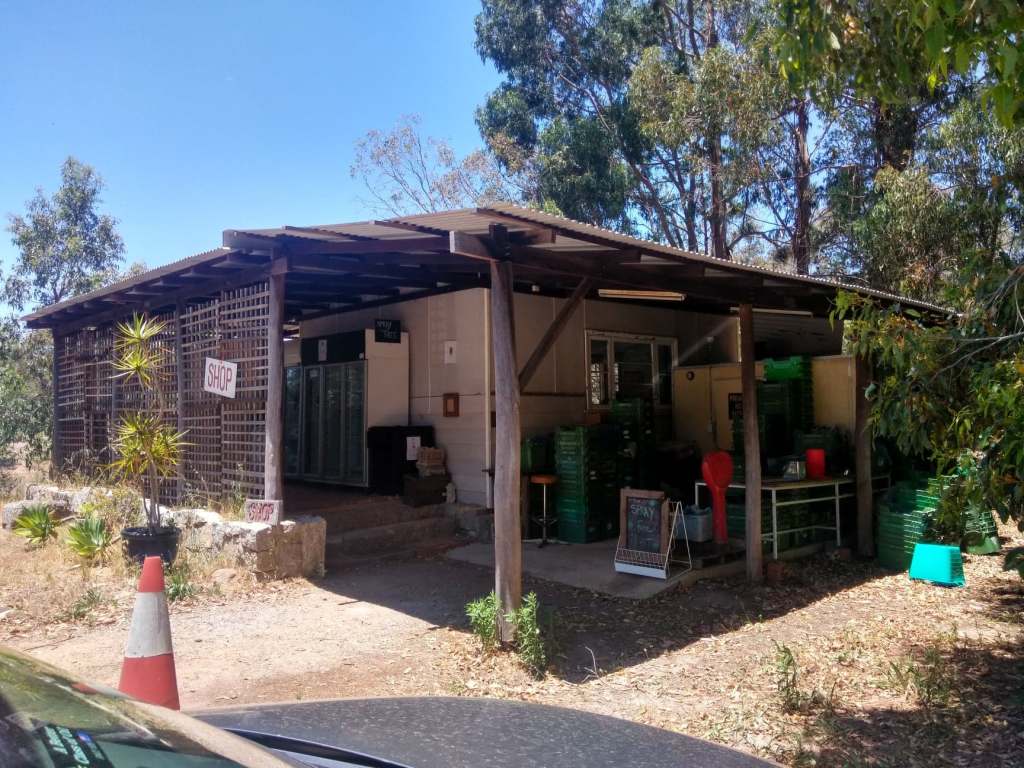
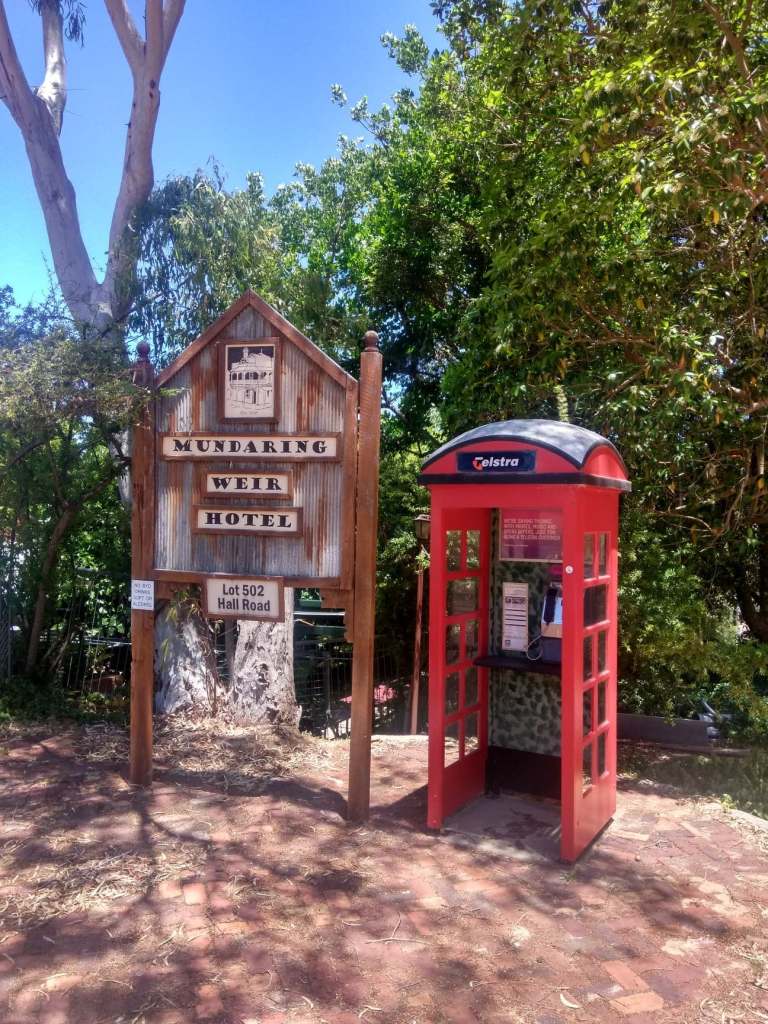
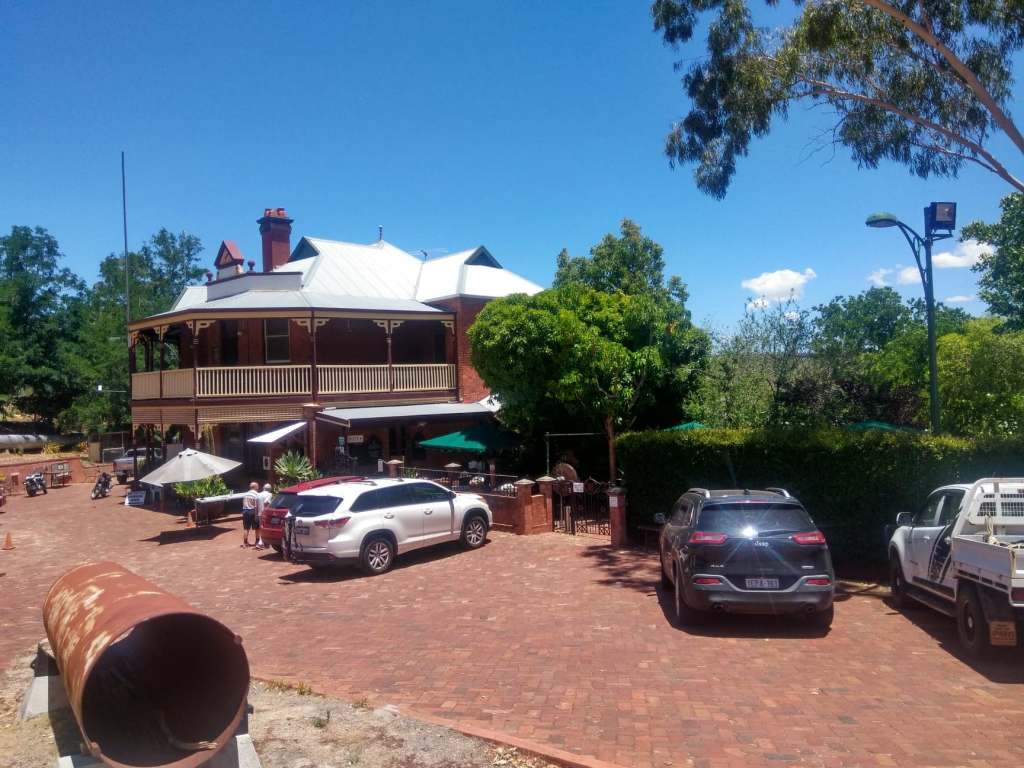
Today I welcome another guest blog by my sister in Australia. When our family first emigrated to Perth in 1964, going up in the hills to see Mundaring Weir overflowing was a regular outing…

Pipe Dreams by Kate Doswell

As a child, I was both fascinated and saddened by the story of Charles Yelverton O’Connor – always referred to as C. Y. O’Connor. As Western Australia’s Chief engineer at the turn of the last century, he was responsible, amongst other things, for the design and construction of Fremantle Harbour, WA’s main shipping port and – more famously – for the Kalgoorlie pipeline.

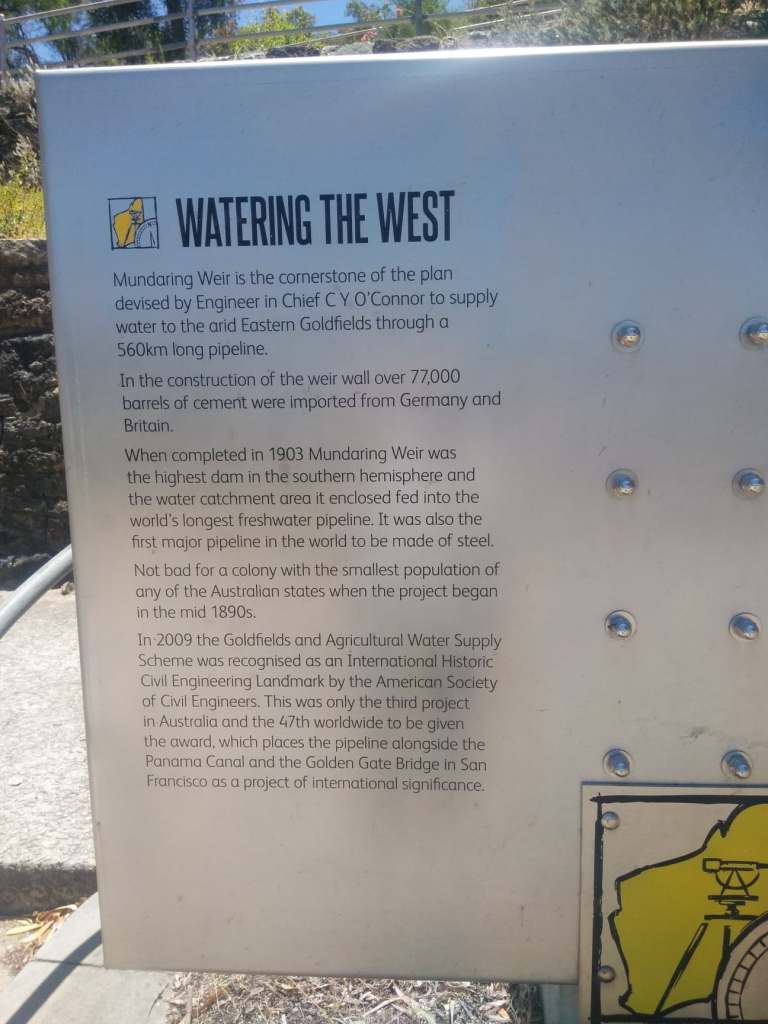
Kalgoorlie was the scene of WA’s massive gold rush and by the early 1900s was a busy town; the engine for much of the wealth and development of the fledgling state. The drawback was that it was in an arid area 560 isolating and harsh kilometres from the capital city of Perth. Supplies of water were a major stumbling block to further development and an answer needed to be found.

C. Y. O’Connor had the audacious idea to build a pipeline to take water from Perth to Kalgoorlie, a feat never attempted before over such a large distance. It would involve construction of a large dam at Mundaring, in the hills above the swan coastal plain. The project would require pumping stations at Mundaring and along the route, and steel pipes big enough to carry sufficient water.

It is ultimately a story of triumph – a brilliant idea, carefully planned and skilfully executed, a triumph made even more incredible considering its achievement by a small, isolated European settlement transplanted into an ancient country only 70 years before. But it is also a sad story. C. Y. O’Connor never lived to see its success; he committed suicide. The story I heard as a child was that the tap was turned on at Mundaring, but due to a miscalculation the water took longer than expected to reach Kalgoorlie. C.Y. O’Connor thought he had failed. He rode his favourite horse out into the surf at a Perth beach and drowned himself. The timing wasn’t quite that poignant, but the fact remains that he was driven to a state of despair by the critical and unrelenting attack mounted against him by the foremost (and possibly only) newspaper of the day, The West Australian (still the only state based newspaper in WA). His other major critic and tormentor was the Premier of the state, John Forrest, though he was happy to share in the credit once it was a success.

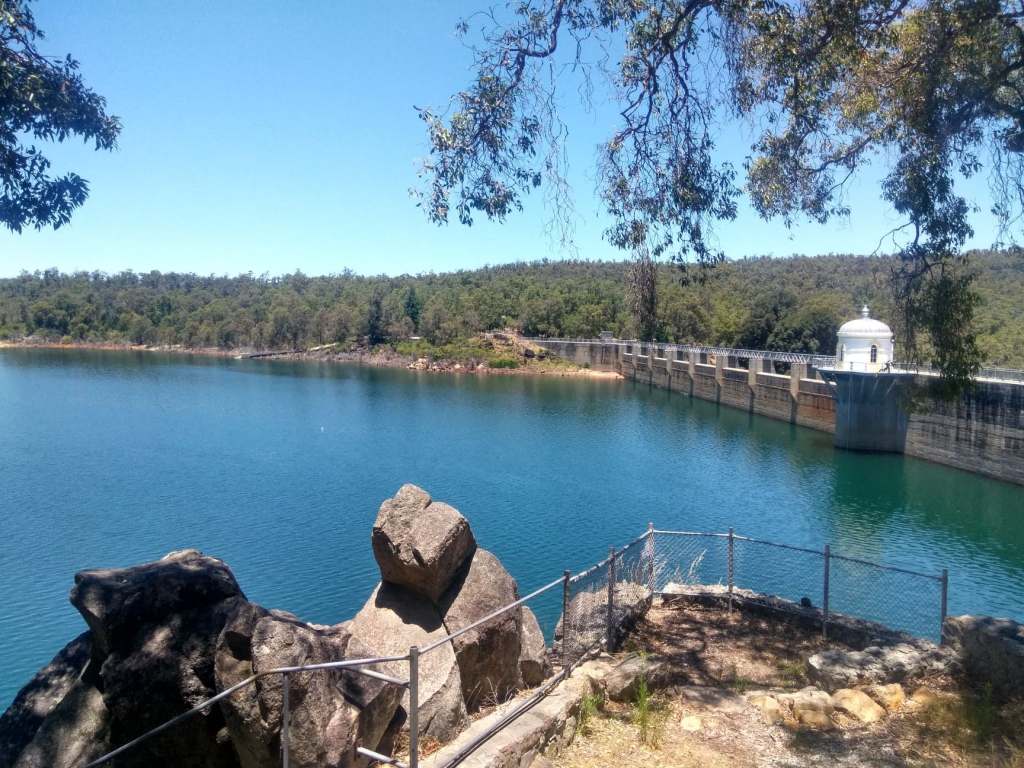
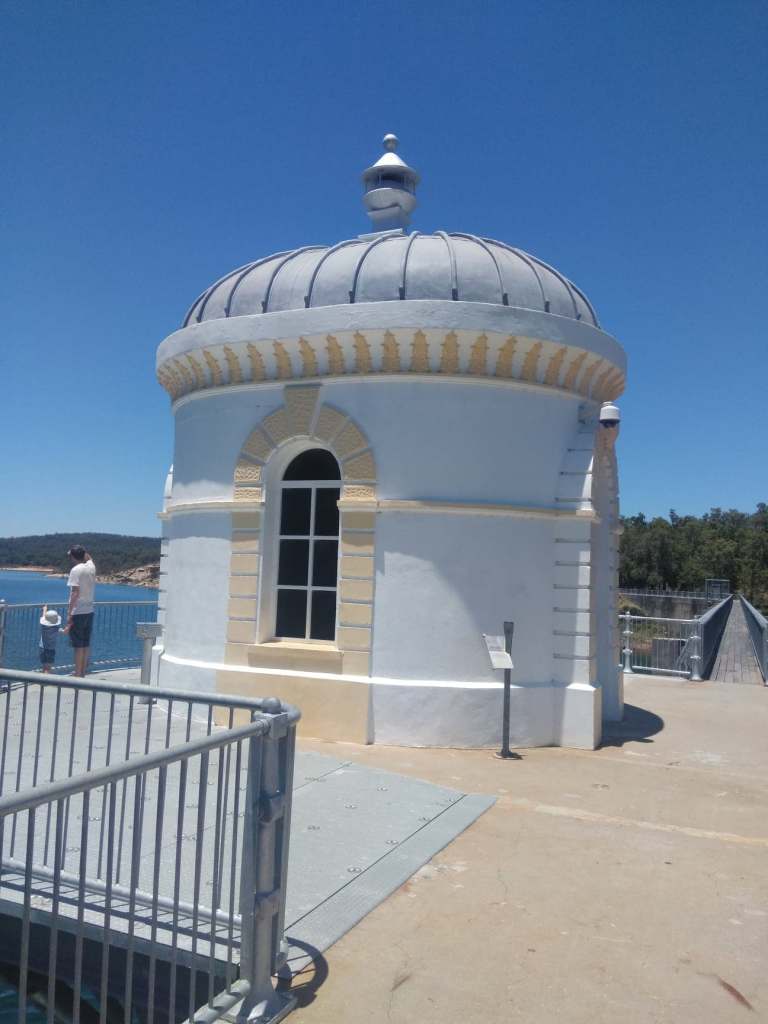
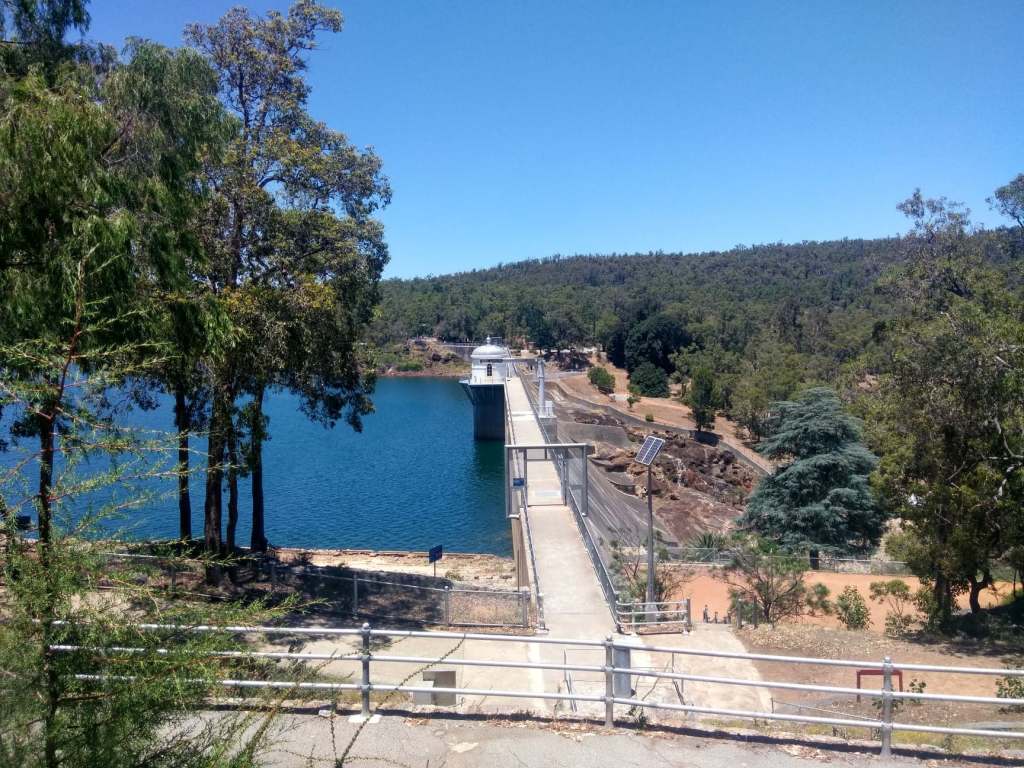
I recently visited the weir for the first time in many years, and it was an occasion for reflection on its place in our history. Completed in 1903, it was the longest freshwater pipeline in the world at the time, the first to use steel pipes and fed by the highest dam in the Southern hemisphere. In 2009 it was recognised as an International Historic Civil Engineering Landmark by the American Society of Civil Engineers, only the 3rd in Australia and 47th in the world to be awarded, alongside the Panama Canal and the Golden Gate Bridge.

On a more personal level, I remember as a child we visited the weir often, as a family and as part of a youth group with a campsite nearby. I always found it interesting and it has a beautiful setting, surrounded by hills and jarrah forest. As a teenager, my family moved to a wheatbelt town, and the water we drank came from the pipe. The pipe ran under our front garden, though I hasten to add we didn’t have a tap connected directly, since the size of the pipe means it stands as tall as a person when it runs above the ground.

 Not only had the pipe delivered water to the miners, it had also allowed the opening up of agricultural towns along the route. It is a constant feature running beside the roads, dipping underground to go through towns, then re-emerging on the other side. It is a guide; I can remember doing a walk-a-thon to raise money, and the route was simple. Just follow the pipeline, you can’t get lost! You can even walk on it if you feel adventurous and have good balance.

My recent visit also gave me pause for thought about our current environmental crises. Perth has traditionally relied to a large part on water from our various dams, but with climate change our rainfall has fallen considerably in the past 20 years. The last time the weir overflowed was in 1996, and visiting some years later it was sad and worrying to see the sloping gravel sides of the dam exposed by the falling water levels, a raw wound running around the circumference of the dam. It was a relief to see a much higher level last week, the water lapping the edge of the forest, but I was disillusioned to discover the pipe that pumped water into the dam from our desalination plant. I reasoned that it was necessary, as the weir still supplies Kalgoorlie and the towns on the way, but to me it was a tangible reminder that we in Australia were failing to take seriously the dangers of climate change. On the driest continent on earth, predicted to suffer most from a warming and drying climate, our politicians and right winged newspapers are happy to sabotage any efforts to address this urgent issue, preferring instead to criticise and lampoon scientists and concerned citizens, and to wilfully ignore the changes we see around us.

As I walked away from the weir lookout it occurred to me; things had not changed much since C.Y. O’Connor’s day.

My novel was inspired by our experiences when our parents emigrated with three children in 1964.

Lockdown Three

Lockdown Three has none of the drama of Lockdown One, though it is more cutting edge than Lockdown Two when schools were open and we thought we still had Christmas to look forward to. In an echo of the brilliant dramatic twist twixt lockdowns when Christmas was cancelled at the last moment, because Covid 19 reneged on its promise to give us five days off, the director instituted a brilliant scene from Downing Street in which the PM closes all schools, not the day before, but the very day after they started the new term ( a sentence nearly as long as lockdown ).

Lockdown Three promises to be longer than Lockdown Two, but with the same advantage of covering winter months, so people will be glad to huddle indoors. Are we prepared? I think it would have been more dramatic if we could be like the French and fill in forms to produce to show we have a good reason to be out. We are allowed out for exercise, to get immunised and to buy food and some people might actually have to go out to work… My freezer now has one drawer full of sliced apple from the tree in my garden; it thrived during last spring and summer’s sunny lockdowns, with no desire to leave home. Another drawer is devoted to the Christmas feast postponed till Chreastersummermas. I still have enough room for regular rations.

As my first winter being a widow it seems apt for normal life to be suspended, not that I would wish a pandemic on the rest of the world merely to take the pressure off me deciding anything. While half the population, from politicians to front line services, are busier than ever, the other half may be shielding or out of work, life curtailed to the banal or at least a gentler pace. There are plenty of positives; new hobbies, putting your CD collection in alphabetical order, having cooking fun. Gardening may have taken a back seat, but you can fill your home with pot plants and cut flowers; perhaps your family will not be able to find you in the jungle when at last they can visit.

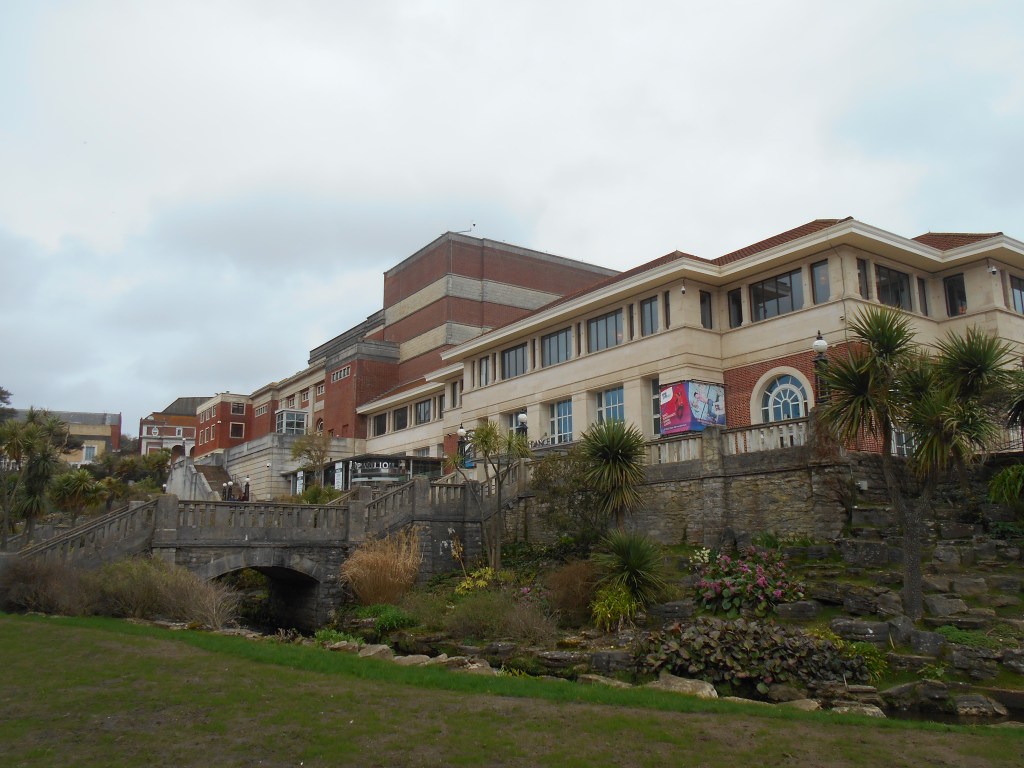
There are new experiences for most of us. Bournemouth Symphony Orchestra tomorrow starts its second series of digital, livestreamed concerts. You can buy tickets for individual concerts or the whole season on line. We had a camera club zoom party and I won the Bingo; no need to go out on a cold night with plates of food, or clear up afterwards. Every Saturday night I join in a Zoom quiz; a window on the outside world.

Bournemouth Symphony Orchestra (bsolive.com)https://bsolive.com/

If you get bored you can always order yourself more presents from Amazon ( yes I know we shouldn’t, but we all use them because you can find what you want, or even things you didn’t know you wanted, and it always arrives ). Nearly everyone in my family from four to forties is obsessed with Lego ( Lego is certainly not just for children ) and after many hints I was given my first Lego set – Lego Architecture mini London. It was tiny, fiddly, fun and addictive; a total change from blogging and writing. I have ordered myself a big box of Lego bricks and bits so I can make my own creations.

My little real Christmas tree in the front garden has been undecorated, but today I had a Glastonburyish idea; I am going to leave it there and tie a ribbon on every day till we’re out of lockdown.

A Tribute to Those That We Love – guest blog.

Today I welcome another of the occasional guest blogs written by my sister in Australia. This time she reflects on an unusual find near a country town in Western Australia.

A Tribute to Those That We Love   by Kate Doswell

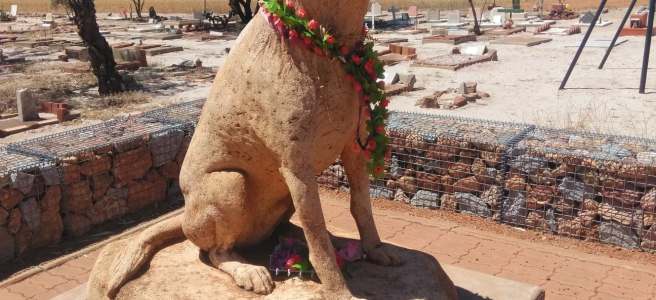
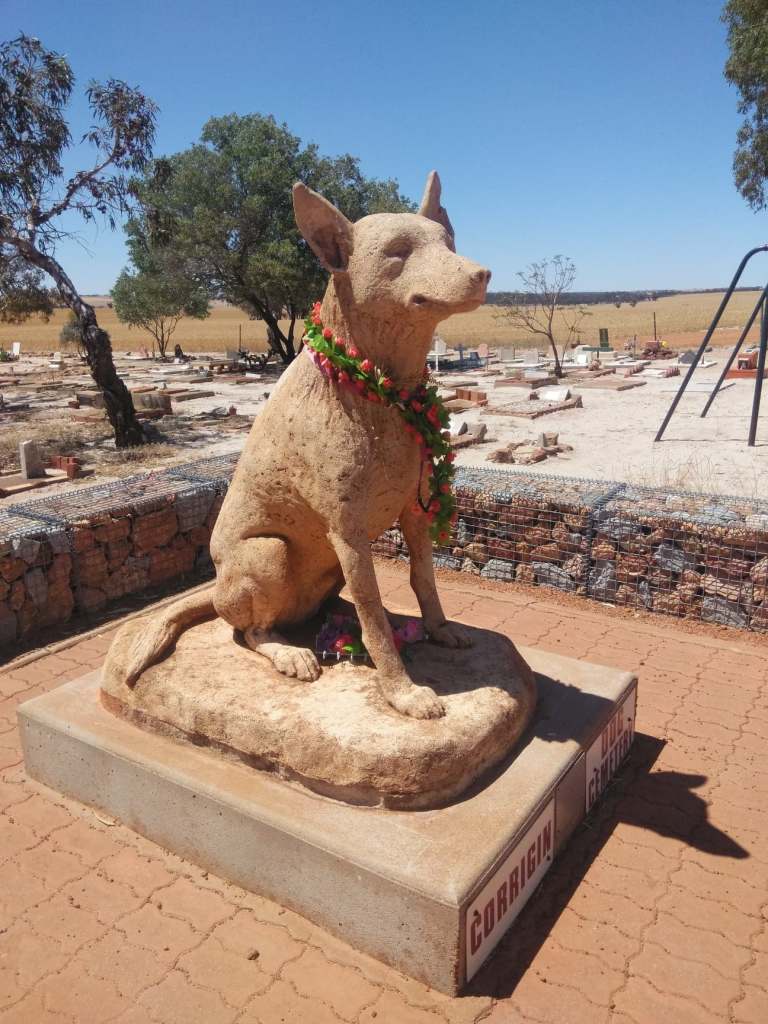
It could be mistaken for the dog that sat on the tucker box, 5 miles from Gundagai, but instead, it was a dog sitting on a small concrete plinth, 5 km from Corrigin. Corrigin is a small wheatbelt town, population 800 or so, 230  km south east of Perth in Western Australia, and the  red kelpie dog immortalised in stone was guarding the entrance to the Corrigin dog cemetery. 

My visit to Corrigin was nothing to do with dogs, but I couldn’t resist stopping and having a look around. It was quite large and surprisingly well kept, considering it seemed to be in the middle of nowhere. It was surrounded by the flat dun paddocks and the dry stubble of harvested crops, and only a blur on the skyline to suggest the presence of a town.

The ground around the graves was dry and sandy, with hardly any living green, but all the graves were well tended and each was utterly distinct. The owners of these beloved dogs had used imagination and care in designing the graves, and it gave some sense of the stories that lay behind their pets’ lives with the family, and there was no doubt they were family members and friends. 

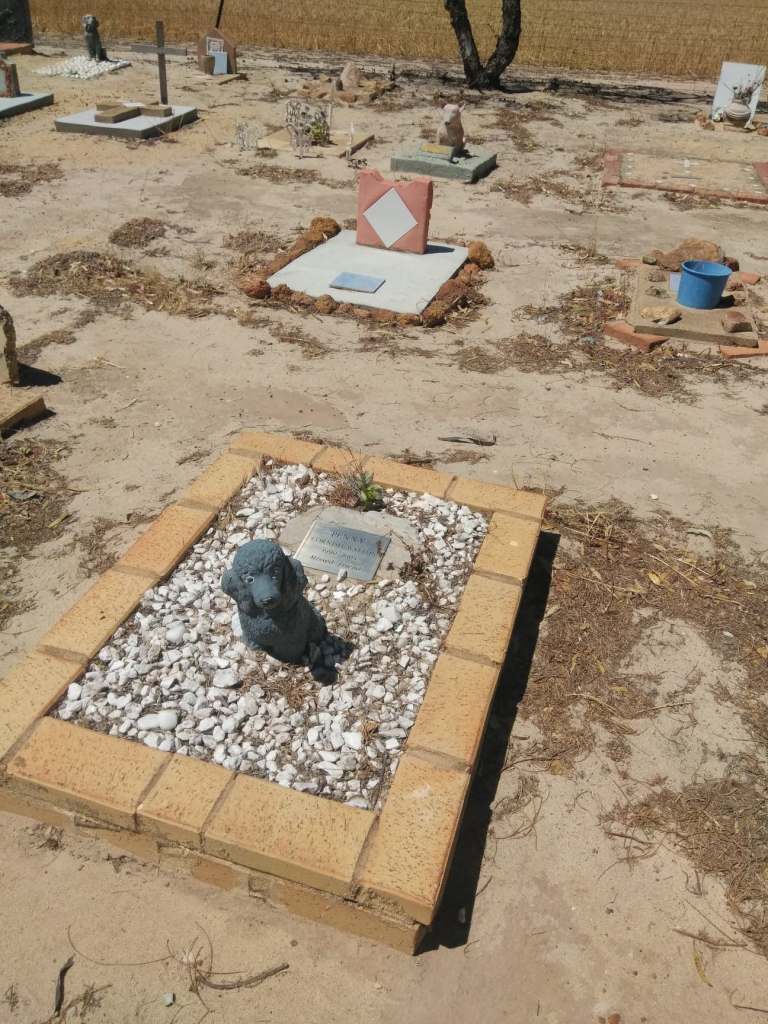
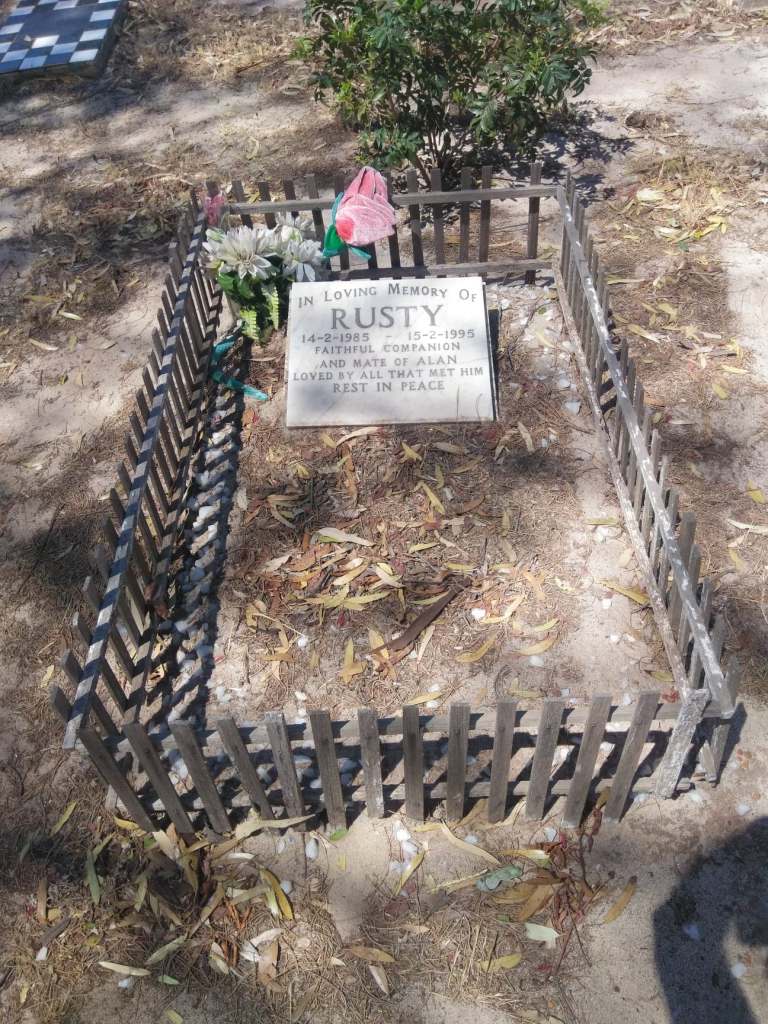
A black poodle statue with surprised eyes sat on a bed of stones, and the plaque told me she had lived for 14 years. Poor Rusty had died the day after his 10th birthday, and his grave was a simple oblong, surrounded by the railings that I had often seen around human graves for those of a higher standing in the community. 

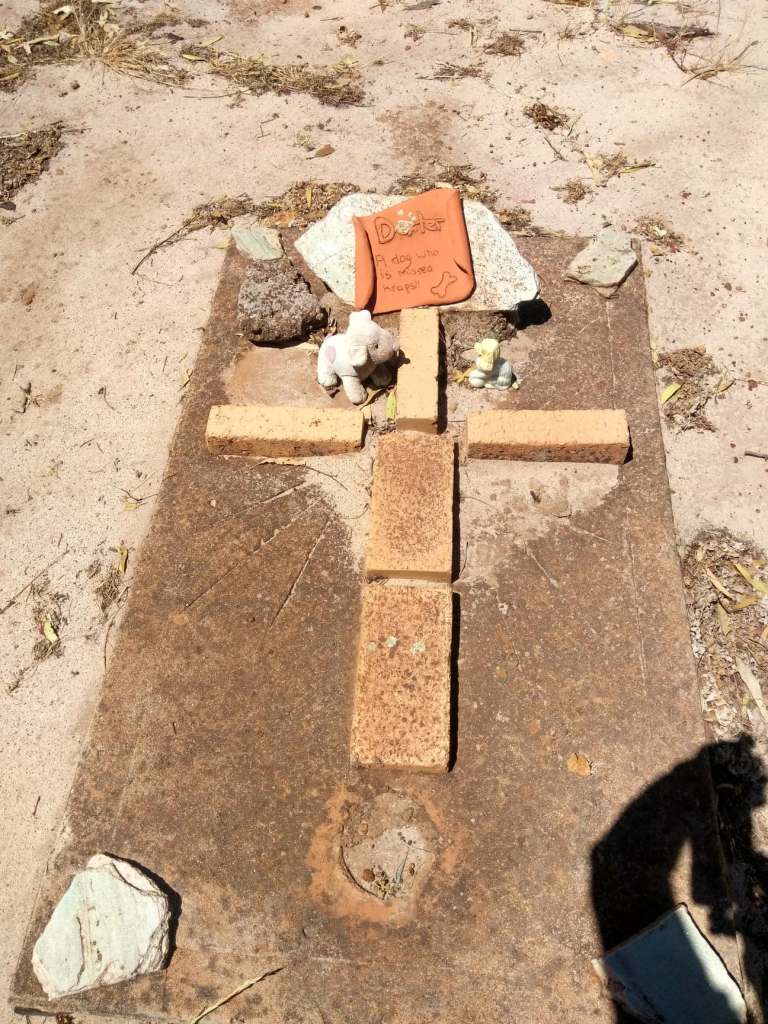
The one that touched me most was that of Dexter, who had a cross formed from bricks laid on a simple slab, with a clay scroll into which a child had carved “Dexter – A dog who is missed Heaps”.   It was sad to see a little stuffed puppy sitting on the grave as well, and I wondered if this had been Dexter’s favourite toy.

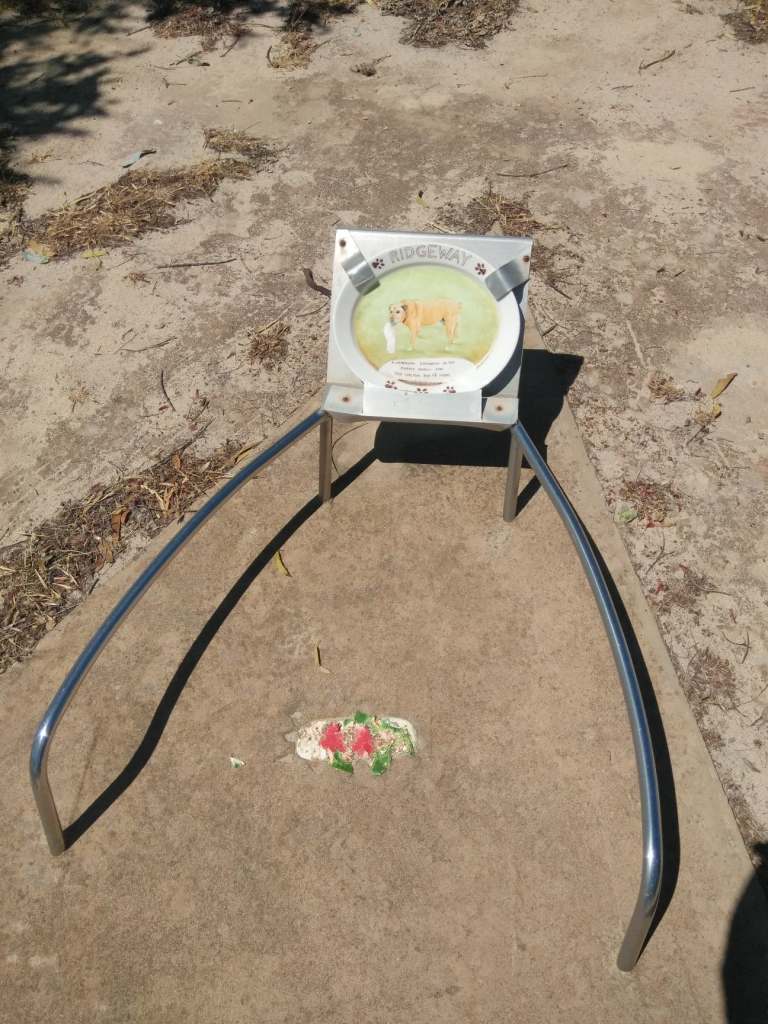
One dog’s family had improvised with a brass fire screen with a scene of Pointers out hunting.  There was no doubt that the image on the next grave was of the dog itself, a hand painted china plate with a picture of the dog and words telling of the wonderful companionship he had given for 15 years. 

There was even a multi-story grave that housed 3 successive dogs. Some people cannot face the idea of having another dog when the one they have loved for years dies, but I think most people recognise that each dog is loved for his or her own original personality.    A point for writers – one of my teachers firmly instructed me that the animals in my stories (usually – well OK –  always,  about dogs or horses) should be referred to as it, rather than he or she. I have never been able to comply, as I know they are living, breathing personalities who deserve to be recognised as such. Maybe there would be less cruelty if we could all see them in that way, rather than as objects or commodities.

Looking around this cemetery, there can be no doubt that many people see dogs as valuable and much loved members of our families; companions, helpers, protectors and comforters. This cemetery started as one man burying his dog in the 1970s, then others from Corrigin  joined him in laying their dogs to rest. Over the years it has attracted the interest of people from far afield who want a permanent memorial to their companion. So it isn’t just the people of Corrigin who feel so strongly about their animals, though this IS the town that set the record for the most number of “Dogs in Utes”  –  a parade of 1,527 utes ( Aussie abbreviation for utility,  any vehicle with an open cargo area at the rear, which would be called a pickup truck in other countries )  each with a barking, tail wagging dog in the back.    

We all have our own ways of remembering those that we love.  Personally, I have never felt the need to have something tangible to remind me of a loved one – I have lost 3 dogs, and each have been cremated.  I have never wanted an urn with their ashes in, though I understand and respect those that do.  With my last dog, a close friend came with me to the veterinary surgery for that final visit, as she had looked after my dog many times when I worked away and loved her as much as I did.  When they asked me if I wanted to keep the ashes, I shook my head, but as I did I noticed the look of dismay on her face.  “Would you like them?”  I asked her and she said yes.  I was happy for her to have them, I could think of no better person to keep them.  

I have recently lost my Mother.  She was 94 yrs old and she had lived close by for many years, so it was sad to have to say goodbye. This Sunday her ashes will be placed in the memorial garden at our church, next to my Father’s ashes.  There are no plaques, simply a book inside the church with the names of all those who are in the garden. When I think of my father, I don’t think of the garden, I think of the furniture he built, the advice he gave me, the funny things he said.  Likewise with my mother, it is and will continue to be, the memories of all the times we had together, the laughs we shared, and the problems we talked over.  It doesn’t matter whether we have a grave to visit, a plaque, or nothing solid to see.  The important thing is that we remember our loved ones, human or animal. I wonder if our animals remember us after we’ve gone? 

Advent Calendar – Thursday Third of December

Bethlehem Down

Christmas always has a touch of winter melancholy, especially this year and one of my favourite carols for enjoying a touch of melancholy is Bethlehem Down, made more interesting and poignant by the story behind it

Peter Warlock was the pseudonymn of Philip Heseltine (1894–1930), his choice of Warlock reflected his interest in occult practices!   Bethlehem Down was created in a mood of flippancy due to the impecunious state of Warlock and his poet friend Bruce Blunt – both notorious for their Bohemian behaviour. They hoped to earn enough money to get suitably drunk at Christmas; the carol was completed in a few days and published (words and music) in The Daily Telegraph on Christmas Eve.  Their plan had worked and they had ‘an immortal carouse on the proceeds’.

But Warlock’s career as a composer, music scholar and critic was cut short; towards the end of his life he became depressed by a loss of creative inspiration and died in his London flat of coal gas poisoning in 1930, probably suicide.

Bethlehem Down – YouTubehttps://www.youtube.com/watch?reload=9&v=yefnj5kvJTw

But elves do not bring melancholy with them – though don’t you hate them hanging around in the kitchen when you are trying to cook?

Advent Calendar – Wednesday Second of December

Covid Free Zone

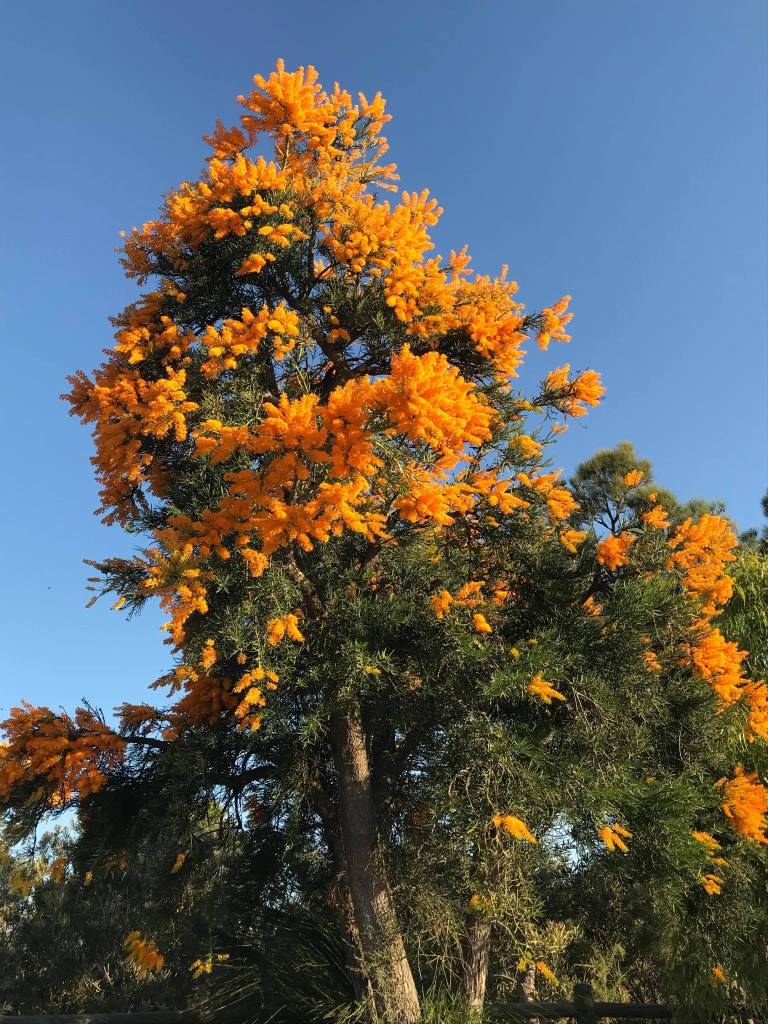
The weather is grey and damp here so what better than an Australian Christmas tree to brighten us up.

But the elf had a trip to the beach hut yesterday where we had glorious sunshine. He is looking forward to some Christmas shopping as we are now out of Lockdown Two and in Tier Two, we can’t visit anybody, but can go to non essential shops, so let me know what you want…

Advent Calendar – Tuesday First of December

Covid Free Zone

I thought I would do an Advent Calendar this year with no idea what might happen each day. Way over East in Tier Three two little boys have hung up their dairy free advent calendars; rather wobbly as they were crocheted by me. No chocolates and apparently this year each pocket has an act of kindness.

Elves on shelves are a recent tradition here, with little to do with Christmas, but I couldn’t resist when I saw a boxful of elves at the garden centre.

Home Alone Two

We’re in tears over tiers; only the Isle of Wight, The Scilly Isles and Cornwall are in Tier 1. From next Tuesday or is it Wednesday… many of us will continue being home alone. Four fifths of my family will be in Tier 3, including the new puppy, but as he’s not allowed beyond the back garden yet he probably is not bothered. For those of us in Tier Two the only difference from Lockdown Two is that all the shops are open, I think… In some ways it is a sort of Covid comfort blanket, no pressure to decide what to do or where to go next.

Christmas is still going to be a five day bubble of fun with three households allowed to meet as long as they keep all the windows open, don’t play board games and don’t hug Granny, but all that could change...

Theoretically it would have been better if everyone had stayed home for ever back in February and worn masks, even in the shower and if flights all over the world had been cancelled… We would have ended up with no food in the shops and worse still, no Amazon deliveries, but at least our leaders could not have been accused of being indecisive.

But what is life like in our new reality? My elderly next-door-but-one neighbour rang up the other evening; earlier when I walked past her house she was sitting in her porch with her granddaughter perched on a chair in the front garden, baby on her lap. I stopped to say hello at a safe distance, but her dog started barking ( the tiny dachshund barks at everyone that goes by ) , frightening the baby, who started crying… I waved apologetically and moved on.  She was on the phone for over two hours, I was a bit punch drunk, but can’t complain I have no one to talk to and she makes me laugh. She was widowed when she was my age; half her family are nurses at our local hospitals and one of her sons works at the crematorium. Whatever the latest instructions  Boris declares, her family have put her under lockdown. Her other son controls her central heating from his home in Malta.

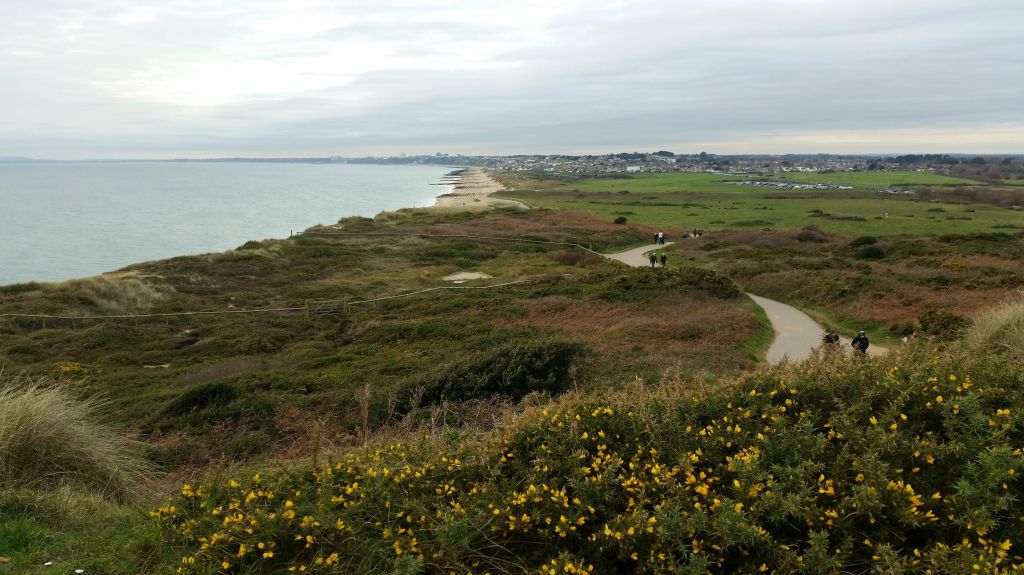
On Tuesday my friend and I met at the beach hut in glorious sunshine. I can go to the shops ( the ones that are open ) or the cliff top and look at the horizon any time; I don’t feel closed in. On the promenade or up on Hengistbury Head it is like a permanent weekend or holiday time, everyone is out walking, jogging, cycling with dogs and children. Mostly they smile as they pass at a safe distance, glad to see people’s faces. Later in the afternoon when it is dark it is quite festive on the sea front; our resident four or five redundant ocean liners are fully lit up and circles of coloured light whiz past as invisible dogs run around with their flashing collars. Back at the shops the Christmas lights are up and windows are brightly lit with displays of what we cannot buy till next week.   

But everywhere there will be people in tears over tiers, most of us confused with the constant changing of rules and information. Folk overworked and folk out of work. Parents going on social media to insist that though Johnny was off school sick, he tested negative for Covid and he wasn’t the cause of the whole of year seven having to stay home and isolate…

Home Alone

The pandemic has revealed just how many people live alone; we hear and read about well known stars and artists happily living by themselves, presumably as a lifestyle choice. Plenty of ordinary people live alone, perhaps always have done as adults, or since a parent or partner died or after divorce. Many of these are happy living by themselves, self contained. Those elderly people already restricted to home before Covid hit, are not necessarily lonely. A lady in her nineties on our library round told us she was never lonely, as long as she had the twenty books we brought her every three weeks. Of course there are many people who are lonely, young people from broken homes in tiny bedsits, old people who have no family left in the world.

None of these ‘single households’ reckoned on having a pandemic and being prisoners in their homes. Single retired people leading busy independent lives suddenly found themselves described as vulnerable. The people for whom lockdowns and the lack of access to normal activities are so hard are single parents in tiny flats, carers left to cope with disabled children or parents and partners with dementia. Their support network was suddenly pulled out from beneath them.

Being alone is not the same as being lonely. In days gone by lone people might manage a farm by themselves with the nearest humans miles away; being alone really meant that, no radio, television or internet. I can’t imagine what that would be like, but perhaps the company of their dog, farm animals and nature all around was enough. It’s a cliché, but you can be just as lonely in a big city; most of us have probably found ourselves in a new town, at a new job, knowing no one.

When we first moved here sixteen years ago Cyberspouse had a few more weeks working out his notice at Heathrow. When he left for work early on Monday morning with the kitchen flooded ( that’s another story ) I suddenly realised I had gone from a home with five people and a job at Heathrow with thousands of people – I wasn’t actually working with thousands, just moving among thousands each day – to a strange house in a place I knew no one. I wondered if I only existed in relation to other people.

I had time to get used to the idea of joining that large club, widows ( what a medical scandal it is that women are still outliving men ) and the even larger club of women living alone. After the flurry of activity and family visits we are in our second lockdown in England, so now I am officially on my own. Cyberspouse was totally dependable, unflappable and fun, so being on my own was not what I would have chosen, but if others manage to cope so will I. During 2019 we had plenty of time for trips and fun and getting everything in order. In 2020 I learnt to be a carer and the only responsible adult in the house, no more yelling for help when the computer didn’t work. I am cheating slightly, having had family to help out with the official stuff and Cyberson Two, who after doing nothing at school, is now a builder we all depend on, who can turn his hand to anything. The downside is that none of the family live nearby, but it must be hard to truly be on your own.

What else helps? Covid Comforts are what we all need and anyone who has a home and food enough to eat must be grateful. We glimpse on our television screens into the homes of news commentators or our favourite entertainers; they enjoy having the chance to chat and presumably they are coping fine with lockdown. Invisible are those folk in poverty or grieving having lost family to Covid. It may seem to me that everyone is walking around alive while Cyberspouse is not, but 53,000 is our death toll from Covid in the United Kingdom.
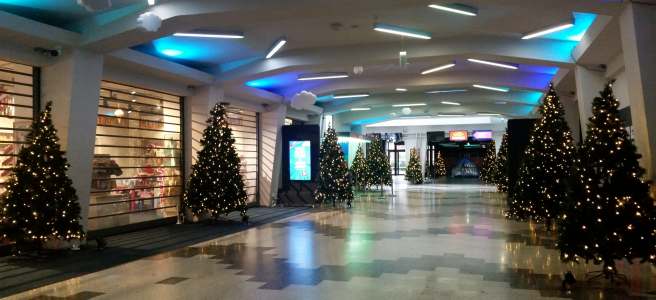
Meanwhile in my cosy lockdown retreat I live in a nice little road with good neighbours and a garden to keep me busy. We are allowed to go to the shops for essentials and at the local shops I buy fresh flowers regularly, my lockdown treat to brighten the dark days of winter.  We can go out for exercise and use our beach huts; I can sit and chat at the beach hut with the one friend we’re allowed to meet outside. We can go out for medical reasons, so I was quite excited to go on the bus to the hospital for a blood test!   

Indoors the lifesaver is BBC Radio, it never goes off; if I can’t sleep I can listen to the World Service. During the day there is news aplenty ( too much ), but also intelligent chat, dramas, serials and music. I have a CD player so I am never without music on tap. Television may have plenty of rubbish, but also interesting or cheerful programmes to watch with dinner on my lap. Writing is absorbing, creative and vital. Photography and crafts are other creatives to focus on.

Connecting with the outside world? The good old fashioned telephone is the easiest way to chat to people, but how many of us would want to do without the internet during Covid? We can blog, Facetime, share political and lockdown jokes on Facebook, go on zoom; my only experience with zoom is the weekly quiz my daughters’ friends do, but it’s good to have something fun to focus on.

What will happen next in the world, in our own countries; will Christmas be cancelled, will those of us in the northern hemisphere cope with winter… look out for Home Alone Two.

The Game of Death – New Players

Warning: If you want to avoid the topic of death and dark humour read no further.

Covid 19 has made people think and talk about how people should die, with emphasis on not being alone, preferably with family. Covid patients in isolation have been unable to see loved ones.

In reality most of us cannot choose where to die or plan the scenario; victims of murder or major disasters certainly don’t have the luxury of dying in their own beds comforted by family. Awful circumstances such as terrorist attacks find total strangers holding the hand of a dying person, giving their death some dignity. As no one comes back to tell us, we cannot know if the surroundings and company or lack of it make any difference to their own unique internal solo journey. Celebrities often seem to have died ‘peacefully at home with their family present’ but folk lore and family tales seem to indicate that dying people often wait till the very moment loved ones pop out of the room.

Most terminally ill people will probably get the chance to opt for palliative care at home, though it can’t be guaranteed; they may need to go to hospital or a hospice eventually, but Covid has made it even more desirable to stay at home and leave hospital beds free for others. Unless everyone in your family is a medical person, carers will need help along the way or near the end; team work and various bits of equipment are required to make life easy for patient and carers. There is nothing to stop you ordering wheelchairs and all sorts on Amazon and getting next day delivery, but the National Health Service is geared up to lend what you need and the various teams helping you will be busy arranging equipment. The largest item is the hospital bed; you might die in your own home, but probably not in your own bed, however romantic that looks in films. The beds have to be plugged in and do all sorts of things. The bed and other items come with wheels and stiff pedal brakes impossible to put on or off if you are only wearing your slippers!

In the first few months of the lockdown I coped fine by myself with Cyberspouse. District nurses were trying to avoid going in any homes, but they phoned regularly with advice and to arrange some of the medications. They were ready to come out with their protective gear if necessary. Cyberspouse was happy not to have any visits, medical or otherwise, relaxing at home in the exceptionally sunny weather we had.

Later on, family help was more vital than keeping isolated and they took turns to come and stay; it was only in the last ten days that the district nurses came and arranged for Marie Curie nurses to parachute in with four visits a day. A helpful bright yellow book arrived promptly in the post. We were also glad a few times to ring the emergency numbers that had been sitting by the phone for months; night duty district nurses and 111 doctors. Marie Curie were excellent, compassionate and caring ladies and one chap. Visits rapidly increased and they made sure I had a night nurse for what turned out to be the last night, one of the few nights I was going to be by myself. They told me I was going to have wonderful Linda who had been doing the overnighter ‘forever’.

Linda arrived with a huge bag, rather like a mature Mary Poppins. I explained yet again that none of the family lived nearby, but they had all been to visit and my daughter was coming back the next day. It was a busy week in real life with two grandchildren just back in the UK and starting a new school and my daughter’s son starting school! Younger son had just got engaged. Linda was there to make sure Cyberspouse was comfortable, to organise the practicalities and make sure I didn’t miss the moment…

I later got a nice card from Marie Curie and they have rung me a few times to see how I am getting on. They are a charity well worth supporting.

Handy Home Hints

You might think your loved one is past the point of seeing the GP, but it is the GP who has to prescribe the drugs and you will have to go and sign for the ‘just in case’ controlled drugs as well as collecting various ongoing prescriptions.

It is helpful if someone in the family works for the NHS or has a friend in palliative care nursing … my daughter is a physiotherapist and had that very friend to ask for advice. She always made lists of questions and sounded professional on the phone, so we were well prepared.

After the death a doctor has to come and certify the death, either the GP or the on call ( 111 ) doctor at night. After that you must call the funeral director, but you can decide if you want them to come as soon as possible or wait a while.

Afterwards you will have to return all the drugs to a pharmacy, especially the controlled drugs, but unused needles have to be returned to the doctors’ surgery.

Darkly Funny Moments.  

The next day, Thursday, the funeral directors phoned to say they had not had the notification from our GP of the death. The on call night duty doctor had sat at the kitchen table typing into his lap top, saying ‘everything is going straight through to your doctor’s surgery’ but my writer’s mind thought ‘I have no proof he’s even been here, no piece of paper, was he actually a doctor?’ I was slightly reassured that nurse Linda knew him. When my daughter tried phoning our surgery she couldn’t get through and in the end resorted to using her internal NHS email. Luckily the information did end up in the right place.

One thing the district nurses requested unsuccessfully was a hospital bed extension, we had been expecting it for weeks. When a chap with a truck arrived at the door on Thursday morning I thought he was very quick to collect the hospital bed until he said cheerfully ‘I’ve brought the bed extension’. Poor bloke was embarrassed when I apologised that it was too late.

We had not seen much of the palliative care team from the local hospital who originally got us organised. One of the nurses had phoned the previous week saying ‘I’ll touch base with you on Friday.’ Sure enough on Friday the phone rang and she said brightly ‘Just calling to touch base’… so I had to tell her the news.  

Because of  Covid we were saved a trip to the registry office; instead I had a nice phone chat to Polly the registrar including Cyberspouse’s no funeral request. After taking most of the details she asked me my occupation. Oh oh, was I going to fail this part? I replied that I had done all sorts of things and she said ‘How would you like to be known in a hundred years?’ Well who in a hundred years would know I didn’t earn a living at it, so of course I replied  ‘A writer!’

https://www.mariecurie.org.uk/help/support/terminal-illness/preparing/what-to-expect