A Room of One’s Own?

‘A woman must have money and a room of her own if she is to write fiction.’ A quote from Virginia Woolf at the beginning of ‘A Room of One’s Own’ which I have just finished reading, I have been dipping into it on my Kindle over a period of time. Virginia was invited to give a series of lectures on women and fiction in 1928 and they were published in 1929.

Of course we imagine the Bloomsbury Group had plenty of rooms and money, not to mention more time than ordinary folk and I can hear fellow writers of both sexes saying we would all like a room of our own and some money.

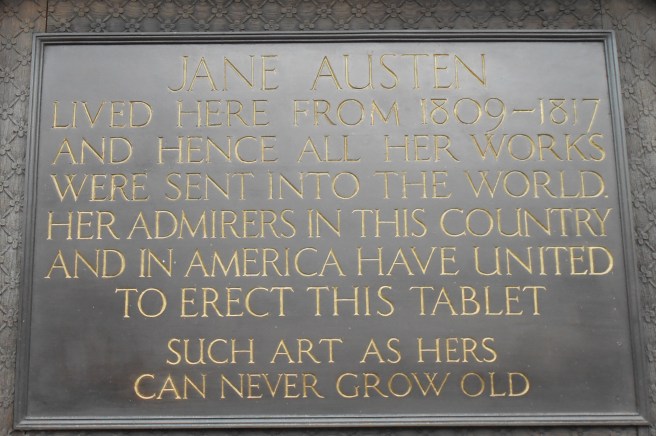
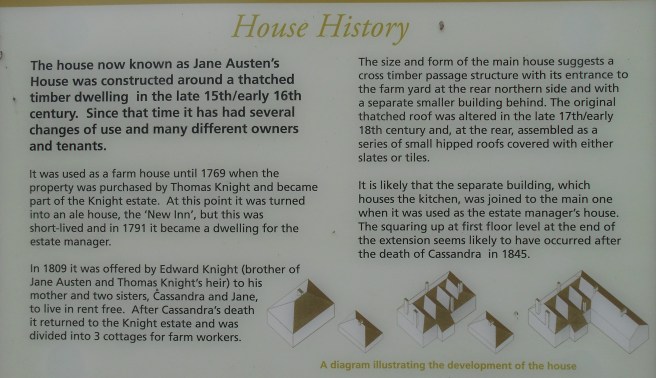
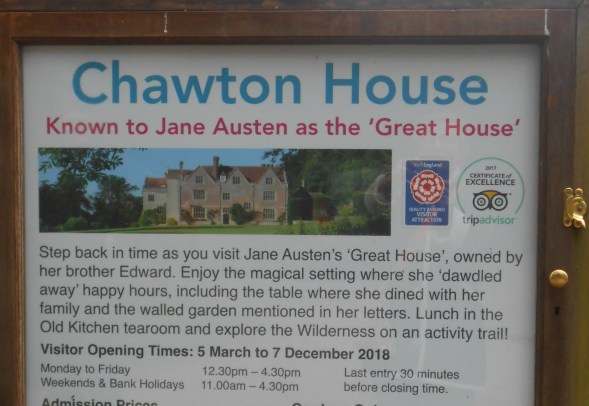
But looking back into the past with Virginia Woolf we would surely agree that the dominance of men in the field of literature was not due to the lack of talent among women, but absence of opportunity. Even Jane Austen did not have a room of her own, she never had a home of her own, just a kind rich brother. In the Jane Austen museum in Bath I saw an example of her tiny handwriting, small pieces of paper could be quickly hidden if someone came into the room. In the Chawton, Hampshire house, where Jane spent her final years and did her most productive writing, she did not allow the creaky door to be fixed because it acted as a warning that someone was about to enter the room. She always shared a bedroom with her sister. How peaceful the house was we cannot know for sure, but with a household of four ladies and a couple of servants, it should have been quiet and certainly she did not have to contend with toddlers running riot or teenage boys clumping up and down the stairs. One of Woolf’s other theories is that women became novelists rather than poets, because it takes more concentration to write a poem and women were more likely to be interrupted. Of course the great poets that have come down through history were usually well off men.

DSCN5987

But for Virginia Woolf, Jane Austen stands out because she writes about women’s lives, not about them as background to men’s lives. She wrote what she wanted to write. The Austen family lived through the Napoleonic Wars, but there is no mention of them. Soldiers are important only for young ladies to fall in love with or run away with.

Writing ninety years ago Wolfe lived in a world where everything had been changed by the Great War. Women now had the vote, they had been important in the workforce during the war and with the loss of so many men, motherhood and domestic bliss, or domestic confines were no longer an option for many women. There was still poverty and hardship, the welfare state was a long way off, but Woolf wanted women to take any opportunities for education and to write. What would she have made of the Twenty First Century?

DSCN6531

With her husband Leonard she founded the Hogarth Press in 1917, so she was able to publish her own books and certainly didn’t need to decide on a genre. She could never have imagined the internet and digital publishing, but she would surely have been impressed that so many women of all ages are writing, and writing whatever they want. But do we still need a room of our own and £500 a year to be able to write? Many of us didn’t start writing till after A Levels, our children’s A Levels; how many students come home for the university holidays to discover their bedroom has been turned into a sewing room or a computer room? Many writers don’t start till they have retired.

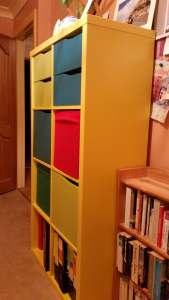
I wrote my first novel on a lap top on the dining table, progressed to a desk top computer in the corner of the bedroom, last year we rearranged the house; junior visitors now have to sleep on air beds, Cyberspouse has a computer room and I have a writer’s den; Virginia Woolf didn’t say a room of your own requires a visit to Ikea, but mine did.
35239587_2126709067358872_2024433736912732160_n

But if you have to write on a lap top curled up on the end of the sofa while the football is on television, you can still enter the digital room or the ethereal mansion where there is room for every writer. Is your blog a room of your own?

DSCN6532

Do you have a room of your own or can you forget your surroundings once you are in your characters’ heads?


Three Billboards, Three Episodes, Three Continents

Once upon a time you could watch television or go to the cinema. If you loved a film, chances are you would never see it again, unless it ended up on television. If you missed an episode of your favourite serial, that was it, gone for ever. The advent of video machines changed everything; you could go to Blockbusters and rent a video of your favourite film to watch at home. If you were going out or did shift work you could record your favourite programme and come home to find you had pressed the wrong channel…

34670839_2115416058488173_7531615677732356096_n

Since then viewing has become far more complicated and gone are the days when everyone watched the Sunday night drama and talked about it on Monday. Catch up, iplayer, fire sticks, boxes of all sorts, Netflix, cables and satellites; gigantic screen televisions down to watching programmes on your phone; take your pick. But a good film, comedy or television drama still stands out.

34581733_2115415835154862_4465963687949107200_n

I love a good comedy. We don’t have Netflix, but we know someone who does and the fact that they moved thousands of miles away doesn’t seem to have stopped us using it. So we have been catching up with ‘The Letdown’, the hilarious and realistic Australian portrayal of parenthood. If you have ever had a baby or there are new babies in the family you will recognise the scenarios. Gone are the days of sitting bored and lonely in the dark watches of the night, feeding a baby who is very cuddly, but not intellectually stimulating. Modern breastfeeding mothers are on their smart phones exchanging sympathy with sleepless mums all over the world and probably looking up the latest advice on the many Facebook support groups. The downside is that new parents are under pressure more than ever to do the right thing, whatever that is. If you get the chance, join Audrey as she meets other mothers and thinks they are all doing it better than her…

33421551_2100265946669851_1418245127951876096_n.jpg

We have finally caught up with Three Billboards Outside Ebbing Missouri. After seeing it reviewed on one of our favourite film programmes, knowing it was co-financed by Film4Productions, I was confident it was my sort of film, even though I don’t like films with lots of swearing and violence. The next day, talking about cinema with a friend, I mentioned there was a film coming out that Cyberspouse and I both wanted to see, though by then I had forgotten what it was called and what it was about.

https://www.film4productions.com/productions/2018/three-billboards-outside-ebbing-missouri

It completely lived up to our expectations. Dark indeed, with violence and swearing, but the humour was brilliant, the story poignant. To carry off a film like this you need the best actors. My only pre conceived idea was that Francis McDormand would be good, but Woody Harleson and Sam Rockwell were also brilliant.

34584556_2115416028488176_6752829577438953472_n

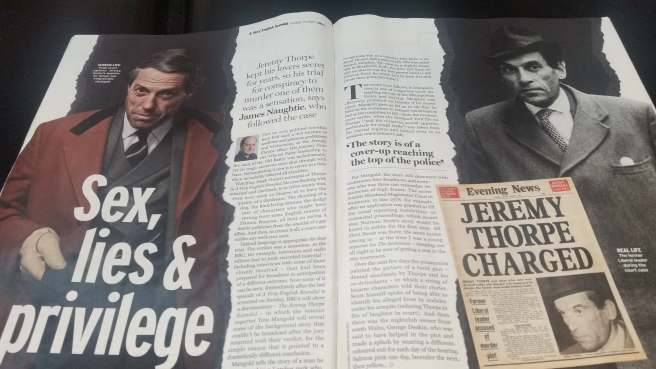
A Very English Scandal on BBC television was three episodes of perfect Sunday evening drama. Russell T Davies’ production was blackly comic (are you sensing a theme here of my taste in viewing? ) and has had viewers agog.  Political scandals are not new, but the 1979 trial of Jeremy Thorpe, the leader of the Liberal Party and Member of Parliament for North Devon, revealed years of cover ups, lying and a farcical attempted murder that you couldn’t make up. It was also a story, familiar now, of a man in power abusing the trust of the most vulnerable. Even today, politicians who are gay often don’t ‘come out’ till their mother has died, or to avoid upsetting their family’s religious sensibilities. Before 1967 all sexual activity between men was illegal throughout the United Kingdom with heavy criminal penalties and was a sure way to destroy one’s career. Thorpe’s sexual encounters with other men and his affair with Norman Scott had to be kept secret, even if it meant killing the young man. Perhaps the public were most upset that the Great Dane was killed by mistake, Norman was only spared because the gun jammed.

34345408_2115415915154854_5134085360246063104_n

The most scandalous thing about the trial was the judge’s totally biased summing up for which he was later lampooned by comedian Peter Cook. All those accused of conspiracy to murder were found Not Guilty.

This delicious three part drama, with its dark humour, worked because of the excellent acting in every part, it was Hugh Grant’s best ever role and Ben Wishaw is always brilliant in every character he takes on. We watched in real time and the icing on the cake was the showing straight afterwards of a 1979 Panorama documentary, intended to be shown after Jeremy Thorpe was found guilty. It had never been shown before. And there was more drama to follow. Tom Mangold who made the documentary, was walking his dog in the park and met a man who claimed to have also been hired to kill Norman Scott, but didn’t go through with it. Andrew Newton, the man accused of the attempted killing was claimed by police to be dead, but is now claimed to be very much alive, living under another name. Gwent Police have reopened their enquiry into the scandal. Sunday night news showed a plainclothes officer knocking at a front door; of course no one was in, another amusing post script.

https://www.independent.co.uk/arts-entertainment/tv/reviews/a-very-english-scandal-review-bbc-episode-3-hugh-grant-ben-whishaw-a8381421.ht


Windsor After That Wedding

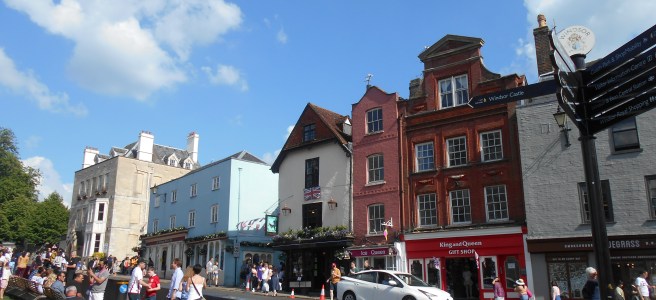
Eight days after the royal wedding we are in Windsor to catch up with friends, not at the castle, though they are staying opposite the castle. We are down the road in a pub bed and breakfast. Flags are flying everywhere and Windsor is busy, like it is every weekend, especially a bank holiday weekend. A sunny Sunday afternoon and everybody is happy, except the odd crying child; crowds, sightseeing and family outings don’t always work. We hear a father saying to his young son ‘We are here to discover the town, not to go to Legoland.’

6

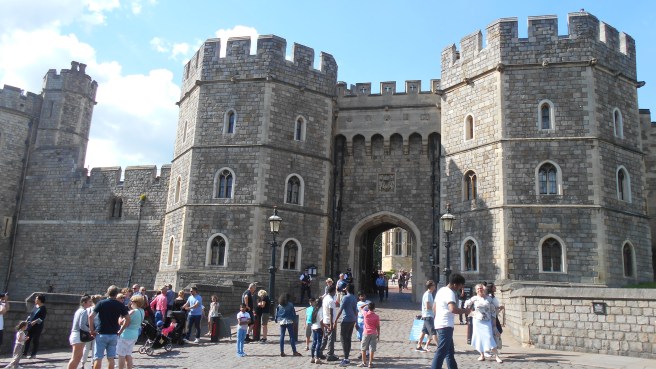
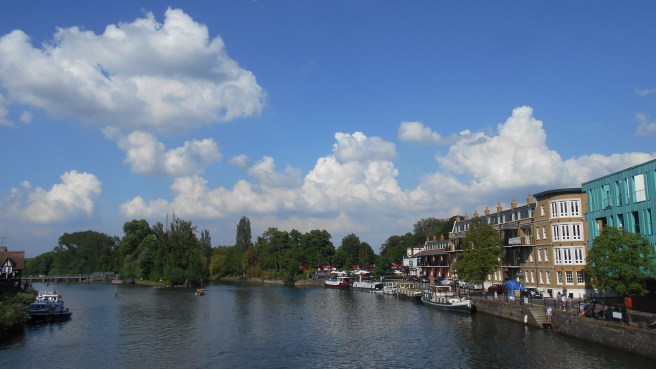
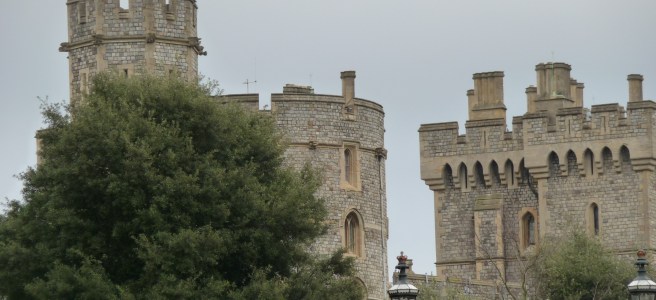
Legoland is way out of town, though you can catch the bus near the castle. We had already seen signs for motorists saying Legoland was full. But Windsor is not about plastic bricks, the castle is made of real stone with thick walls to keep out the aircraft noise; along with many other people the Queen lives under the flight path to Heathrow. The blue sky today is heaven for plane spotters. We sit on the footbridge over the River Thames, the bridge links Windsor and Eton, the little town is part of the school rather than the school being in the town and is well worth a wander. Today the river is busy, you can dine aboard a big boat or hire a little boat and get in the way of the sightseeing riverboats. You can also ride in the Windsor Duck for an amphibious tour.

DSCN6241

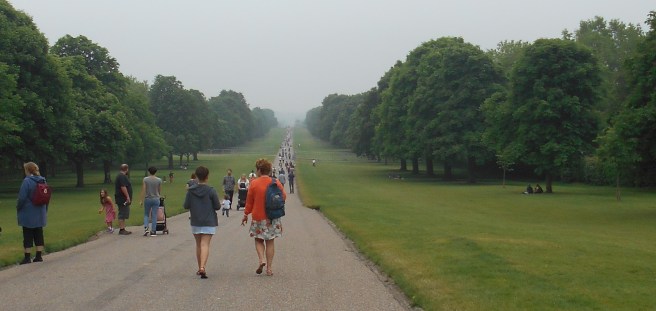
On Bank Holiday Monday morning the sky is heavy, the air misty. We can hear the roar as we step outside, but the clouds are so low the aeroplanes above us are invisible. We stroll the same way the royal wedding carriage drove and arrive at Windsor Great Park. The scaffolding is coming down where the cameras were last week and the Long Walk is back to normal, no crowds, just people and dogs enjoying The Queen’s back garden. If you wanted to you could keep going towards the bronze horse, away from the crowds; beyond lie gardens, forests and lakes. We walk up to the castle gates, open for royals, locked to the public. Everyone is taking photographs. Round the town side there is a queue for the castle, but only for ticket holders. There is another queue for people wanting to buy a ticket, it stretches down the hill out of sight, but all is civilised, plenty of people in uniforms to direct or advise you to come back first thing in the morning. Everyone wants to see the setting of the wedding.

dscn6287.jpg

DSCN6298

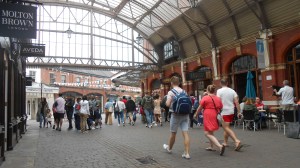
Opposite the castle is Windsor and Eton Central railway station, the branch line from Slough was built for Queen Victoria. The three carriages go back and forth all day, curving across the river. Below the station is the main coach park; visitors are funnelled in through the station concourse and out onto the busy street. We sit with our coffee just inside the entrance and people watch. Tour guides now have microphones and their followers have earpieces and a receiver hanging round their necks. Each guide has their own flag or totem to wave above their heads, we wonder if there will be jostling or fighting for the best spots.

DSCN6303DSCN6304

Down by the river the sun has come out. In the gardens there are fountains and children’s play areas, lots of families are having big picnics, or big families are having picnics. We buy an ice cream and watch a chap potting up plants for the roof of his narrow boat. The scene is peaceful and far removed from the tourist frenzy at the top of the town. On the other side of the river boat owners enjoy picnics on the fields of Eton.

DSCN6343

You can see more pictures of Windsor on my Beachwriter’s Blog at my website.

https://www.ccsidewriter.co.uk/chapter-five-beach-writer-s-blog/

As it’s Windsor Week at Tidalscribe look out for Flash Fiction Friday

and Silly Saturday – Not The Royal Wedding

Wonderful Windsor Wedding

P1050020


The Japanese tourist gasped as the toddler hurtled towards the castle wall, beyond lay a steep drop down the grassy bank.

Before the Windsor Castle fire of 1992, the public were free to wander round most of the castle grounds. The Royal family still had their private gardens. You could pay to just see Queen Mary’s dolls house, or to go in parts of the castle. The free wander round made a pleasant outing for children or Australian visitors on a sunny day.

I don’t think anyone’s child has ever fallen over the wall, but ‘bad parents’ also had another child wander into the guard room in an unguarded moment, he was quickly ejected.

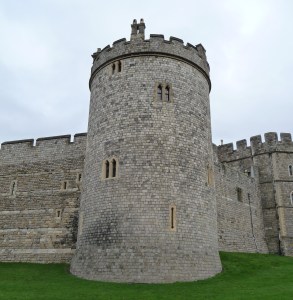
The town of Windsor in Royal Berkshire is still a great place to visit, a playground for those who live near or work at Heathrow airport. Why did the Queen have her castle built right under the flight path? The streets around the castle are thronged with tourists all year round, though not as crowded as today for the wedding of Prince Harry and Meghan Markle. Though we often visit Windsor, we weren’t there today. I don’t like crowds, but I do admire the spirit of the stalwarts who camp out for days for royal events. Like millions of others we stayed at home and had an excellent view on television. Billions around the world?  How do they know how many people are watching in their own homes? My sister in Australia was and my daughter-in-law in the USA was up at 2am ready to switch on.
P1050016

You may have thought from news coverage that everybody in the country was avidly interested, but this is not so. In Britain, royalists and republicans are as sharply divided as Remainers and Brexiteers, but we chopped our king’s head off long ago, did not like the alternative and welcomed back the monarchy. Ten European countries still have a king or queen. Through many ups and downs The Windsors are still with us and Queen Elizabeth the Second is the only monarch most of us have lived under, seeing off many prime ministers and far wiser than most of them no doubt. Truly a spiritual head of the country, above politics; whatever anybody else believes I am sure the Queen truly believes in the holy vows she took on her coronation. She is head of the Church of England, it is our state religion and a Christian wedding is what took place today. Most of us don’t bother to go to church, but we do expect the church to be there in all its glory for special occasions.

The happy atmosphere and the vast crowds showed plenty of people still love monarchy and tradition. Humans love colour, pageantry, romance and drama. We enjoyed all of that today with sunny weather making it perfect.

I know nothing about Meghan or her acting career, but she seems a graceful and warm person who has slipped easily into her fairy tale princess role.

The wedding went perfectly; nine o’clock seemed early for full coverage to start, but guests were arriving and there were outfits to admire and the guessing game of who was who. People from all walks of life, no politicians, just the occasional prince from afar such as Prince Seeiso of Lesotho.

The bride had ten delightful little bridesmaids and page boys. Inside the church there was beautiful music. Bishop Michael Curry of the Episcopal church livened up the Cof E with his rousing sermon on love.

The sun was still shining as the bride and groom emerged from Saint George’s chapel and it was time for the beautiful horses to play their starring role. The Windsor Greys pulled the carriage, the Household Cavalry escorted them on their shiny black steeds, through the streets then back up the Long Walk in Windsor Great Park and the return to the castle for the Queen to host lunch, our part in the wedding was over.

DSCN0876


Bank Holiday Book Bonanza

dscn1928.jpg

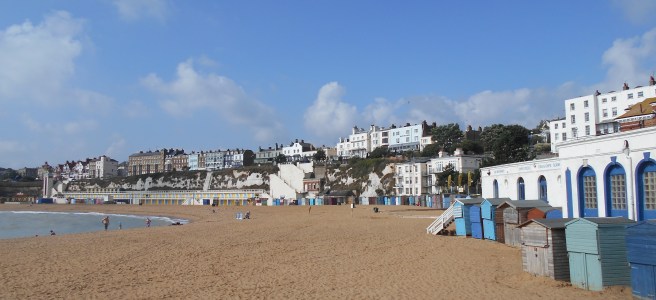
Charles Dickens and I have one thing in common, not literary success, but we have both been to Broadstairs on holiday. He enjoyed summer holidays in a house now called Bleak House, where you can still stay. My earliest holiday memory is of Broadstairs, two summers blended into one set of memories. There was only me at the time and Mum and Dad did not attempt to stay in a hotel again.

10848018_968864813143309_7729461894329696875_n

On one occasion I opened the wrong door, to be confronted with a lady wearing black underwear, I had never seen such an outfit. With brilliant insight she said ‘Are you looking for your Mummy and Daddy?’

The hotel boasted child minding, so one evening Mum and Dad left me; probably only for a little cliff top stroll, I’m sure they did not spend all night in the pub, but whatever the supervisory arrangements were, I had enough time to take our clothes out of the suitcase and wash them in the large washbasin in our room – this was in the days before everyone expected en suite facilities.

Apparently I never wanted to leave the beach, drawn to the sea already, and had to be dragged off screaming or bribed with a ride on the ‘Peter Pan Railway’.

DSCN3615

Broadstairs, Ramsgate and Margate are all part of The Isle of Thanet, the easternmost part of Kent; an island formed about five thousand years ago and always a busy place, Stone Age, Bronze Age communities and then The Romans. The last ship sailed through the Wantsum Channel in 1672 and over the decades it narrowed, it is many years since Thanet was an island.

22

The next time I visited the Isle of Thanet was when we took our toddler, in the days when we wondered how anyone coped with more than one child on outings, on a British Rail Awayaday to Margate. It was a sunny day, but fog descended halfway down the line and never lifted. We sat on the beach, but never actually saw Margate.

23

When a branch of the family moved to Margate in 2015 we returned in sunshine; a great chance for Tidalscribe the beachwriter to explore more of the British coast. We were soon sitting in the cafe of Turner Contemporary Gallery, which had opened only four years previously, looking out over the sunny harbour. As well as being famous for Tracy Emin, Margate also claims the painter JMW Turner.

https://www.independent.co.uk/arts-entertainment/films/features/mr-turner-exploring-margate-and-tracing-the-inspiration-behind-mike-leighs-latest-film-9823823.html

31964052_2081261078570338_7768173959475888128_n

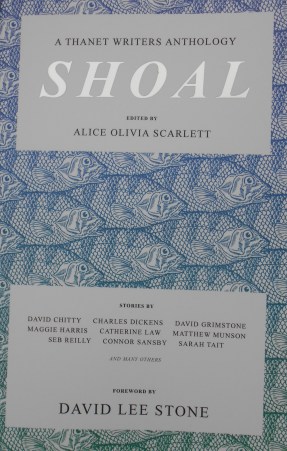
May Bank Holiday Monday brought hot weather and hordes of visitors streaming out of the railway station. The Turner Gallery was gleaming white in the sun and as part of the Margate Bookie there was a book launch. Once again Dickens and I have something in common, we both have short stories in a new anthology. Shoal is a venture by Thanet Writers.

Writing is a solitary occupation; most of us are energised by meeting up with other writers in local groups or on line. To speak in public and read out your work is another skill very different from writing. Gathering people together, setting up a website, publishing and creating a book requires plenty of enthusiasm and yet another set of skills.

The launch of the anthology was very well attended and presented and the book is a delight. A varied selection, from the brief and poignant ‘The Pigeons’ to ‘Life and Times of a Zombie.’  There are flamingos in Pegwell Bay, an unhappy wife a hundred years ago and a fairy tale so much darker than Disney.

DSCN6015

https://thanetwriters.com/

Spend a day in Margate at my website.

https://www.ccsidewriter.co.uk/chapter-five-beach-writer-s-blog/


A Good Day Out

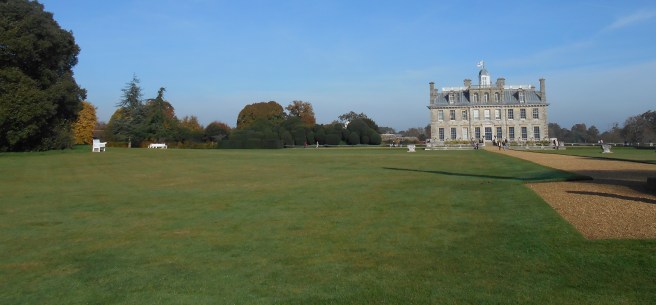
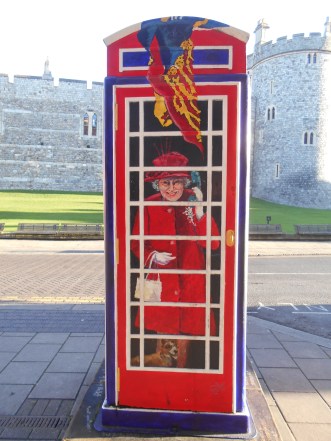
Where would you like to go for a day out? A popular choice in England is to visit a National Trust House. The National Trust is a charity which is over one hundred and twenty years old and owns and cares for 59 villages, 775 miles of coastline and vast tracts of hills and fields, all free for everyone to roam. Whatever your political leanings and thoughts on charities, I’m sure many would agree that these lands are safer with the National Trust than with governments, big businesses or greedy billionaires.
OLYMPUS DIGITAL CAMERA


Despite all their other conservation work, Big Houses are what people most often associate with the National Trust, donated by landowners come upon hard times, or just moving with the times. Whatever their ancestors would have thought, the common people are now free to roam their estates.  Not actually free; you have to pay to go in A Big House, unless you are one of the four million members; a few visits each year will make your membership worthwhile.

https://www.nationaltrust.org.uk/lists/fascinating-facts-and-figures


dscn1311.jpg

One thing is never guaranteed on your day out, the weather, but that would never deter the average member.

DSCN5941

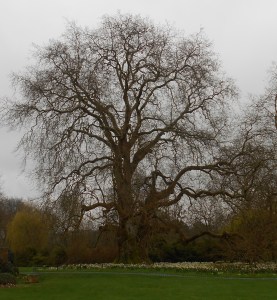
Once you have passed through the portal, you will enter a traffic free zone, except for the occasional buggy for those not up to striding round the whole estate.  Your children can run around on vast lawns, visit the adventure playground, do school holiday  activities or say hello to some pigs. Gardeners can admire walled vegetable gardens and beautiful borders, nature lovers can enjoy very old trees.

DSCN7098

DSCN7108.JPG

DSCN7039

dscn1356.jpg

DSCN5942DSCN5954

dscn5422.jpg

If it pours with rain go and look around the house, read about the owners, peep at family photos and ask volunteers questions. There will probably be an interesting exhibition to look at. There will certainly be sweeping staircases to ascend and descend and narrow stairs to climb as you visit downstairs where the servants worked, or upstairs where they lived.

DSCN5933

DSCN7121

DSCN7123

DSCN5935

DSCN7124

DSCN1351


DSCN5940

dscn5939.jpg

No visit would be complete without tea and cake or a nice lunch. This will be in the stable block, the old kitchen or the orangery, always a restaurant with character. Then you can rummage through the second hand bookshop which could be tucked away in an outbuilding. The Shop is a must; tasteful and expensive souvenirs, tea towels to bone china. Don’t miss the books, there are bound to be real life stories about the lady of the  house or the black sheep of the family.

dscn7096.jpg

Perhaps you have visited Durlswood, you may or may not find it in the National Trust guide book, but you can read the mysterious happenings of 2014 in the novella Durlswood, part of the Someone Somewhere collection.


ANZAC Day

Today is ANZAC day and what better way to mark it than with these poignant words from a special guest blogger. In the first of an occasional series my Sister Down Under writes about a unique island.

A Very Humble Monument   by Kate Doswell

Some thoughts for ANZAC day   25th April, 2018.


30772291_10212842443909538_1334244612_o

I’m not sure what it’s like in other Commonwealth countries, but in Australia we take our war memorials very seriously, and rightly so. “Lest We Forget” is inscribed on most of them, and as we read down the long, alphabetical lists of names, we are reminded of the truly terrible cost of war. Even in tiny outback towns, the list seems far too long, far too many of the youngest and strongest of the community taken from those that are left behind to carry on.

Most of these monuments are made of stone, imposing obelisks in bluestone or limestone or granite, depending on where they are situated. They are usually in the centre of town. Running around the monument and integral to its form is a ledge wide enough to sit on. People may sit and contemplate awhile, or simply pass by on their daily business or as a visitor to the town. How many, I wonder, stop and read the names and wonder at the fate of these lost men? Do the locals become so used to it that they just pass by?

30546417_10212842451869737_1397495450_o.jpg

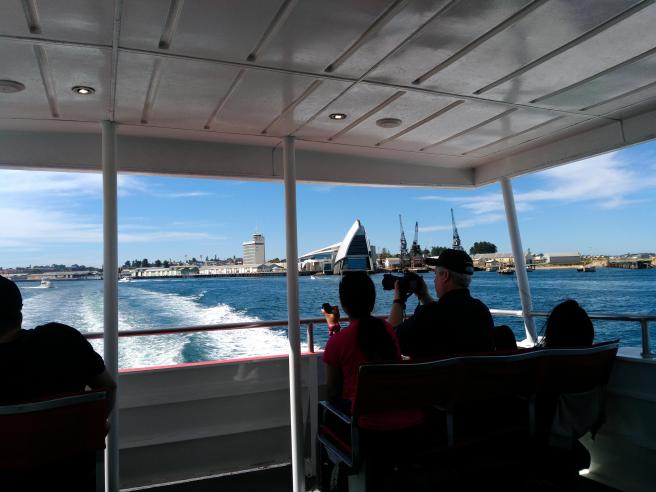
However, not all monuments are as striking or as prominent, and last week I found one that was truly humdrum. It was on the Island of Rottnest, 20 km from the West Australian Port of Fremantle. For many years this Island has functioned as a much loved holiday playground for the people of Western Australia, and the tourists who come to our isolated part of the world. It has a rather grand Roman Catholic church high on a hill, but the Anglican church is represented by a much older, but more modest chapel of limestone and whitewashed render.

30767987_10212869608108626_1610926664_o

30772440_10212869676350332_1722123227_o

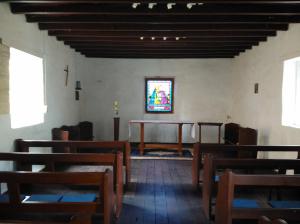
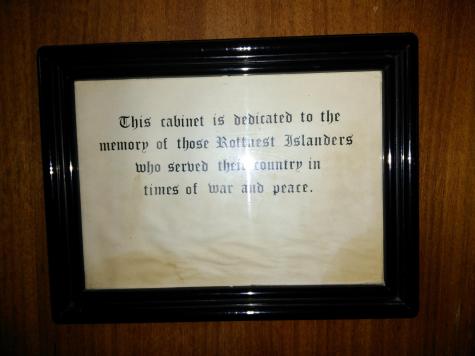
I visited the chapel late in the day, as there were other tourist activities that had claimed my attention. The door was stiff to open, and the interior gathering the gloom of the impending sunset, so the first thing I noticed was the distinctive smell of very old (to our European Australian eyes) limestone buildings from the early settlement era. Above the altar, I could see a simple, but attractive stained glass window depicting The Annunciation. Turning from there I looked at the pews, some thought to have been made by the Aboriginal Prisoners for whom this Island acted as a prison for 60 years. There were brass plaques on the wall in memory of various European families who had played important roles in the Island’s history, but the one that caught my eye was one on the door of a storage cupboard at the back of the chapel. It looked relatively new – certainly not crafted by the Aboriginal men in the 18th century – and I guessed it had been built and installed after the chapel was reconsecrated in 1965. It was utilitarian – capacious and solidly built but without ornament or distinctive features. Except for the plaque. A simple paper notice, its words carefully handwritten in Old English script, and framed with a plain wooden frame, so small it could be covered by two hands.

“This cabinet is dedicated to the memory of those Rottnest Islanders who served their country in times of war and peace.”

I have never seen such a monument before, if I can even use the word monument. Is this the only place in the Commonwealth to have such a homely reminder of the dead?


30771997_10212869673830269_2127583472_o

30769005_10212869667870120_1043963808_o.jpg

30550196_10212869673910271_984660608_o

30825116_10212869673870270_2125740430_o


I didn’t open the cupboard, I had no business to do so, but I imagined it containing vestments for the visiting priest, the chalice and paten, hymn books and orders of service, all the paraphernalia of a functioning chapel. I thought of those remembered by this most humble of monuments, and wondered if they would have been disappointed, aggrieved, or even angry that they had nothing grander built in their memory? But then again, maybe they would have been pleased that, having it placed on an object that was in regular use for the worshipers, they would readily and frequently come to people’s minds. These people, no doubt, would have attended this chapel, maybe some even came in the week before they left to sail away to war. Now, each time someone opens the cupboard and sees that little plaque, they are back here again. Back home to stay.

30547133_10212864000568441_1695530355_o


Observed on 25 April each year, Anzac Day was originally to honour the members of the Australian and New Zealand Army Corps (ANZAC) who fought at Gallipoli against the Ottoman Empire during World War I. It is one of Australia’s most important national occasions. It marks the anniversary of the first major military action fought by Australian and New Zealand forces during the First World War.

30550812_10212842448149644_161802627_o

Happy Birthday Shakespeare

DSCN5865

Stratford-upon-Avon was a busy town long before William Shakespeare was born. In 1196 King Richard I granted Stratford the right to hold weekly markets. A lively town in the heart of the country, trading wool, with many craftsmen such as blacksmiths, carpenters, shoemakers, brewers and bakers. By the 13th century Stratford also had a small grammar school.

DSCN5866

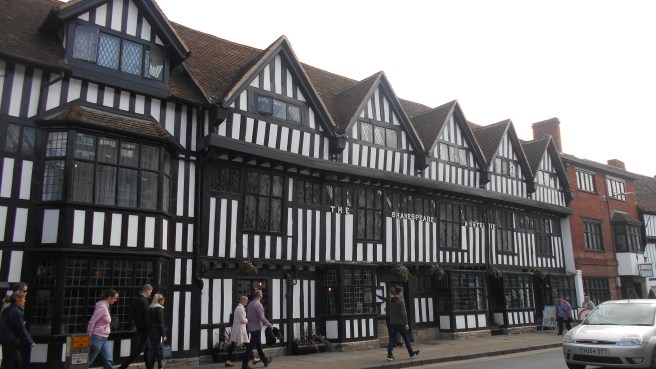
The town is full of interesting old buildings which must have seen many transformations over the centuries, ending up as hotels or designer shops.

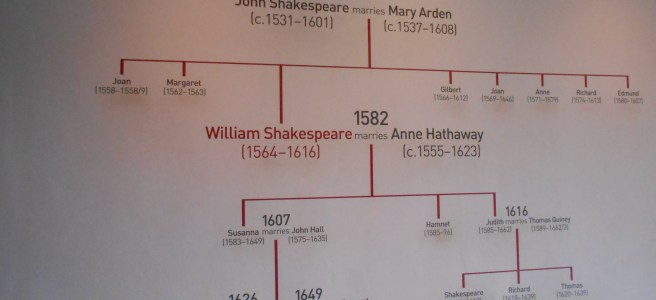
In 1557 a glover from Stratford Upon Avon named John Shakespeare married Mary Arden, the daughter of a well-to-do farmer. Their son William was born on or about 23 April 1564 in a house in Henley Street. And it is this house I had the chance to visit recently. After a varied history the house was purchased by a charitable trust in 1847, sponsored by well known names such as Charles Dickens.

30698416_2052037664826013_8232524434582274048_o

DSCN5840

DSCN5861

Luckily it was a fine day when I was there; the gardens are very pretty and you can sit and listen to costumed actors who will take your requests for speeches.


DSCN5846

DSCN5843

dscn5851.jpg

DSCN5844

DSCN5854

Inside the house costumed guides are there with plenty of snippets of information or domestic details. Dinner was eaten at 11am; as the son of a middle-class citizen William would have attended the grammar school. He went to school at 6am then came home for his dinner. Sumptuary laws in Tudor times aimed to keep class distinctions and prescribed what people could eat. The Shakespeare family were allowed two courses, but each course included plenty of dishes.

DSCN5860

30709555_2052910448072068_6578983328660062208_n

Upstairs you can see the marital bedroom where William was born, even the likely spot near the fire, with his mother probably using a birthing stool. Younger children shared with their parents, a truckle bed being wheeled out from under the parents’ double bed and did not sleep in a separate room until they could be trusted with a candle. Wooden houses with rush floors were a great fire hazard. For the same reason all domestic fires had to be put out at sunset; the risk of a spark while everyone was asleep was too great. Doorways were small, not because people were much shorter, they weren’t, but to keep the heat in. The long nights of winter must have been uncomfortable, especially as people slept sitting up with a bolster and pillows. They believed if the Devil saw them lying down he might think they were dead and take their souls.

DSCN5859

Read more about my trip here.

https://www.ccsidewriter.co.uk/chapter-four-travel-diary


Visiting Jane

DSCN5962

On Monday we paid a long overdue visit to Jane’s house; Jane Austen’s House in Chawton, Hampshire. I had always imagined the little cottage under siege by coach loads of tourists, timed tickets and queues. Perhaps a Monday school day, arriving soon after opening time, made it a simple and civilised visit that Jane would appreciate.

dscn5963.jpg

We parked in the free car park as instructed on the website; all was quiet, rain threatened, but never happened. The wet winter has left the gentle Hampshire countryside lush and green.

dscn5968.jpg

Jane’s friends were cheerful and welcoming, the tulips and primroses in the pretty gardens were at their best. It was a bit early to call on the Misses Austen so we roamed the gardens, looked around the bakehouse, enjoyed a moving picture of family life and admired the beautiful quilt given to Jane for her anniversary last year. Everything was seemly, nothing tawdry presented to visitors.

DSCN5970

We felt immediately at home when we stepped inside the red brick cottage. The Austen ladies do not own this house, but I would never let on that I knew this. What does that matter when Jane feels so at home here, at peace to write while Cassandra and their aptly named friend Martha take care of the housekeeping. Left an orphan, with just a little money I gather Martha Lloyd became part of the family long ago, not in a position to be independent or find a husband.

30716485_2055172457845867_551388799108644864_o

dscn5974.jpg

The Drawing Room is newly papered in a pretty yellow pattern, Chawton Vine. It was here we met a relative of Jane’s brother Edward, Jeremy Knight, who invited us up to the Great House, as Jane calls it, for lunch later. Who could have foreseen when the Austens sent their son to be adopted by the Knight family that he would be instrumental in making sure his sister’s novels were published.

DSCN5989

Upstairs the floorboards creaked and Jane will not have the creaky door fixed as it is a warning of someone coming so she may hide her writing. Mrs. Austen’s room is the largest and is newly decorated with a pretty ribbon trellis pattern wallpaper. The ladies have stitched a beautiful patchwork coverlet. Every window sill had a pretty cup with a posy of spring flowers, testament to how beautifully the ladies keep the cottage.

DSCN5987

DSCN5985

We didn’t stay too long, Jane’s health has not been good and like all authors she probably can’t wait for visitors to leave so she can return to her writing.

DSCN6000

Back outside the rain still held off and we walked up the road in Jane’s footsteps to Chawton House, the merry sound of the local children at playtime ringing in our ears as we passed their school. With fields all around one can see why Jane and Cassandra enjoy two hour walks every afternoon. Up the long driveway to the house it was very quiet, we rang the doorbell and it was quickly answered; we were welcomed inside and shown into the cosy kitchen. We only had time for a scone and tea, as we had another appointment, but promised to come again when we return to see Jane.

dscn6001.jpg

DSCN6004

DSCN6005