Wonderful Winchester September Staycation – Part Two

DSCN0308

We visit Winchester Cathedral quite often; this time we had been told about the flower festival. After a late breakfast at Wetherspoons we sauntered down the road to the cathedral. It was a week day so we weren’t expecting to see a queue to get into the cathedral, but a flower festival by definition can only last a short time.

dscn0328.jpg

It was worth the wait; it was a flower festival like no other I have ever seen and the rich colours cannot be conveyed in the pictures. What can be shown is the crowds. There were a lot of very English,’ excuse mes’ and ‘sorrys’ as we all tried to take photos or stay out of the way of other people taking them. Winchester is very light inside and gazing up you could forget you were not alone.

41341811_2273310256032085_1206749487914024960_o

The rich reds, blues and purples reflected this year’s theme which was inspired by the Winchester Bible.

DSCN0382

The Winchester Bible is the largest and finest of all surviving 12th-century English bibles. A single scribe wrote out its text in Latin, while artists worked its exquisitely illuminated capital letters. Their glowing colours, including gold and lapis lazuli, are as intense today as 800 years ago.

dscn0403.jpg

http://www.winchester-cathedral.org.uk/our-heritage/cathedral-treasures/the-winchester-bible-details/


We have never seen the Bible. On a previous visit, hoping to see it, we were informed with great satisfaction by an officious lady that the room where it was kept was closed that day! This time we could have queued to see one volume in a temporary exhibition, but made the decision to queue for the crypt.

DSCN0384

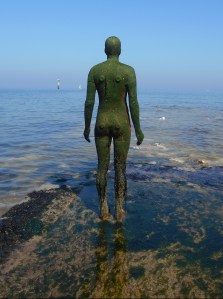
Down here, often standing in water, is Antony Gormley’s statue. Cyberspouse got a picture years ago when he pushed open a door that was ajar to see where it went; that time the statue was a complete surprise. This time the surprise was to see a candlelit path to the man with cupped hands.

http://www.winchester-cathedral.org.uk/our-heritage/art-architecture/antony-gormley-sculpture/

41290243_2273528329343611_2462619236892147712_o


http://www.winchester-cathedral.org.uk/

dscn0342.jpg

DSCN0340

DSCN0409

DSCN0411


On staycation you visit places for the day that  others may have travelled across the world to see. We chatted to a  couple who had come down from the North, but had the convenience of a son-in-law who worked at the cathedral and lived in the cathedral close, so they had free delightful accomodation and the opportunity to look round when everyone else had gone home.

DSCN0379

In my novel Three Ages of Man the stranger has never seen anything as old and solid as a cathedral and marvels as he lays his hands on the stone walls of Winchester Cathedral.

Secret Salisbury – September Staycation – Part One

Salisbury is a small city where we used to think not much happened. It lies in the county of Wiltshire, where you might think not much has happened since Stonehenge was built. Salisbury is a city because it has a cathedral. It is not large, but it is busy with a hospital, university and many places of interest to historians and tourists.

Since March this year it has been in the international news with the poisoning by novichok nerve agent of two Russians and a local policeman. Just when Salisbury was getting back to some normality there was the bizarre tragedy when two locals were taken ill and one became the first fatality. Two Russian suspects have been named and even appeared on Russian television to explain they visited Salisbury merely as tourists to see the cathedral with its famous spire and the oldest clock in the world.

DSCN0516

You couldn’t make this story up; if these two men were ‘secret agents’ they certainly bungled the whole mission, their target was not killed, though he and his daughter only survived thanks to the National Health Service and skilled care. Before leaving Salisbury they dumped the novichok in a rubbish skip.  Through all these months, parts of Salisbury have been closed off and scoured for any trace of the nerve agent, a nightmare for businesses expecting a busy tourist summer.

We quite often go to Salisbury and went there last week after our morning at Stonehenge. Everywhere seemed busy, but perhaps they were locals.

DSCN0506

I can believe the two suspects didn’t find the cathedral; though the famous spire can be seen for miles around, the first time we visited we stood in the main square and could not see it, we had no idea which way to go.

Through an arch you will find yourself looking at the cathedral green; fine weather shows the scene at its best. This area is full of interesting houses and museums and the expanse of grass is ideal for children to run and play and school parties to let off steam. There is too much for one visit, but whatever your plans just stand by yourself and look up at the spire.

The refectory, cloisters and smart toilets are free to wander in. Do you pay to go in the cathedral? There is a suggested donation. On our visit, late in the afternoon, I was just trying to read what we might ‘kindly be asked’ to pay when I realised Cyberspouse was already inside. We may have accidentally followed a coach party in. The house of God should be free to enter, but cathedrals need constant loving and expensive care. We always buy our refreshments at the refectory and there is a nice shop for tourists.

DSCN0535

Cathedrals can be overwhelming, I guarantee most of us do not remember all the saintly and royal details in the leaflets. Take in the ambience and spend time with what takes your eye. Highlights include the clock, perhaps the Russians wanted to steal our cutting edge technology! Look carefully down the nave and see if you can spot the columns bowed at the centre of the cathedral under the weight of the spire. A model of the spire shows the original wooden scaffold still there. Another  model shows the cathedral being built; I had a nice chat with an American lady as we admired the model and the original builders. The biggest miracle of ancient buildings is the fact they are still standing and I love to wonder if those who built it could have imagined how far into the future their creation would be admired.

DSCN0530

Cathedrals are living places and new art is added. I love the font, sculptor William Pye, consecrated in 2008.

DSCN0537

On our brief stroll around the cathedral Cyberspouse met a woman from Iceland, tourists are still coming to Salisbury.

https://www.visitwiltshire.co.uk/salisbury/things-to-do

My Brief Encounters trilogy is partly set in rural Wiltshire and Salisbury also features, especially in Lives of Anna Alsop.


Sunday Salon – Nights in and a Night Out

Reviews of two very different novels and a murder mystery play by Francis Durbridge

I posted both book reviews on Amazon and Goodreads

Our Spoons Came From Woolworths

by Barbara Comyns

5 Stars

I read this as a paperback passed on to me and recommended. I had not heard of the author before.

Many of us love anything to do with the twenties and thirties; architecture, art, music and elegant young men and women capture wistfully the two decades between world wars. But we also know it wasn’t glamorous for most and for the British it was a time our parents and grandparents remember before the Welfare State and the birth of the National Health Service.

Sophia is young and naive and the novel is probably very close to the author’s own life. I love the way she tells us her story as if she was looking back and telling a friend, which indeed she does at the end. The book was published in 1950.

We have a vivid picture of life with very little money, renting rooms and sharing bathrooms. From details of what they eat to the realities of pregnancy and childbirth which will appall most women. Ironically it was also a time when new mothers who were able to afford a nice nursing home would have enjoyed two weeks of bed rest – unheard of these days! Love and poverty never go well together and being married to an artist who is never going to earn proper money is a recipe for disaster. Follow Sophia in a poignant story that has humour, very dark times and then hope.


Secrets    by Anita Dawes

4.0 out of 5 stars A deep dark look into childhood.

20 August 2018

Format: Kindle EditionVerified Purchase

I finished reading this in the middle of last night; though it is not unusual for me to turn my Kindle on in the early hours, this is not the sort of novel you should be reading in the dark watches of the night! It is a good paranormal thriller, but more than that it will make you reconsider all our childhoods. How responsible are children for what they do and what is really going on in their minds? In some ways I felt most sorry for Jack’s parents, a poignant back story gradually revealed, an event that ruined any chance of his father continuing the life he loved or his mother coming to accept their rural life. There is a lot going on in everyone’s lives, but Jackie is a reminder that those of us who have led ordinary lives cannot know what others have had to overcome. There were only a few things that jarred – I thought it was likely the social services would have got involved, Maggie did not guess an obvious pointer as Jack’s story was revealed and some dialogue and characters’ thoughts could be confusing in the pace of the story. But overall I really enjoyed this unusual novel.


SHELLEY THEATRE, BOSCOMBE.

Francis Durbridge’s  play Suddenly At Home

Thursday-Tuesday August 16-21

Durbridge won international acclaim as the creator of Paul Temple, one of the most famous of all BBC radio detectives. He also wrote nine stage plays, Suddenly At Home was first performed in 1971.

Shelley Manor

Percy Florence Shelley was the son of the poet Percy Bysshe Shelley  (1792 -1822) and Mary Shelley, author of Frankenstein.

He bought Boscombe Cottage, near Bournemouth, Dorset for his mother to live in and had it rebuilt based on the Casa Magni in Lerici, northern Italy, the last home of Percy Bysshe and Mary. He renamed it Boscombe Manor. Mary died before it was completed and Percy and his wife Jane took residence.

Sir Percy had a timber theatre built in the grounds but replaced it with the current grander theatre which opened in 1870 with a public performance. Many of their friends acted and came to see shows including Sir Henry Irving and Robert Louis Stevenson (who wrote Jekyll and Hyde in Bournemouth).

Now this lovely pocket sized theatre has been restored and is a treat to visit. The volunteers give you a friendly greeting, there is a pleasant bar and the seats are very comfortable – they came from the much hated Bournemouth Imax cinema building when it was demolished, but that story is for another blog!

Small theatres are always fun, the audience are there to enjoy themselves for a play such as this which follows in the  long British tradition of  darkly comic murder mysteries.

The London Repertory Players were at the Shelley Theatre for a four play summer season. The action was set in one room; all that was needed were a few items of furniture and several doors. Door bells and ringing phones, always at the wrong moment, kept the cast and audience on their toes and guessing till the final curtain.

http://shelleytheatre.co.uk/article.php?sec=ABOUT&articleId=3224


Friday Flash Fiction Flies – Per Ardua ad Astra

Edward was not unique in his obsession with aeroplanes, but he was fortunate that his wife understood, or at least didn’t mind spending the summer touring round all the air shows in their camper van. The boys didn’t always go with them these days, but they had enjoyed a childhood of camping and exploring the British Isles.

A slight autumnal melancholy would descend on the couple as the air show season drew to a close, but the winter months were still busy for Edward, visiting air museums and doing research. Josie did not mind him spending long evenings on the computer, at least he wasn’t looking at pornography and she was free to watch her favourite television dramas.

DSCN4007

Winter also gave Edward time to spend in his man den at weekends; this was no ordinary garden shed, but the sanctuary where he tinkered with his inventions. If his wife and sons had paid more attention to what he was creating they would have been very excited… or very worried.

DSC_8556

Josie and the boys did not share Edward’s obsession with World War Two and the RAF. His special love, the other woman in his life, as Josie teased him, was the Spitfire, the most perfect aircraft ever built, a beautiful bird that pilots did not just fly, but became a part of. Or so Edward had read and heard from those who had flown them. His six foot four gangly frame, poor eyesight and asthma had precluded any hope of joining the RAF, let alone becoming one of the special few who flew with the Battle of Britain Memorial Flight. He was a frequent visitor to the BBMF visitor centre at RAF Coningsby and all the tour guides knew him well, too well; they didn’t always appreciate him volunteering extra information to their polished talks.

DSC_8562

Edward had no idea where his Spitfire dreams came from, nobody else in his family had been interested in flying. Josie said he should consult a medium, perhaps he had been a pilot in a previous life, helping to win the Battle of Britain. In his dreams at night he was always soaring up into the blue sky, not diving down to a violent death. But as his wife pointed out, he could have survived the war and lived on for a good many years; Edward was born in 1970.

But Edward’s thoughts and day dreams went far deeper than his family could imagine, in his den were creations nobody knew about. Talk of time machines was outdated, Edward’s calculations and research pointed to folds in time and certain frequencies. His plan was to tune into the frequency of the iconic Merlin engines and his dream was to save lives; the Spitfire was built to fly not die, not kill. If he could bring the Spitfires forward to the present, before their pilots perished in the Battle of Britain, their young lives would not be wasted.

DSC_8559

His theory became reality when he realised he could tune his adapted radio to hear the past, even if he could not see it. Edward had plotted meticulously the dates and air bases of that summer of 1940, but all the planes would converge to one date, the final day of the Sandy Cliffs Air Festival. The spitfires would fly in formation above the fields of Kent they knew so well.

There were only two drawbacks to Edward’s grand plan; the weather might be bad and he could change the course of history.

If it changed so he had never existed then he would never have been around to change it… On the other hand if he was alive and well to witness the proof of time travel, he would also be able to observe if history had been changed. If the pilots were taken away the Battle of Britain would be lost, but that didn’t mean WW2 would be lost. Edward had given this great thought; historic events weren’t a matter of one way or another, there were infinite possibilities at the start of every day. Whatever happened, it should be a jolly good show for the year of the RAF’s hundredth birthday.
DSCN0117

The weather was beautiful, Edward could hardly contain his excitement. Josie had a headache and decided to stay in the shade of the camper van, the boys had come along reluctantly and were mooching around glued to their smart phones. They should all be snapped out of their languor at three pm.

The commentator also had a headache, the extra hot summer and too many air shows were taking their toll on his health. Wearily he turned on the microphone.

…and don’t forget the finale of the show at four pm with the Red Arrows and a few surprises, but now here come the Spitfire and Hurricane; on a sunny day like this in 1940 the sky would have been full of these beautiful planes… but

He took his glasses off and rubbed his eyes…

On the cliffs the crowd gasped in awe as tiny dots became little planes and more and more filled the skies above them…

DSCN0229


Edward thought his heart would burst with pride, the formation grew in the orderly fashion he had planned. The commentator was silent, but suddenly crackled back into life.

Once again we celebrate the strange events of 1940 when German pilots reported the enemy planes disappearing into thin air in front of their eyes, day after day until they all refused to fly for fear they too would evaporate. And so began the slow process of conciliation and the creation of our great empire Gaul.

Edward looked around at the crowds waving strange purple and green flags and wearing clothes that looked unfamiliar. He rushed back to the camper van to tell Josie what he had done; he needed her to confirm what he was seeing.

A strange woman flung open the door, two little girls ran up to him.

‘Daddy, Daddy did you see all the planes?’

‘They certainly put on a good show this year Ed’ said the strange woman.

Edward realised a factor he hadn’t taken into account, he still existed, but the great mixing of the gene pool that occurred after the war and brought Josie’s grandparents to Britain had not occurred, or had occurred in a different variation…


Albertopolis

Everyone remembers the first time they see a dinosaur. For many of us it will have been on our first visit to the Natural History Museum in London. As you walked in the Great Hall there he was staring at you, the huge skeleton of Diplodocus. We were on a junior school outing, squashed cheese and tomato sandwiches in Kensington Gardens, then round the museum with our activity sheets. It wasn’t until I visited as an adult that I was disappointed to discover he was only a plaster cast of the original, uncovered in the plains of fossil-rich Wyoming.

One memorable visit was when two friends and I took our seven children, including three toddlers in buggies, on the tube train. On the way home in rush hour the poor passengers had to contend with four large plastic diplodocuses, their dangerously long tails waving in their faces. Diplodocus is now touring round the country and you can see a real Blue Whale skeleton instead.

https://www.theguardian.com/science/2017/jan/01/dippy-diplodocus-london-tour-replica-dinosaur-whale-natural-history-museum

7

But Prince Albert would have been pleased how many school children and families visit Albertopolis.  Over 150 years ago open fields and market gardens changed when two men had a vision to develop a part of London dedicated to the arts and sciences, using the profits of the Great Exhibition of 1851 held in nearby Hyde Park. Nicknamed ‘Albertopolis’, the area was designed to celebrate the achievements and grandeur of Victorian Britain, it is still thriving today with three museums, colleges and the Royal Albert Hall.

https://www.discoveringbritain.org/activities/greater-london/walks/albertopolis.html

39613703_397479757449518_5582809189551439872_n-e1534894085854.jpg

Prince Albert’s vision for the hall was to promote understanding and appreciation of the Arts and Sciences. When he died of typhoid fever in 1861, plans were put on hold until they were rekindled by Albert’s collaborator Henry Cole. The Royal Albert Hall of Arts and Sciences was opened on 29 March 1871 by Queen Victoria. Albert’s very ornate statue sits across the road in Kensington Gardens. The design of the Hall was inspired by Cole’s visits to ruined Roman amphitheatres and it was originally intended to accommodate 30,000 people, reduced to 7,000 for financial and practical reasons, and today to around 5,500. Every summer it is the main venue for the BBC Proms, the world’s greatest music festival, which surely would have pleased the prince.

39799723_488185681646015_9009656414120968192_n.jpg

Even if you have never been to London, the building will be familiar if you watch The Proms on television; a good way to enjoy the concerts as you get to meet musicians and find out about the music. There is something for everyone from ‘Cuba meets Jamaica’ to the first appearance of the Estonian Festival Orchestra founded in 2011. Premiers of new music are bundled in with old favourites so no one will be scared off. You will learn to interpret the words of the commentators; ‘what an amazing sound picture’ – no tune – ‘especially commissioned work’ – it’s only five minutes long…

But you can’t beat a live performance. I must confess I have never queued for cheap tickets on the day to stand in the arena with the Promenaders. I have not lived near enough and don’t like queuing or standing, is my excuse, but enthusiasts will tell you it is a wonderful experience and some go to every concert. If you are booking seats, all you need to know is don’t book the cheap seats near the top if you want to hear your favourite pianist or violinist  – the soloists look like tiny puppets going on stage. But if you are going to hear a big symphony or the Planet Suite, sit wherever you like, it will be fun. If you want to go on the famous Last Night plan well ahead and check how the ballot system works.

What are your museum memories? Have you been to The Proms?

Silly Saturday – Where do you think you Were?

Answers at the end.

DSCN7854

34581733_2115415835154862_4465963687949107200_n

Salisbury Cathedral

DSCN4238

33237689_2100284010001378_563722119821656064_n

12

DSCN5859

DSCN1928

4

DSCN4541

Time for the answers.


DSCN3736

Windsor, Royal Berkshire

Ten Downing Street, London, SW1

Salisbury Cathedral, Wiltshire

Hastings, Sussex

My garden

Bournemouth, Dorset

Stratford-upon-Avon, Warwickshire

Broadstairs, Kent

Margate, Kent

Brighton, Sussex

Sheerness, Isle of Sheppey

HOW MANY DID YOU GUESS?

2

IF YOU LIKE PICTURE QUIZZES TRY THE TWENTY QUESTIONS AT MY WEBSITE.


https://www.ccsidewriter.co.uk/chapter-three-picture-quiz


Musical Notes

In high school our music teacher said he was once at a concert where the conductor fell backwards off the podium. Whether this story was true or not, it was a good way to encourage us to go and see a real live symphony orchestra in the hope of seeing the conductor fall. Perhaps that was why I was happy to go along with my parents and younger brother and sister to see the West Australian Symphony Orchestra give their free Sunday afternoon concerts at His Majesty’s Theatre in Perth. As my parents loved classical music, but had a tight budget, this was a welcome treat.37691213_2195243867172058_7940072414816239616_n

The greatest classical music festival in the world, the BBC Proms, is now well under way and it was to a prom concert that my parents went on one of their first dates. Dad wasn’t interested in concerts, he just asked Mum where she would like to go for an evening out. Beethoven’s Fifth Piano Concerto was one of the pieces played and Dad loved it.

Unless we are lucky enough to be born into a family of musicians, most of us first hear and absorb music from the radio or themes from television programmes. What is registered in our brains forever depends on our parents’ taste and the decade we were born. Don’t give your age away by mentioning The Lone Ranger when you hear the William Tell Overture.

Despite their love of music my parents never acquired a record player, but just as cassette tapes were being invented Dad acquired a large reel to reel tape recorder for which you could buy classical music tapes. I still had to listen to pop music on friends’ record players. The hefty machine made its way to Australia in our packing cases when we emigrated. Later on, my best friend Marjorie and I commandeered it to record our favourite pop programme, we then did endless GoGo dancing in our little lounge; we must have driven my parents mad.

37660230_2195243413838770_3666554254211940352_n

Promenade concerts had existed in London’s pleasure gardens since the mid 18th century, but The Proms as we know them were inaugurated on 10 August 1895 in the Queen’s Hall by the impresario Robert Newman, seeking a wider audience for concert hall music by offering low ticket prices and an informal atmosphere, where eating, drinking and smoking were permitted to the promenaders! You can still buy £6 tickets on the day of every concert to stand in the arena, but smoking is certainly not on.

https://www.bbc.co.uk/proms

If you can’t get along to the Royal Albert Hall all the concerts are broadcast live on BBC Radio 3, repeated and available on iplayer. Some are broadcast on television, complete with background film and chats with musicians. We are told that people all over the world will be listening; in Australia my mother once watched the Last Night of the Proms at Christmas, while my sister told me she listened to a prom while driving along a road in the bush.

This is a true festival and there are orchestras and artists from all over the world playing many sorts of music. The first night of the proms featured Anna Meredith/59 Productions’ Five Telegrams, a response to the centenary of the end of the First World War, with specially produced digital projections. It looked fantastic on television, but to fully appreciate it one surely had to be there. Another completely new experience was Jacob Collier and Friends; Jacob, a young vocalist and multi- instrumentalist, became an online sensation with his one man multi tracked arrangements of well known songs.

The musical theme at Tidalscribe continues on Friday with flash fiction ‘Musical Chairs’.

37732349_2195243683838743_1247184221299015680_n.jpg

Music inspired my character Emma Dexter in Brief Encounters of the Third Kind. Her mother has good reason to fear her daughter is not human and among her phenomenal abilities she has become a brilliant composer, pianist and violinist.

Star Sheep and Show Shires

The members of the New Forest Agricultural & Horticultural Association, formed nearly a hundred years ago, would be unlikely to recognise the New Forest Show of the twenty first century. The early shows cost two shillings and four pence to get in with competitions, one tent and livestock tethered up to a piece of rope between two oak trees.

37731933_2198003693562742_2018051222237347840_n

The modern show is on for three days and it would take three days to see all the events and exhibits; it can be quite exhausting being a visitor, let alone for the people working and taking part. On Tuesday, armed with our tickets from Stewarts Garden Centre giving us entry to their hospitality tent, we enjoyed free light refreshments all day, ample toilets with no queues and seats by one of the main rings; albeit looking into the blazing sun. As we sipped our first cup of tea riders were showing off their working hunters. The beautiful horses were examined for their looks then observed for their elegance and obedience as they trotted, cantered and galloped round the ring. The male judges wore bowler hats and for the lady judges a hat wider than their hips was the dress code, they all had very big hats!

dscn6912.jpg

I wandered off at intervals to explore the show ground. Arts and crafts, holiday homes, furniture makers and funeral directors all had stands, alongside vintage farm machinery and ferret racing. In their quarters the ferrets had tiny hammocks to sleep in, more exclusive than the tent full of show rabbits.

I came across a dancing sheep display and learned a lot about sheep as well as having a good laugh; the finale was the shearing of a sheep, it’s not easy to be a stand up comedian and shear sheep at the same time.

Stewarts had a garden display, with beautiful wildflower beds; you could buy packets of seeds to make your own. There was a garden tent with exquisite flowers and a guess the weight of the cabbage. The Women’s Institute had a varied and delightful display to celebrate their centenary; the theme was a woman who has inspired you; each entry had to feature three different crafts, variety and imagination was in abundance.

37737560_2198001803562931_4851586914303606784_n

Back at the show ring the cows and sheep were having a winners’ parade, the highlight being a ram who managed to escape and run around making fools of the humans chasing him. Two beagle packs came on and children were invited into the ring to play with them, parents were reassured the beagles were longing to play with their darlings; we heard someone behind us laugh and comment … and rip them to pieces… but nothing untoward happened.

The highlights for me were the horses. The heavy horses’ musical ride is not seen anywhere else in the whole world, so we were told. Among the giants the Shires are my favourites with their feathered feet and elegant trot. But the best was yet to come, Atkinson Action Horses. If you watch any television dramas featuring horses, you will have seen some of their stars. We ladies love the scenes of our heroes galloping along cliff tops and across fields and these are real flesh and blood horses, not CGI; trained by experts, they enjoy working. The show display was action packed with gymnastics on Cossack saddles, bare back riding, jumping over fire and lying down and playing with their ‘best friends’. There was an hilarious commentary; riding and talking at the same time is very clever… and ladies, these chaps were fit, very fit. The girl riders were also amazingly agile, so I’m sure they had plenty of admirers.

http://actionhorses.co.uk/the-horses/

dscn6950.jpg

Big and modern though it is, the show is still about animals, country life and competitions.

https://www.newforestshow.co.uk/

Sunday Salon – Guest Blogger

Second in the series of occasional blogs by my Sister Down Under

Return To Sender

I often send Birthday cards to relatives in England, and as I seal down the envelope and stick my address label on the flap, I always find myself wondering if there is any point. If the address was to be incorrect, would they take the trouble and expense to send it all the way back to Australia?

37072684_10213413731471370_3835982618025787392_nI now have my answer. The other week, I received a blue envelope with an air mail sticker and an Australian stamp on it, and it was addressed to me. Someone had crossed the address out with a blue pencil, and there was a red Royal Mail sticker on it declaring that the address was unknown. It wasn’t a surprise that the address was incorrect, as it belonged to the youngest of my nephews, the inventor in the family, the itinerant creator of firework displays with a bedroom full of enough electronic equipment to drain the power grid of the Southeast of England. What was surprising was that the Australian postmark said it was posted at 6 pm on the 26th of July, 2011. Seven years ago. 

37065444_10213413736551497_5748848274412929024_n.jpg

So, yes, they do go to the trouble of returning letters. And an awful lot of trouble by the looks of it. Not for the Royal Mail the conventional route of placing it on a plane to fly half way around the world. No, this was more like the challenge taken on by Michael Palin to go around the world in eighty days without flying. The Royal Mail Postman was to get to Australia travelling overland, and taking sea journeys only when it was unavoidable.

What a tale that post man must have to tell! Imagine the deprivations and adventures he must have encountered on his 7 year odyssey! Crossing the channel to France was probably easy, but was he then waylaid by a French temptress, dallying with her for many months before silently slipping out at dawn one morning to continue his journey? Did he scale the Alps and get caught in a storm, to be nursed back to health by a local farmer and his daughter?

 One imagines him crossing the Mongolian plains, joining the Mongol herders, living in a Yurt and learning to survive off the land. He would have regretfully had to say goodbye, explaining the Royal Mail always gets through, and he would put his uniform back on with pride, not withstanding that it was getting a little threadbare. He would have gone on a pilgrimage through India – retracing the steps of his colonial forefathers who had first brought British law and the British postal service to that teaming and untamed land. Then on to South East Asia, tiring now of the crowds and the jostling, longing only to reach that wide, open land of Australia.

37033862_10213413735791478_6723459611816361984_n

What a relief he would have felt as he stepped off the small fishing boat at Darwin, only to be arrested as an illegal immigrant. He would have spent quite some time in detention, and despair would have been his companion as he waited for his superiors in London to confirm who he was and what his mission involved. There would have been a delay at their end, while they overcame their incredulity and double checked his credentials before rejoicing that he was not, as believed, dead – the first (or so they thought) postman to die in active overseas service.

And finally, catching a cruise ship (courtesy of the Royal Mail in gratitude for his services) around the coast to Fremantle. What a reception he would have from his Australia Post colleagues – glad to see him, but at the  same time a little jealous that they could no longer boast they had the longest mail routes in the world.

And as for me – time to tell my nephew that he isn’t unloved, and that I did send a card, but something happened to it along the way

Kate Doswell,  15/07/2018.

Some Like It Hot

As new migrants in Australia, the first time the thermometer hit one hundred degrees we were very excited, a Century meant it was very hot; instead of sheltering behind venetian blinds in the relative coolness of indoors, in the days before most homes had air conditioning, I walked around marvelling at the sensation of the dry heat. If the thermometer hit one hundred degrees Celsius you would be dead. After a week of the temperature reaching over one hundred degrees Fahrenheit every day, the novelty wore off.

Since then the world has moved to Celsius, leaving only the USA and a few other countries using Fahrenheit. But one hundred sounds more dramatic than the slightly higher forty Celsius. When I worked at Heathrow, an English girl told me the first time she arrived in Kuwait she felt as if she had been blasted by a giant hairdryer. A Kuwaiti passenger told me no one had to work if the temperature rose above fifty degrees, but officially it never got hotter than fifty. A Singapore passenger told me the heat was not a problem as every building was air conditioned. I asked ‘What if you want to go for a walk?’ He looked puzzled. Why would you want to go for a walk?

36940738_2172002706162841_6989539359858884608_n

Those who have lived in hotter climes might wonder at the fuss we are making about our heat wave in Britain. Temperatures over thirty, so early in the summer, have weather forecasters excited. We have had heat waves before and after our wet winter the reservoirs were full, so we shouldn’t run dry yet. Despite the usual comments such as ‘it won’t last’ and ‘we’ll pay for this later’ the heat wave shows no sign of ceasing, though some places have had rain. Our relatives, visiting back from Las Vegas, saw rain only once and looked forward to getting back to their air conditioned house.

36350576_2151607484869030_3353091477772173312_n

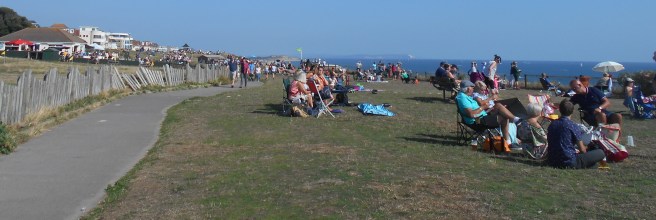
We are not prepared for hot weather, we don’t have air conditioning, shutters and awnings or a tradition of siestas. In the garden, early morning or evening watering has become part of the domestic routine for those who cherish their flowers. The holiday atmosphere is fun; breakfast and dinner in the garden and days by the sea. Our beach hut feels worth the rates we pay the council for the tiny patch of concrete it stands on; it provides shade, changing room and a kettle. Daily swims have become the norm; as far as I’m concerned there is no point in having hot weather unless you can paddle or swim in a pool, river or sea.

12

Hot weather is no fun for those who have to work out in it and especially fire fighters. The heat has brought destruction to the moors with peat fires. It is equally oppressive for those who can’t get out. A lady told me it’s the first time in ninety four years she hasn’t worn a vest!

But the biggest cloud, or absence of cloud hanging over our holiday mood is What if it never rains again, is this another big warning about global warming?