The calendar has already opened on a ballet, so today’s window opens on an opera popular at Christmas.
Hansel and Gretel was composed in 1891/1892 by nineteenth-century composer Engelbert Humperdinck The libretto was written by his sister, based on the Grimm Brothers’ dark fairy tale of brother and sister lost in the forest and finding the witch’s gingerbread house. The first video is the evening prayer the children sing as they fall asleep in the forest.
The second piece has its own magic. On 19 June 1929, 250 children from 52 local schools, the Manchester Children’s Choir, travelled by tram to the Free Trade Hall in Manchester to record Nymphs and Shepherds by Henry Purcell with the Hallé Orchestra, under the direction of Sir Hamilton Harty. It was issued on Columbia 9909, a 12in 78rpm disc that cost four shillings and sixpence and sold 1million copies. The B side was the Dance Duet from Hansel and Gretel.
Today peep through the window to a traditional Christmas scene, carols from King’s College Cambridge. The choir are singing ‘The Angle Gabriel’ and you can see what happens to sweet little choir boys when they grow up in the second YouTube video.
You can listen toA Festival of Nine Lessons and Carolsbroadcast live at 3pm on BBC Radio 4 on Christmas Eve, as it has been since 1928. Patrick Magee, the senior chorister, wrote casually of this first broadcast in his journal “Christmas Eve. Practice 10-12.45. Go out to dinner with Mum and Dad. Carol service broadcasted. Comes off well. I read a lessons and sing a solo in ‘Lullay’.” You can watch the carols later on BBC 2 at 5.30pm. This Covid year the choir will be socially distanced and there will be no congregation, I wonder how different that will look and sound?
Today is the 250th birthday of Ludwig van Beethoven, or at least the anniversary of the day he was baptised, but he has been celebrating all year; though like everyone else, he had to cancel all his live concerts and parties. So today’s window opens in Germany once more, to a very special Christmas performance and plenty of Freude!
Freude! Freude! … Alle Menschen warden Brüder. / Joy! Joy! … All men shall become brothers.
On December 23rd 1989, only a month and a half after the fall of the Berlin Wall, Leonard Bernstein led a concert in West Berlin. Two days later, on Christmas Day, he led an identical concert across the border, in what was previously East Germany. The music was Beethoven’s Ninth Symphony.
Ode to Joy was first written in 1785 by German poet Friedrich Schiller as a celebration of the brotherhood of man. Beethoven set the words for the final, choral movement of the Symphony completed in 1824. Having soloists and a choir burst into joyful singing in a symphony was revolutionary, but it has obviously stood the test of time.
Bernstein made one change for this two-concert series: he directed the choir to sing “Freiheit” (freedom) instead of “Freude” (joy).
The Ode to Joy is also the anthem of The European Union; an instrumental ( and much shorter ! ) version for a continent of many languages. Alas for British Remainers, this music is now a bitter reminder of the Brexit disaster and all that we are about to lose. Luckily Tidalscribe will be remaining in the European Union and adhering to Schiller and Beethoven’s optimism and belief in the brotherhood of man – brotherhood in the figurative inclusive sense .
Today’s window opens joyfully in Germany. Jauchzet, frohlocket! ( Shout for joy ) is a 1734 Christmas cantata by Johann Sebastian Bach that forms the first part of his Christmas Oratorio. It was incorporated within services of the two most important churches in Leipzig, St. Thomas’ and St. Nicholas’. Bach, a devout Lutheran, composed music for the Lutheran Church and was Thomaskantor responsible for church music at four churches in Leipzig. Enjoy this music in a beautiful Dresden church.
Johann Sebastian Bach (1685 – 1750) was a composer, organist and violinist widely regarded as one of the greatest classical composers of all time. Not only did he compose great works every week for church services, but his home life was also busy, though full of tragedy. He was devoted to his family. In 1706 he married his cousin Maria Barbara Bach. The couple had seven children together, some of whom died as infants. Maria died in 1720. The following year Bach married a singer named Anna Magdalena Wülcken. They had thirteen children, more than half of them died as children. But he still managed to leave the world so much.
You can read the poignant history of that amazing church with this link.
Today’s window opens in France with L’adieu des bergers – The Shepherd’s Farewell, not as we might imagine, the shepherds taking their sheep back to the hills after visiting the new baby Jesus.
L’enfance du Christ (The Childhood of Christ), Opus 25, is an oratorio by the French composer Hector Berlioz, based on the Holy Family’s flight into Egypt, first performed on 10 December 1854, with Berlioz conducting. The second part of his sacred trilogy shows Mary, Joseph and Jesus setting out for Egypt to avoid the slaughter of the innocents, having been warned by angels.
And what a journey lay ahead with Jesus now a lively toddler, from Bethlehem to an unnamed location in Egypt. If they headed for the big city, Alexandria, it could be about 320 miles as the crow flies. On motorways this is a long journey with young children, even with the electronic entertainment modern parents install in their cars. What route Mary and Joseph followed we do not know, so it is likely the journey was longer than 320 miles and arduous.
Today’s window opens on a digital Christmas Card with a visit to Cyberspouse’s Facebook page. He wasn’t interested in Facebook, but he did create a website and a Facebook page for his photography and digital images. The last picture he put on his page was a Christmas card. There are lots of other interesting pictures worth looking at on his page. The Christmas picture was taken at Kingston Lacy, Dorset, a lovely National Trust historic house with beautiful grounds worth exploring at all times of the year.
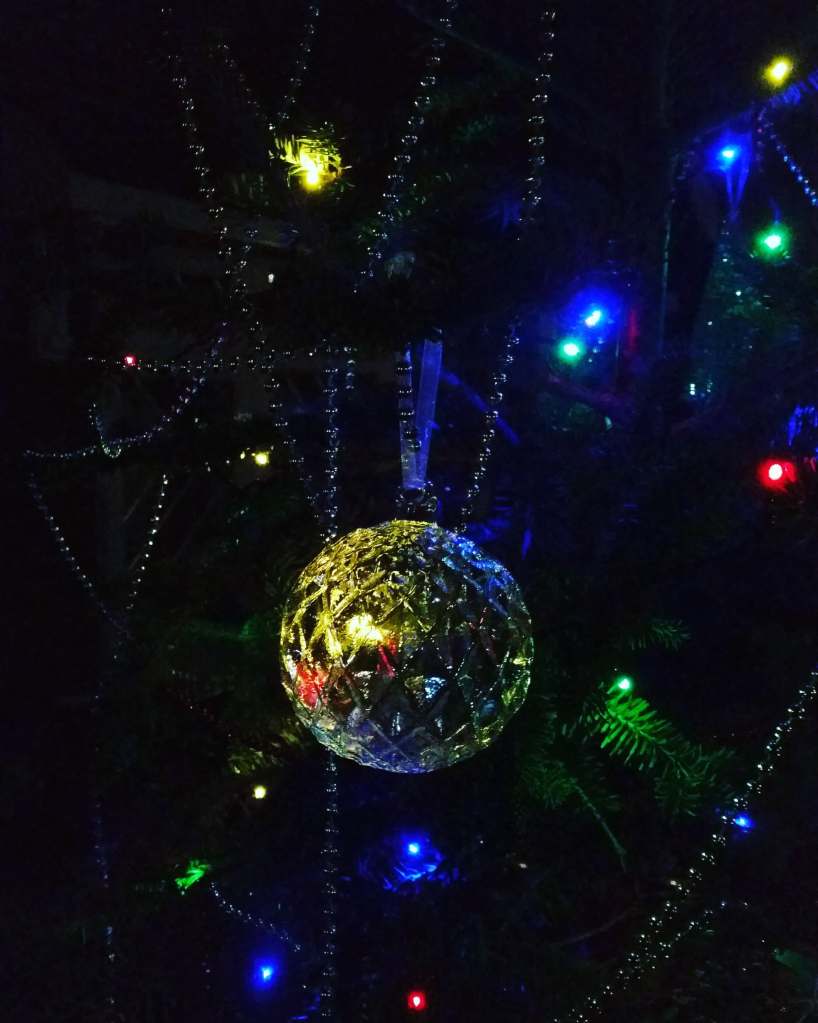
Elf has put up his Christmas lights and now he’s ready for a bit of culture.
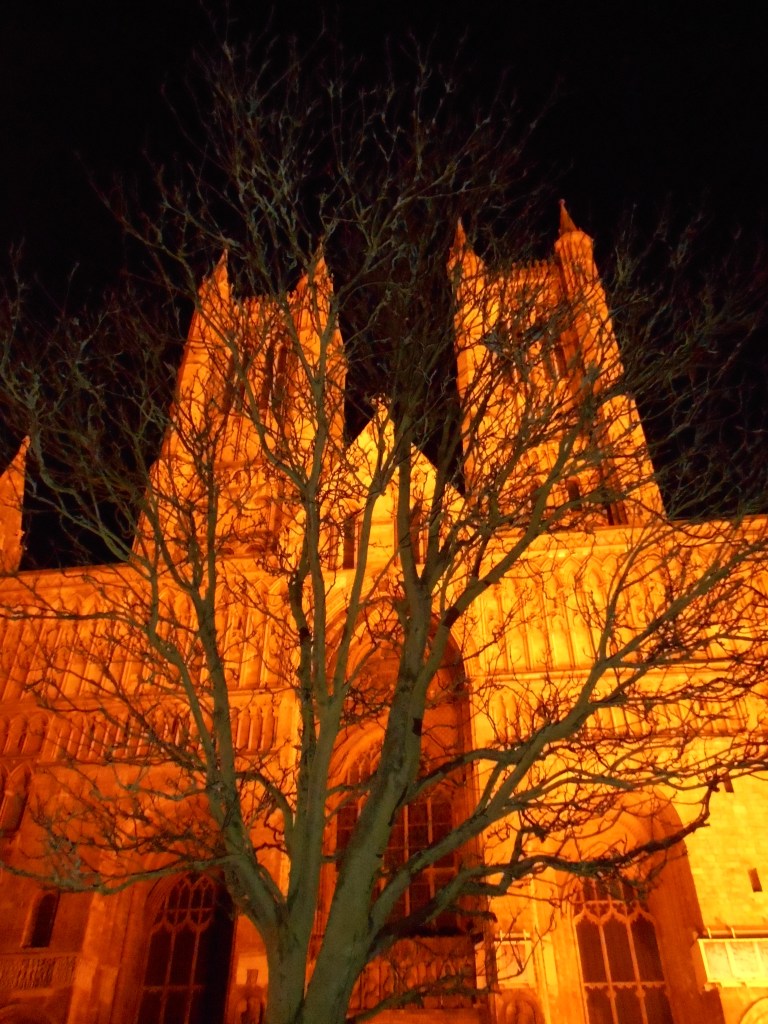
Derived from the Portuguese barroco, or “oddly shaped pearl,” the term “baroque” has been widely used since the nineteenth century to describe the period in Western European art music from about 1600 to 1750, one of the richest periods in music history, including of course, Bach and Handel. Christmas and Baroque music just seem to go together and usually at this time of year, before Covid struck, choral societies would be performing The Messiah, while chamber orchestras had the perfect excuse to perform candlelit concerts in lovely ancient churches.
Arcangelo Corelli, 17 February 1653 – 8 January 1713, was an Italian violinist and composer of the Baroque Era. With a name like that, surely destined to be something great and artistic. I first heard his Christmas Concerto when Classic FM radio station burst onto the scene in the early 1990’s. Enjoy the gentle opening movement and hang around as the strings burst into the lively second movement.
Today I welcome another of the occasional guest blogs written by my sister in Australia. This time she reflects on an unusual find near a country town in Western Australia.
A Tribute to Those That We Love by Kate Doswell
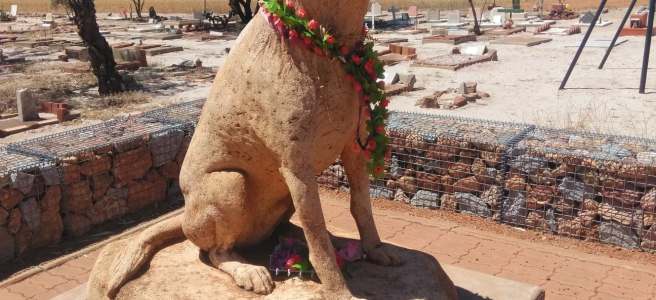
It could be mistaken for the dog that sat on the tucker box, 5 miles from Gundagai, but instead, it was a dog sitting on a small concrete plinth, 5 km from Corrigin. Corrigin is a small wheatbelt town, population 800 or so, 230 km south east of Perth in Western Australia, and the red kelpie dog immortalised in stone was guarding the entrance to the Corrigin dog cemetery.
My visit to Corrigin was nothing to do with dogs, but I couldn’t resist stopping and having a look around. It was quite large and surprisingly well kept, considering it seemed to be in the middle of nowhere. It was surrounded by the flat dun paddocks and the dry stubble of harvested crops, and only a blur on the skyline to suggest the presence of a town.
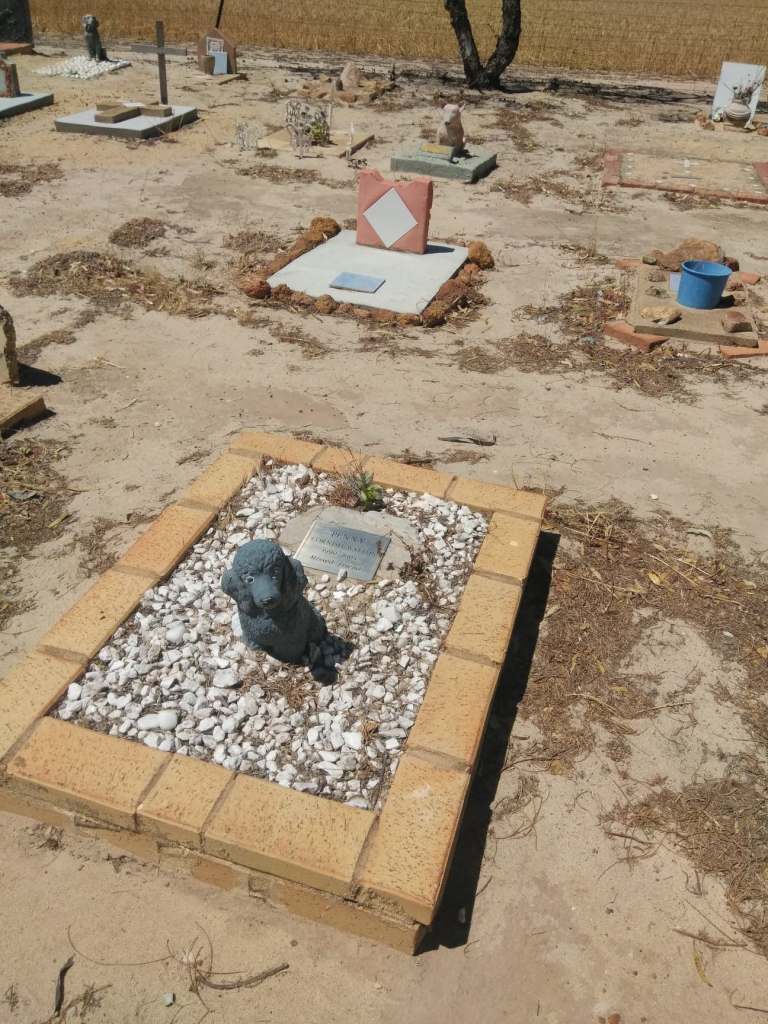
The ground around the graves was dry and sandy, with hardly any living green, but all the graves were well tended and each was utterly distinct. The owners of these beloved dogs had used imagination and care in designing the graves, and it gave some sense of the stories that lay behind their pets’ lives with the family, and there was no doubt they were family members and friends.
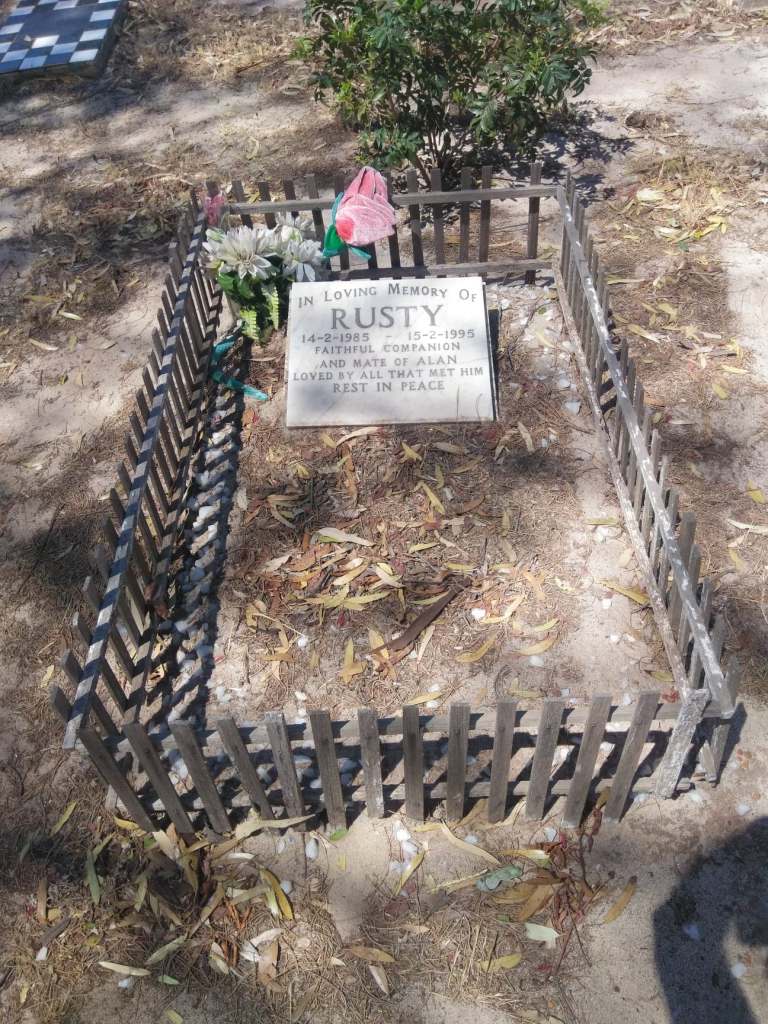
A black poodle statue with surprised eyes sat on a bed of stones, and the plaque told me she had lived for 14 years. Poor Rusty had died the day after his 10th birthday, and his grave was a simple oblong, surrounded by the railings that I had often seen around human graves for those of a higher standing in the community.
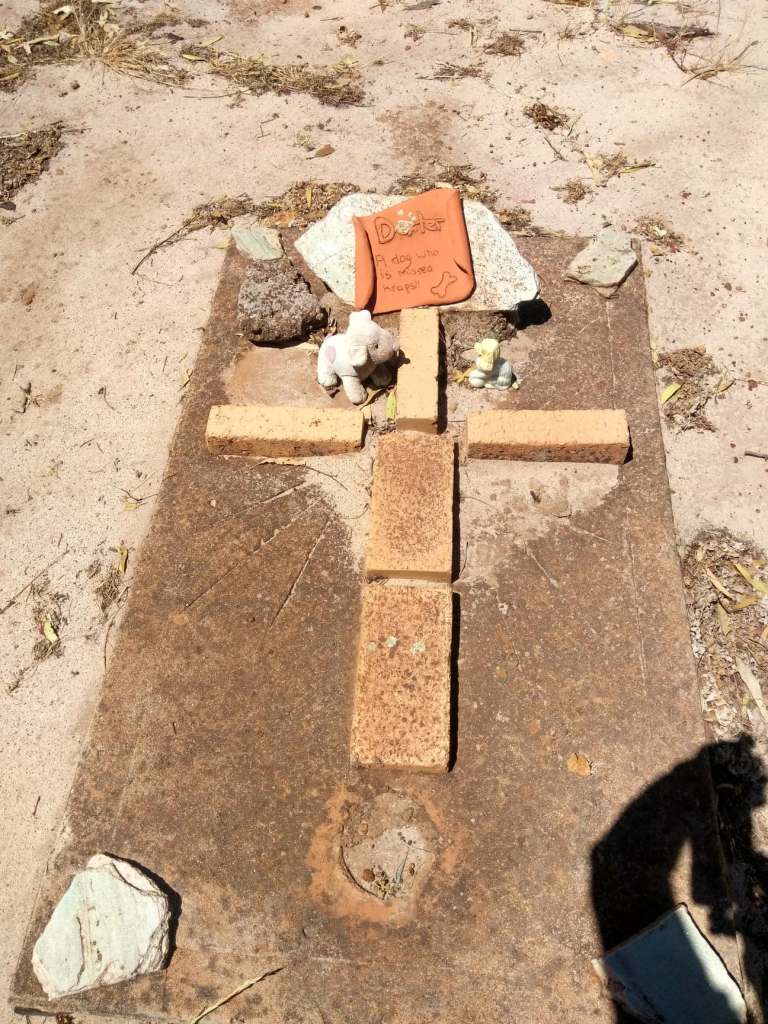
The one that touched me most was that of Dexter, who had a cross formed from bricks laid on a simple slab, with a clay scroll into which a child had carved “Dexter – A dog who is missed Heaps”. It was sad to see a little stuffed puppy sitting on the grave as well, and I wondered if this had been Dexter’s favourite toy.
One dog’s family had improvised with a brass fire screen with a scene of Pointers out hunting. There was no doubt that the image on the next grave was of the dog itself, a hand painted china plate with a picture of the dog and words telling of the wonderful companionship he had given for 15 years.
There was even a multi-story grave that housed 3 successive dogs. Some people cannot face the idea of having another dog when the one they have loved for years dies, but I think most people recognise that each dog is loved for his or her own original personality. A point for writers – one of my teachers firmly instructed me that the animals in my stories (usually – well OK – always, about dogs or horses) should be referred to as it, rather than he or she. I have never been able to comply, as I know they are living, breathing personalities who deserve to be recognised as such. Maybe there would be less cruelty if we could all see them in that way, rather than as objects or commodities.
Looking around this cemetery, there can be no doubt that many people see dogs as valuable and much loved members of our families; companions, helpers, protectors and comforters. This cemetery started as one man burying his dog in the 1970s, then others from Corrigin joined him in laying their dogs to rest. Over the years it has attracted the interest of people from far afield who want a permanent memorial to their companion. So it isn’t just the people of Corrigin who feel so strongly about their animals, though this IS the town that set the record for the most number of “Dogs in Utes” – a parade of 1,527 utes ( Aussie abbreviation for utility, any vehicle with an open cargo area at the rear, which would be called a pickup truck in other countries ) each with a barking, tail wagging dog in the back.
We all have our own ways of remembering those that we love. Personally, I have never felt the need to have something tangible to remind me of a loved one – I have lost 3 dogs, and each have been cremated. I have never wanted an urn with their ashes in, though I understand and respect those that do. With my last dog, a close friend came with me to the veterinary surgery for that final visit, as she had looked after my dog many times when I worked away and loved her as much as I did. When they asked me if I wanted to keep the ashes, I shook my head, but as I did I noticed the look of dismay on her face. “Would you like them?” I asked her and she said yes. I was happy for her to have them, I could think of no better person to keep them.
I have recently lost my Mother. She was 94 yrs old and she had lived close by for many years, so it was sad to have to say goodbye. This Sunday her ashes will be placed in the memorial garden at our church, next to my Father’s ashes. There are no plaques, simply a book inside the church with the names of all those who are in the garden. When I think of my father, I don’t think of the garden, I think of the furniture he built, the advice he gave me, the funny things he said. Likewise with my mother, it is and will continue to be, the memories of all the times we had together, the laughs we shared, and the problems we talked over. It doesn’t matter whether we have a grave to visit, a plaque, or nothing solid to see. The important thing is that we remember our loved ones, human or animal. I wonder if our animals remember us after we’ve gone?
Warning – readers may find some scenes disturbing.
Some more melancholia today as we have a traditional carol that is far from the cosy nativity scene; do you know what it is really about?
The Coventry Carol is a 16th Century Christmas carol, performed as part of a Mystery Play depicting the birth of Jesus. The carol refers to the story of the ‘Slaughter of the Innocents’ in which King Herod ordered the mass murder of any child up to the age of two, after hearing of Jesus Christ’s birth. The song is a lullaby the women sing to their fallen children.
The Slaughter of the Innocents is rarely dwelt upon, certainly not in school nativity plays, but it is a tale that that would horrify any mother. I always feel the bible stories are lacking in back story and character development. As Mary and Joseph fled ( eventually ) into Egypt did they know what awful events they had unwittingly unleashed? A modern day reporter on the scene would have undoubtedly asked her ‘How did you feel, Mary?’
Herod the King, in his raging, Charged he hath this day; His men of might, in his own sight, All children young, to slay.
Then woe is me, poor Child, for Thee, And ever mourn and say; For Thy parting nor say nor sing, By-bye lully, lullay.
Here are two very different versions, the traditional tune and a different tune so we can include an angelic choir boy.
Christmas always has a touch of winter melancholy, especially this year and one of my favourite carols for enjoying a touch of melancholy is Bethlehem Down, made more interesting and poignant by the story behind it
Peter Warlock was the pseudonymn of Philip Heseltine (1894–1930), his choice of Warlock reflected his interest in occult practices! Bethlehem Down was created in a mood of flippancy due to the impecunious state of Warlock and his poet friend Bruce Blunt – both notorious for their Bohemian behaviour. They hoped to earn enough money to get suitably drunk at Christmas; the carol was completed in a few days and published (words and music) in The Daily Telegraph on Christmas Eve. Their plan had worked and they had ‘an immortal carouse on the proceeds’.
But Warlock’s career as a composer, music scholar and critic was cut short; towards the end of his life he became depressed by a loss of creative inspiration and died in his London flat of coal gas poisoning in 1930, probably suicide.



















 Times and Tides of a Beachwriter