On The Radio

What can any blogger write that doesn’t involve mentioning Covid, Brexit, The White House or the fact that a new year has started? Let us retreat to where most of us are at the moment, home. Home comforts, or what I now call Covid Comforts are keeping us going. If you are reading this it is unlikely you are in a refugee camp, an intensive care unit or a war zone; for that we should be grateful. If you look around your home I wonder how many modern wonders provide your life support system? The internet obviously, books, television, central heating, on line shopping, computer games. Before any of those was The Word, okay so radio came quite a while after the beginning of the Old Testament, but the first modern invention in my life was the radio, long before I could read, even before I could walk or talk music was seeping into my bones thanks to the BBC. Before I was born my parents were listening to programmes that are still being broadcast; The Archers, Desert Island Discs and Woman’s Hour.

Woman’s Hour has just had its seventy fifth birthday and received a letter from The Queen. When Dame Jenni Murray ( a national institution ) announced she was leaving after thirty three years, followed soon after by a similar announcement by Jane Garvey, who has been with the programme for thirteen years, my immediate thoughts were You can’t do this, not in the middle of a pandemic and my mother and husband have just died… As I have been listening at least since our first baby was born forty one years ago, there have been other favourite presenters, the programme will survive.  The modern mother can listen on her iPhone while breastfeeding in the dark watches of the night. Many men also listen and people of all ages can hear the programme in the car or when out jogging. Very different from the early days when it was broadcast at 2pm and mothers were presumed to be sitting down for a rest after lunch while their babies were having their nap. There is fun, but there are dark topics. I imagine there is no controversial issue that has not been covered on the programme, Woman’s Hour is where we first heard about FMG. The final quarter of the hour is a serial, there is always something for everyone.

Woman’s Hour: The Queen sends ‘best wishes’ to show on its 75th year – BBC Newshttps://www.bbc.co.uk/news/entertainment-arts-55527576

In that 2020 strange sunny spring and summer of isolation, Cyberspouse listened to Woman’s Hour every morning over our leisurely breakfasts in the sun lounge. BBC Radio Four in the mornings is packed with interesting programmes and three different serials. Thanks to Amazon I bought two more digital radios to add to our collection.

There is much more to say about radio; such as why are we fascinated by the shipping forecast… but that’s for another blog. For now here is something cheery, one of my early memories that I just heard on the radio. Light music is what we all need at the moment and there have been memorable tunes composed on both sides of the Atlantic. This is one for writers by Leroy Anderson, though I don’t think he could have written a piece about computers…

The Typewriter Leroy Anderson Martin Breinschmid with Strauß Festival Orchestra Vienna – YouTubehttps://www.youtube.com/watch?reload=9&v=g2LJ1i7222c

What are your Covid Comforts? Do you have favourite radio presenters and programmes?

Pipe Dreams

Today I welcome another guest blog by my sister in Australia. When our family first emigrated to Perth in 1964, going up in the hills to see Mundaring Weir overflowing was a regular outing…

Pipe Dreams by Kate Doswell

As a child, I was both fascinated and saddened by the story of Charles Yelverton O’Connor – always referred to as C. Y. O’Connor. As Western Australia’s Chief engineer at the turn of the last century, he was responsible, amongst other things, for the design and construction of Fremantle Harbour, WA’s main shipping port and – more famously – for the Kalgoorlie pipeline.

Kalgoorlie was the scene of WA’s massive gold rush and by the early 1900s was a busy town; the engine for much of the wealth and development of the fledgling state. The drawback was that it was in an arid area 560 isolating and harsh kilometres from the capital city of Perth. Supplies of water were a major stumbling block to further development and an answer needed to be found.

C. Y. O’Connor had the audacious idea to build a pipeline to take water from Perth to Kalgoorlie, a feat never attempted before over such a large distance. It would involve construction of a large dam at Mundaring, in the hills above the swan coastal plain. The project would require pumping stations at Mundaring and along the route, and steel pipes big enough to carry sufficient water.

It is ultimately a story of triumph – a brilliant idea, carefully planned and skilfully executed, a triumph made even more incredible considering its achievement by a small, isolated European settlement transplanted into an ancient country only 70 years before. But it is also a sad story. C. Y. O’Connor never lived to see its success; he committed suicide. The story I heard as a child was that the tap was turned on at Mundaring, but due to a miscalculation the water took longer than expected to reach Kalgoorlie. C.Y. O’Connor thought he had failed. He rode his favourite horse out into the surf at a Perth beach and drowned himself. The timing wasn’t quite that poignant, but the fact remains that he was driven to a state of despair by the critical and unrelenting attack mounted against him by the foremost (and possibly only) newspaper of the day, The West Australian (still the only state based newspaper in WA). His other major critic and tormentor was the Premier of the state, John Forrest, though he was happy to share in the credit once it was a success.

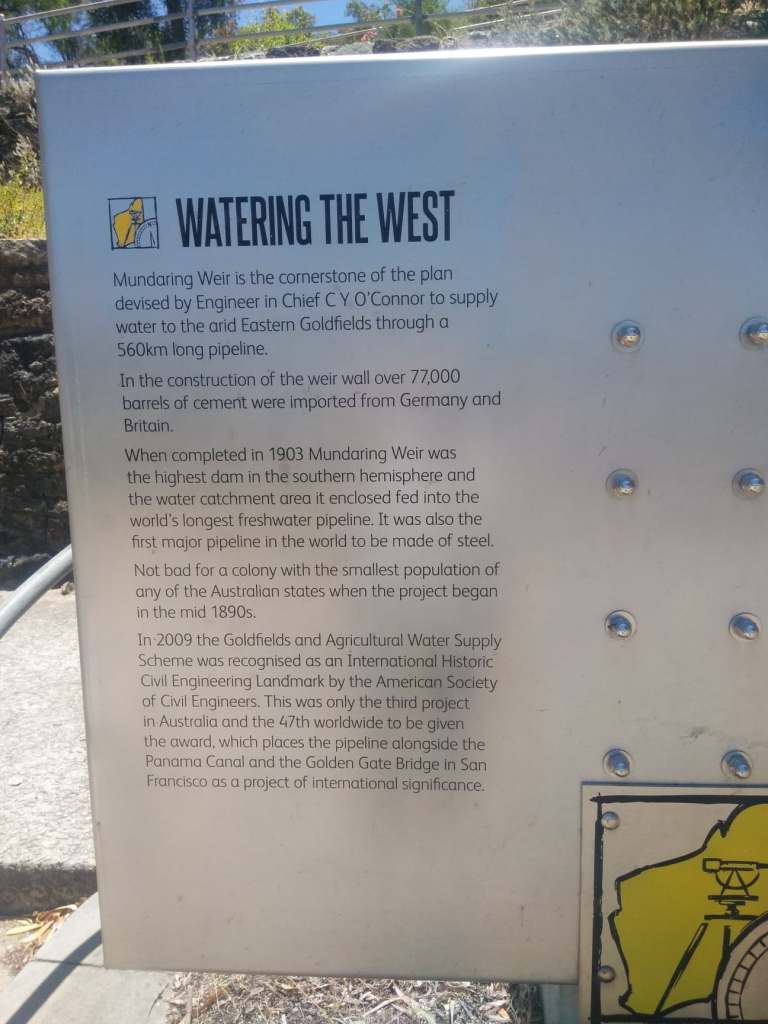
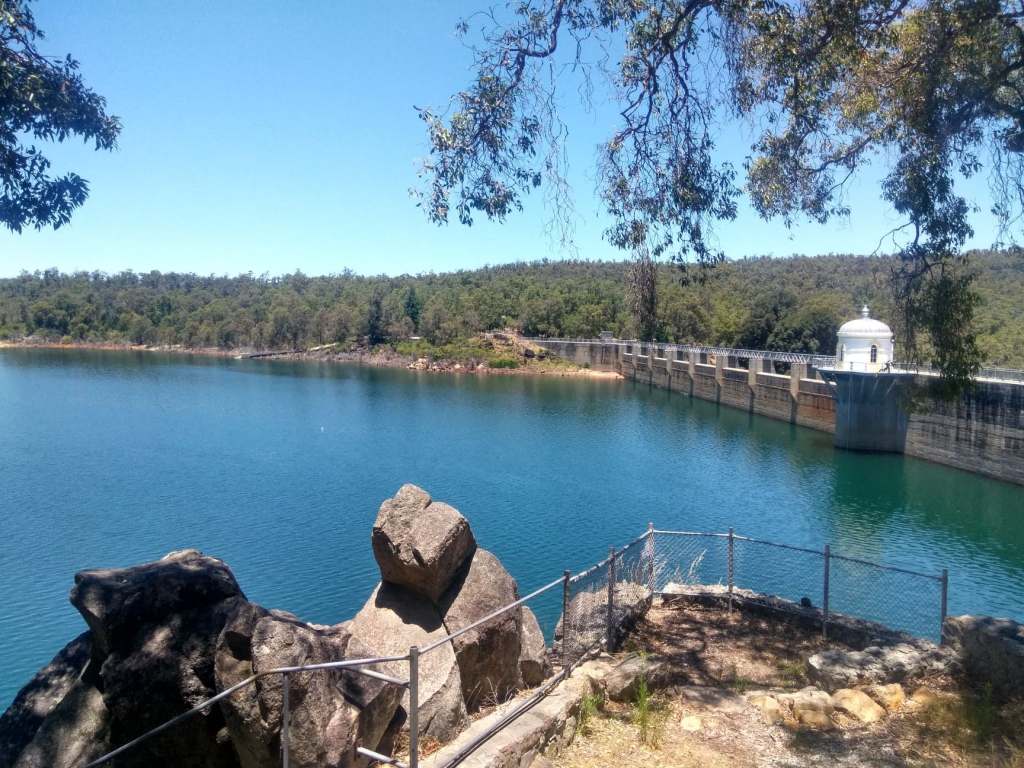
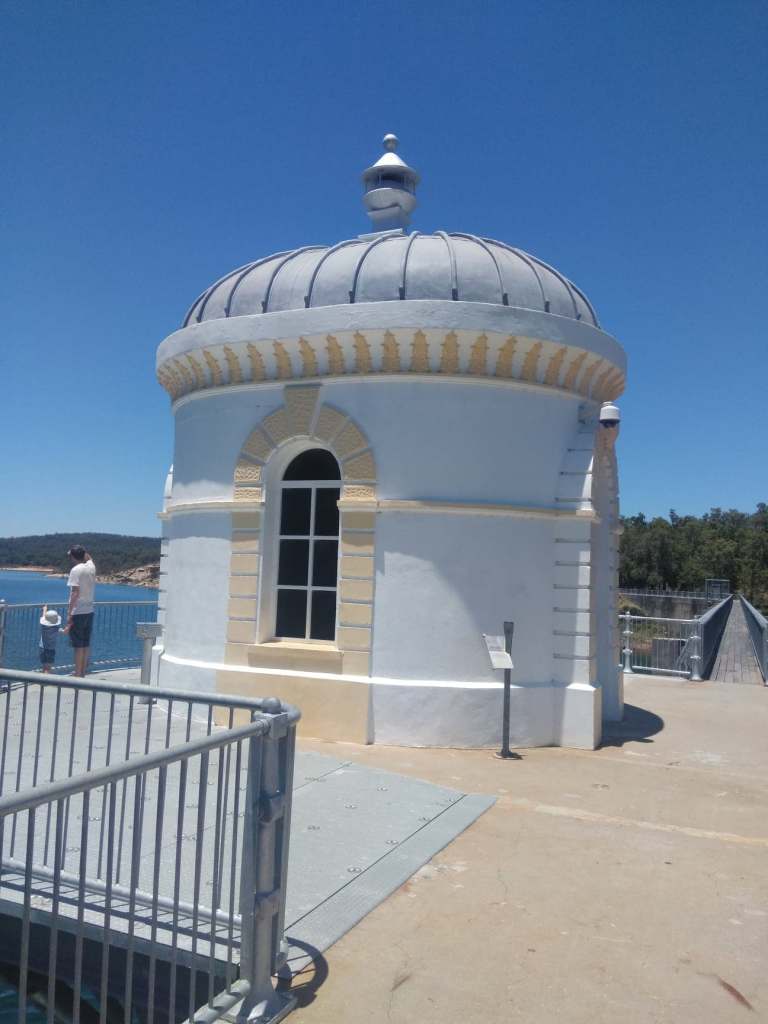
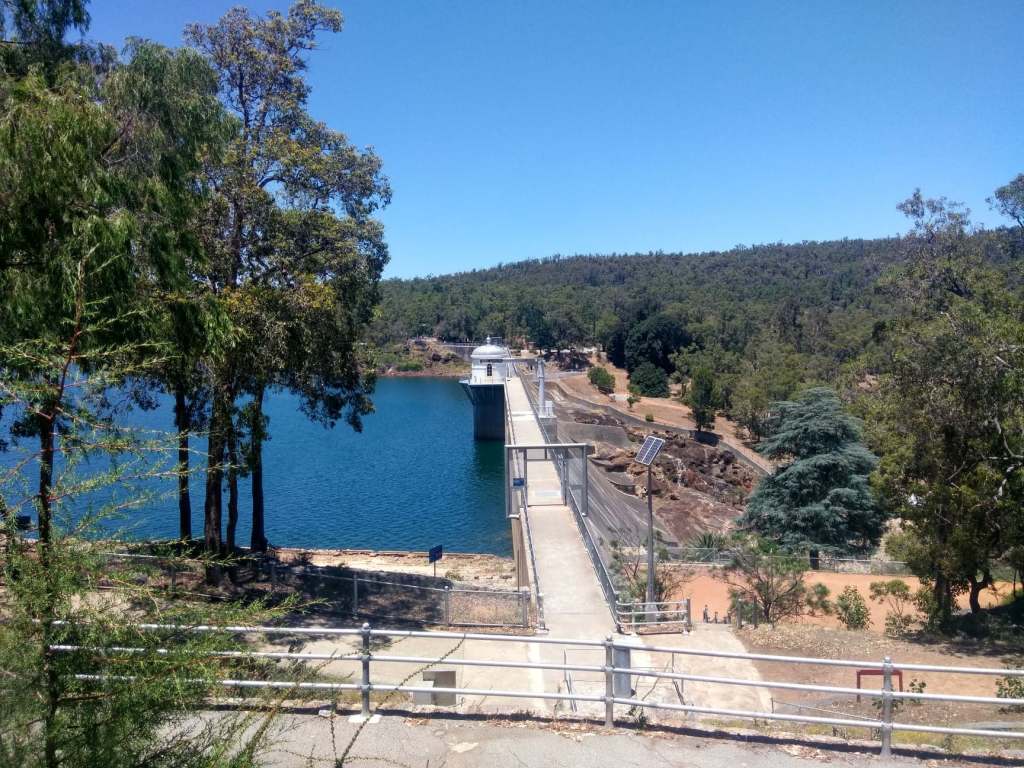
I recently visited the weir for the first time in many years, and it was an occasion for reflection on its place in our history. Completed in 1903, it was the longest freshwater pipeline in the world at the time, the first to use steel pipes and fed by the highest dam in the Southern hemisphere. In 2009 it was recognised as an International Historic Civil Engineering Landmark by the American Society of Civil Engineers, only the 3rd in Australia and 47th in the world to be awarded, alongside the Panama Canal and the Golden Gate Bridge.

On a more personal level, I remember as a child we visited the weir often, as a family and as part of a youth group with a campsite nearby. I always found it interesting and it has a beautiful setting, surrounded by hills and jarrah forest. As a teenager, my family moved to a wheatbelt town, and the water we drank came from the pipe. The pipe ran under our front garden, though I hasten to add we didn’t have a tap connected directly, since the size of the pipe means it stands as tall as a person when it runs above the ground.

 Not only had the pipe delivered water to the miners, it had also allowed the opening up of agricultural towns along the route. It is a constant feature running beside the roads, dipping underground to go through towns, then re-emerging on the other side. It is a guide; I can remember doing a walk-a-thon to raise money, and the route was simple. Just follow the pipeline, you can’t get lost! You can even walk on it if you feel adventurous and have good balance.

My recent visit also gave me pause for thought about our current environmental crises. Perth has traditionally relied to a large part on water from our various dams, but with climate change our rainfall has fallen considerably in the past 20 years. The last time the weir overflowed was in 1996, and visiting some years later it was sad and worrying to see the sloping gravel sides of the dam exposed by the falling water levels, a raw wound running around the circumference of the dam. It was a relief to see a much higher level last week, the water lapping the edge of the forest, but I was disillusioned to discover the pipe that pumped water into the dam from our desalination plant. I reasoned that it was necessary, as the weir still supplies Kalgoorlie and the towns on the way, but to me it was a tangible reminder that we in Australia were failing to take seriously the dangers of climate change. On the driest continent on earth, predicted to suffer most from a warming and drying climate, our politicians and right winged newspapers are happy to sabotage any efforts to address this urgent issue, preferring instead to criticise and lampoon scientists and concerned citizens, and to wilfully ignore the changes we see around us.

As I walked away from the weir lookout it occurred to me; things had not changed much since C.Y. O’Connor’s day.

My novel was inspired by our experiences when our parents emigrated with three children in 1964.

Advent Calendar – Wednesday Twenty Third of December

Today’s window peeps into one of the most famous Christmas stories. A Christmas Carol, is a novella by Charles Dickens, first published in 1843. It recounts the story of Ebenezer Scrooge, an elderly miser who is visited by the ghost of his former business partner Jacob Marley and the Spirits of Christmas Past, Present and Yet to Come. After their visits, Scrooge is transformed into a kinder, gentler man.

The story has been filmed or inspired films many times and as you are probably busy getting ready for Christmas, why not watch this five minute Lego version?

A LEGO Christmas Carol (In 5 Minutes) – YouTubehttps://www.youtube.com/watch?v=QWnMapyZi-k

Advent Calendar – Tuesday Twenty Second of December

The calendar has already opened on a ballet, so today’s window opens on an opera popular at Christmas.

 Hansel and Gretel  was composed in 1891/1892 by nineteenth-century composer Engelbert Humperdinck The libretto was written by his sister, based on the Grimm Brothers’ dark fairy tale of brother and sister lost in the forest and finding the witch’s gingerbread house. The first video is the evening prayer the children sing as they fall asleep in the forest.

Hansel and Gretel: Evening Prayer (Aleksandra Kurzak, Kate Lindsey) – YouTubehttps://www.youtube.com/watch?v=OK7lPC1jodw

The second piece has its own magic. On 19 June 1929, 250  children from 52 local schools, the Manchester Children’s Choir, travelled by tram to the Free Trade Hall in Manchester to record Nymphs and Shepherds by Henry Purcell with the Hallé Orchestra, under the direction of Sir Hamilton Harty. It was issued on Columbia 9909, a 12in 78rpm disc that cost four shillings and sixpence and sold 1million copies. The B side was the Dance Duet from Hansel and Gretel.

Dance Duet.wmv – YouTubehttps://www.youtube.com/watch?v=NevoVhkzwRc

You can read here about the choir and the wonderful musical play Victoria Wood wrote about the poignant reunion of the choir.

Victoria Wood recalls a historic day for Manchester music | Victoria Wood | The Guardianhttps://www.theguardian.com/tv-and-radio/2011/jun/30/victoria-wood-historic

Advent Calendar – Sunday Twentieth of December

Today peep through the window to a traditional Christmas scene, carols from King’s College Cambridge. The choir are singing ‘The Angle Gabriel’ and you can see what happens to sweet little choir boys when they grow up in the second YouTube video.

The Angel Gabriel : Kings College, Cambridge – YouTubehttps://www.youtube.com/watch?v=pliqObTHxUQ&feature=emb_logo

You can listen to A Festival of Nine Lessons and Carols broadcast live at 3pm on BBC Radio 4 on Christmas Eve, as it has been since 1928. Patrick Magee, the senior chorister, wrote casually of this first broadcast in his journal “Christmas Eve. Practice 10-12.45. Go out to dinner with Mum and Dad. Carol service broadcasted. Comes off well. I read a lessons and sing a solo in ‘Lullay’.” You can watch the carols later on BBC 2 at 5.30pm. This Covid year the choir will be socially distanced and there will be no congregation, I wonder how different that will look and sound?

Carols From King’s: How a tradition was made (theartsdesk.com)https://www.theartsdesk.com/books-classical-music/carols-kings-how-tradition-was-made

THE KING’S SINGERS The angel Gabriel – Basilica S.Nicolò di Lecco 2 dicembre 2019 – YouTubehttps://www.youtube.com/watch?v=gdHcNkSe5W4

Advent Calendar – Thursday Seventeenth of December

Today is the 250th birthday of Ludwig van Beethoven, or at least the anniversary of the day he was baptised, but he has been celebrating all year; though like everyone else, he had to cancel all his live concerts and parties. So today’s window opens in Germany once more, to a very special Christmas performance and plenty of  Freude!

Freude! Freude! … Alle Menschen warden Brüder. / Joy! Joy! … All men shall become brothers.

On December 23rd 1989, only a month and a half after the fall of the Berlin Wall, Leonard Bernstein led a concert in West Berlin. Two days later, on Christmas Day, he led an identical concert across the border, in what was previously East Germany. The music was Beethoven’s Ninth Symphony.

Ode to Joy was first written in 1785 by German poet Friedrich Schiller as a celebration of the brotherhood of man. Beethoven set the words for the final, choral movement of the Symphony completed in 1824. Having soloists and a choir burst into joyful singing in a symphony was revolutionary, but it has obviously stood the test of time.

Bernstein made one change for this two-concert series: he directed the choir to sing “Freiheit” (freedom) instead of “Freude” (joy).

4th Movement – part 2 – Ode to Freedom – 1989 – Leonard Bernstein – Beethoven’s 9th Symphony HD 720p – YouTubehttps://www.youtube.com/watch?v=IciKr8NUmKs

The Ode to Joy is also the anthem of The European Union; an instrumental ( and much shorter ! ) version for a continent of many languages. Alas for British Remainers, this music is now a bitter reminder of the Brexit disaster and all that we are about to lose. Luckily Tidalscribe will be remaining in the European Union and adhering to Schiller and Beethoven’s optimism and belief in the brotherhood of man – brotherhood in the figurative inclusive sense .

European Union International Anthem – “Ode To Joy” (Instrumental) – YouTubehttps://www.youtube.com/watch?v=_ecrJaA_mXg

Advent Calendar – Wednesday Sixteenth of December

Today’s window opens joyfully in Germany. Jauchzet, frohlocket! ( Shout for joy ) is a 1734 Christmas cantata by Johann Sebastian Bach that forms the first part of his  Christmas Oratorio. It was incorporated within services of the two most important churches in Leipzig, St. Thomas’ and St. Nicholas’. Bach, a devout Lutheran, composed music for the Lutheran Church and was Thomaskantor responsible for church music at four churches in  Leipzig. Enjoy this music in a beautiful Dresden church.

J.S. Bach WO – BWV 248 Teil1 “Jauchzet frohlocket ” aus der Frauenkirche Dresden. – YouTubehttps://www.youtube.com/watch?v=DlwcZT1XVss

Johann Sebastian Bach (1685 – 1750) was a composer, organist and violinist widely regarded as one of the greatest classical composers of all time. Not only did he compose great works every week for church services, but his home life was also busy, though full of tragedy. He was devoted to his family. In 1706 he married his cousin Maria Barbara Bach. The couple had seven children together, some of whom died as infants. Maria died in 1720. The following year Bach married a singer named Anna Magdalena Wülcken. They had thirteen children, more than half of them died as children. But he still managed to leave the world so much.

You can read the poignant history of that amazing church with this link.

Dresden Frauenkirche | Landeshauptstadt Dresdenhttps://www.dresden.de/en/05/Dresden-Frauenkirche.php

Advent Calendar – Sunday Thirteenth of December

Today’s window opens in France with L’adieu des bergers – The Shepherd’s Farewell, not as we might imagine, the shepherds taking their sheep back to the hills after visiting the new baby Jesus.

L’enfance du Christ (The Childhood of Christ), Opus 25, is an oratorio by the French composer Hector Berlioz, based on the Holy Family’s flight into Egypt, first performed on 10 December 1854, with Berlioz conducting. The second part of his sacred trilogy shows Mary, Joseph and Jesus setting out for Egypt to avoid the slaughter of the innocents, having been warned by angels.

And what a journey lay ahead with Jesus now a lively toddler, from Bethlehem to an unnamed location in Egypt. If they headed for the big city, Alexandria, it could be about 320 miles as the crow flies. On motorways this is a long journey with young children, even with the electronic entertainment modern parents install in their cars. What route Mary and Joseph followed we do not know, so it is likely the journey was longer than 320 miles and arduous.

Académie de musique de Paris – Berlioz – L’Adieu des bergers à la Sainte-Famille – YouTubehttps://www.youtube.com/watch?v=k4Qx4QBeekE

Advent Calendar – Saturday Twelfth of December

(2) Photogog | Facebookhttps://www.facebook.com/photogog

Today’s window opens on a digital Christmas Card with a visit to Cyberspouse’s Facebook page. He wasn’t interested in Facebook, but he did create a website and a Facebook page for his photography and digital images. The last picture he put on his page was a Christmas card. There are lots of other interesting pictures worth looking at on his page. The Christmas picture was taken at Kingston Lacy, Dorset, a lovely National Trust historic house with beautiful grounds worth exploring at all times of the year.

Advent Calendar – Monday Seventh of December

Elf has put up his Christmas lights and now he’s ready for a bit of culture.

Derived from the Portuguese barroco, or “oddly shaped pearl,” the term “baroque” has been widely used since the nineteenth century to describe the period in Western European art music from about 1600 to 1750, one of the richest periods in music history, including of course, Bach and Handel. Christmas and Baroque music just seem to go together and usually at this time of year, before Covid struck, choral societies would be performing The Messiah, while chamber orchestras had the perfect excuse to perform candlelit concerts in lovely ancient churches.

Arcangelo Corelli, 17 February 1653 – 8 January 1713, was an Italian violinist and composer of the Baroque Era. With a name like that, surely destined to be something great and artistic. I first heard his Christmas Concerto when Classic FM radio station burst onto the scene in the early 1990’s. Enjoy the gentle opening movement and hang around as the strings burst into the lively second movement.

Corelli Christmas Concerto; Op.68 — Freiburger Barockorchester – YouTubehttps://www.youtube.com/watch?v=XFQ2oTYp5Z8